Sign In
By signing in or creating an account, you agree with Associated Broadcasting Company's Terms & Conditions and Privacy Policy.
By signing in or creating an account, you agree with Associated Broadcasting Company's Terms & Conditions and Privacy Policy.
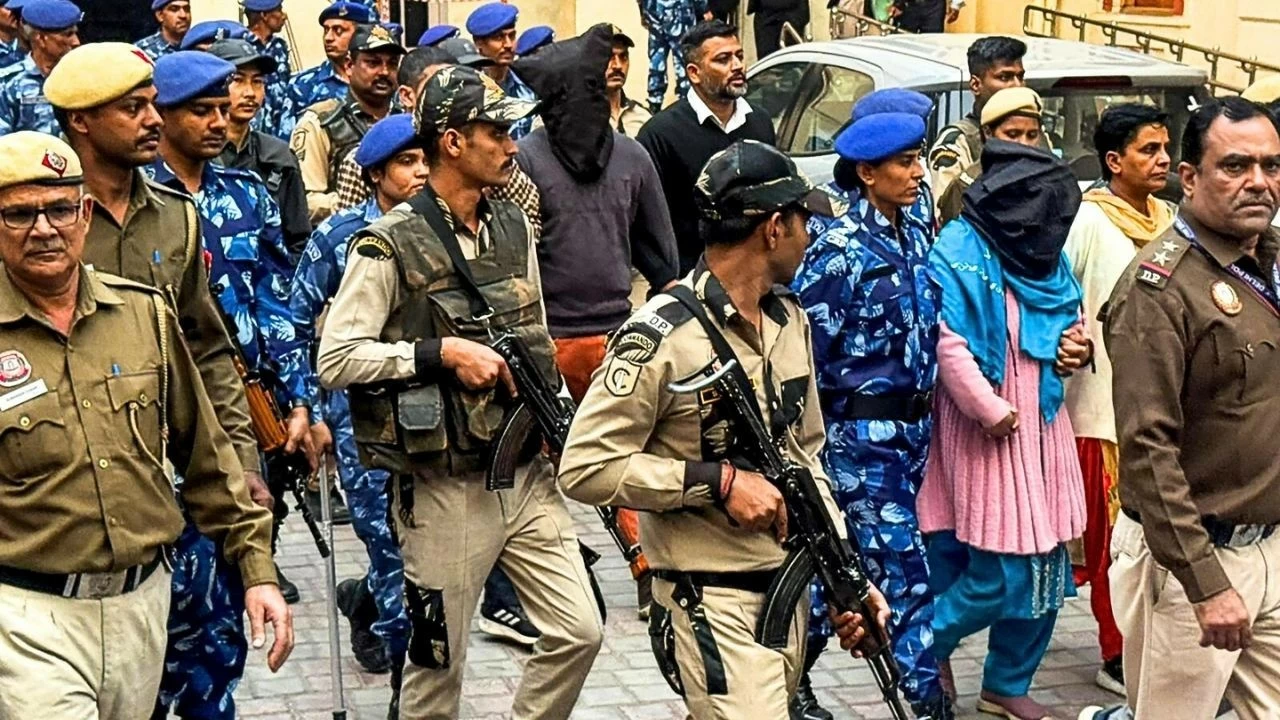


New Delhi: Investigations into the blast near Delhi’s Red Fort on November 10 last year have revealed an elaborate communication network involving “ghost” SIM cards, encrypted applications and a dual-phone strategy allegedly used by highly educated doctors to coordinate with Pakistan-based handlers, officials familiar with the probe said on Sunday.
These findings have directly shaped a major directive issued by the Department of Telecommunications (DoT) on November 28, mandating that app-based messaging platforms such as WhatsApp, Telegram and Signal remain continuously linked to an active physical SIM card on the device, according to news agency PTI.



Officials said members of the so-called “white-collar” terror module relied on multiple mobile phones and illegally procured SIM cards to evade surveillance. Those arrested in the case, including doctors Muzammil Ganaie and Adeel Rather, allegedly carried two or three handsets each. Dr Umar un-Nabi, a resident of Pulwama who died while driving the explosives-laden vehicle, was also said to be following the same pattern.
Investigators found that the accused typically maintained a “clean” phone registered in their own name for routine personal and professional use. Alongside this, they carried a second device — described as a “terror phone” — used exclusively for encrypted communication with handlers operating from Pakistan and Pakistan-occupied Kashmir (PoK).
According to officials, the secondary phones were linked to messaging platforms such as WhatsApp and Telegram and used to communicate with handlers known by codenames like ‘Ukasa’, ‘Faizan’ and ‘Hashmi’. The SIM cards in these devices were allegedly obtained by misusing Aadhaar details of unsuspecting civilians or through fake Aadhaar documents.
Security agencies observed a troubling trend: even when these SIMs were operated from across the border, the linked messaging accounts continued to function, allowing handlers to guide activities in India without physical presence.
The probe also revealed that handlers exploited features of messaging apps that allow them to work without a physical SIM. Through these channels, recruits were allegedly directed to learn IED assembly via YouTube and plan “hinterland” attacks. Officials said some recruits initially wanted to travel to conflict zones in Syria or Afghanistan before being redirected to operations inside India.
To plug these gaps, the Centre invoked the Telecommunications Act, 2023, and the Telecom Cyber Security Rules. Under the new norms, all Telecommunication Identifier User Entities must ensure their applications function only when an active SIM is present. Telecom operators have been instructed to log users out automatically if no active SIM is detected, and platforms such as Snapchat, Sharechat and Jiochat must submit compliance reports to the DoT.
Officials said the measures, being fast-tracked in Jammu and Kashmir, are expected to deal a major blow to the digital infrastructure used by terror networks, even though fully eliminating fraudulent SIMs will take time.