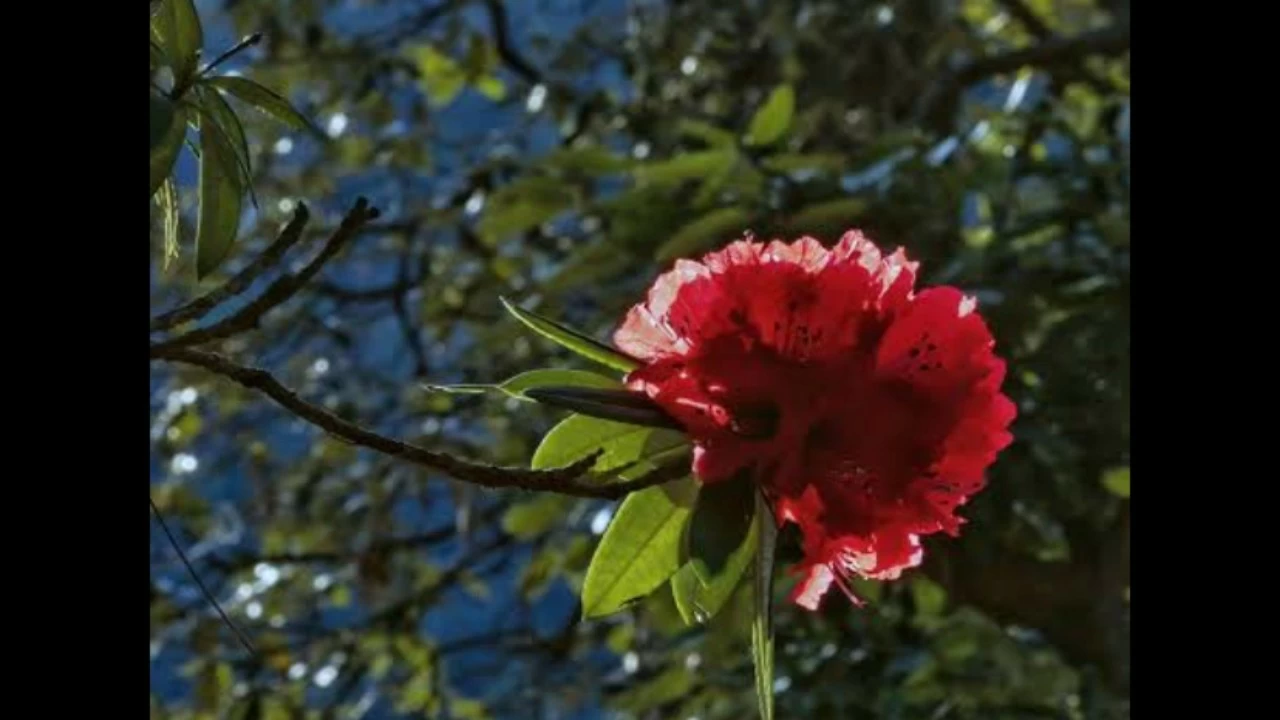
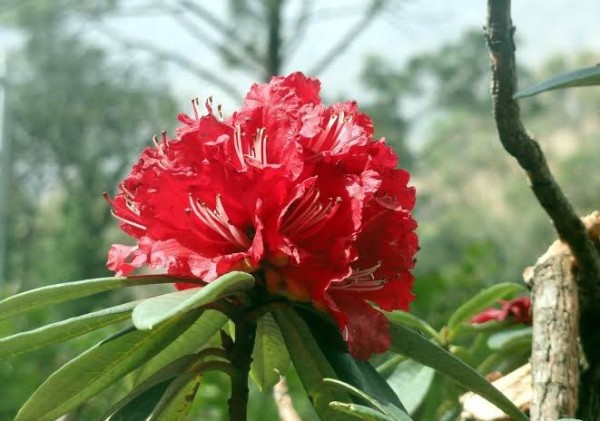
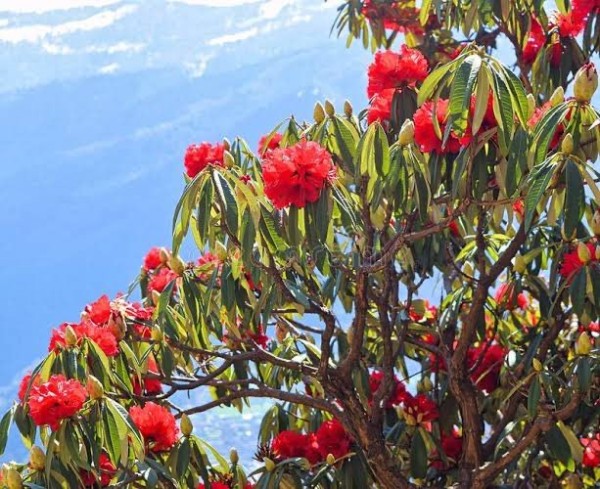
Dehradun: The forests of Uttarakhand are turning red earlier than usual, with rhododendron flowers blooming in December and January instead of their normal season between March and May. While the sight is breathtaking, experts say it is also a warning of climate change in the Himalayan region.
Rhododendron, scientifically known as Rhododendron arboreum, is a well-known Himalayan tree found at altitudes above 1,800 meters.
Scientists have noticed that rhododendrons are flowering earlier than expected
For the past 15 years, scientists have noticed that rhododendrons are flowering earlier than expected. Dr. Lalit Tiwari, professor of Botany at DSB College, Nainital, explains that flowers which once appeared in February–March are now blooming two to three months sooner.
Rising temperatures and dry weather conditions are primarily responsible
The main reason is rising temperatures and dry weather conditions. Winters in the Himalayas are becoming warmer, snowfall is decreasing, and average temperatures are steadily climbing. These changes create favorable conditions for rhododendrons to bloom early. According to experts, this premature flowering is a clear sign of global warming and its impact on the fragile Himalayan ecosystem.
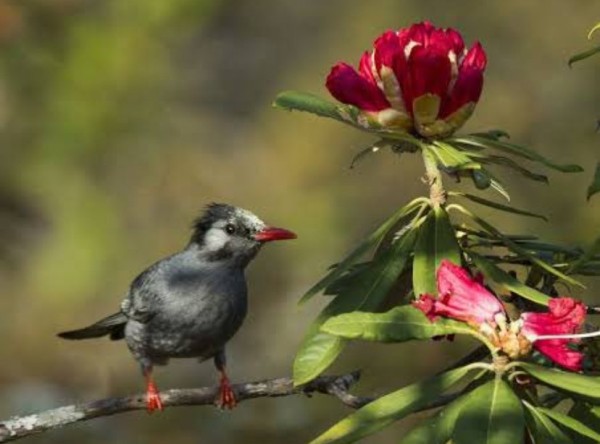
Rhododendrons are an important part of Himalayan biodiversity
Tourists and locals are enjoying the red blossoms across Nainital and nearby forests, but scientists caution that this beauty hides ecological risks. Rhododendrons are an important part of Himalayan biodiversity, and their early bloom suggests that the natural rhythm of the ecosystem is being disturbed. If such changes continue, other plants and animals that depend on seasonal cycles may also be affected.
Valued for its medicinal properties
Rhododendron is valued not only for its beauty but also for its medicinal properties. Its flowers are rich in antioxidants and flavonoids like quercetin and rutin, which are believed to help fight cancer. Rhododendron juice is widely consumed in Uttarakhand and is considered beneficial for liver problems, heart health, arthritis pain, and even diabetes. Ayurveda and homeopathy also use rhododendron for its antiviral and anti-inflammatory properties.
Early blooming is not a good sign for the environment
Despite these benefits, scientists emphasize that early blooming is not a good sign for the environment. Pollution, rising temperatures, and reduced snowfall are altering the delicate balance of nature. If this trend continues, it may affect not only rhododendrons but also other species of flora and fauna in the Himalayan region.
It signals that the Himalayan ecosystem is under stress
The premature bloom is therefore both a delight and a danger. On one hand, it attracts tourists and adds economic value through rhododendron-based products. On the other, it signals that the Himalayan ecosystem is under stress. Experts believe urgent steps are needed to monitor biodiversity, reduce pollution, and address climate change impacts in Uttarakhand.
The red blossoms may look like a beautiful spring in winter, but they carry a silent warning. The early flowering of rhododendron is a reminder that climate change is already reshaping the environment around us.