Sign In
By signing in or creating an account, you agree with Associated Broadcasting Company's Terms & Conditions and Privacy Policy.
By signing in or creating an account, you agree with Associated Broadcasting Company's Terms & Conditions and Privacy Policy.
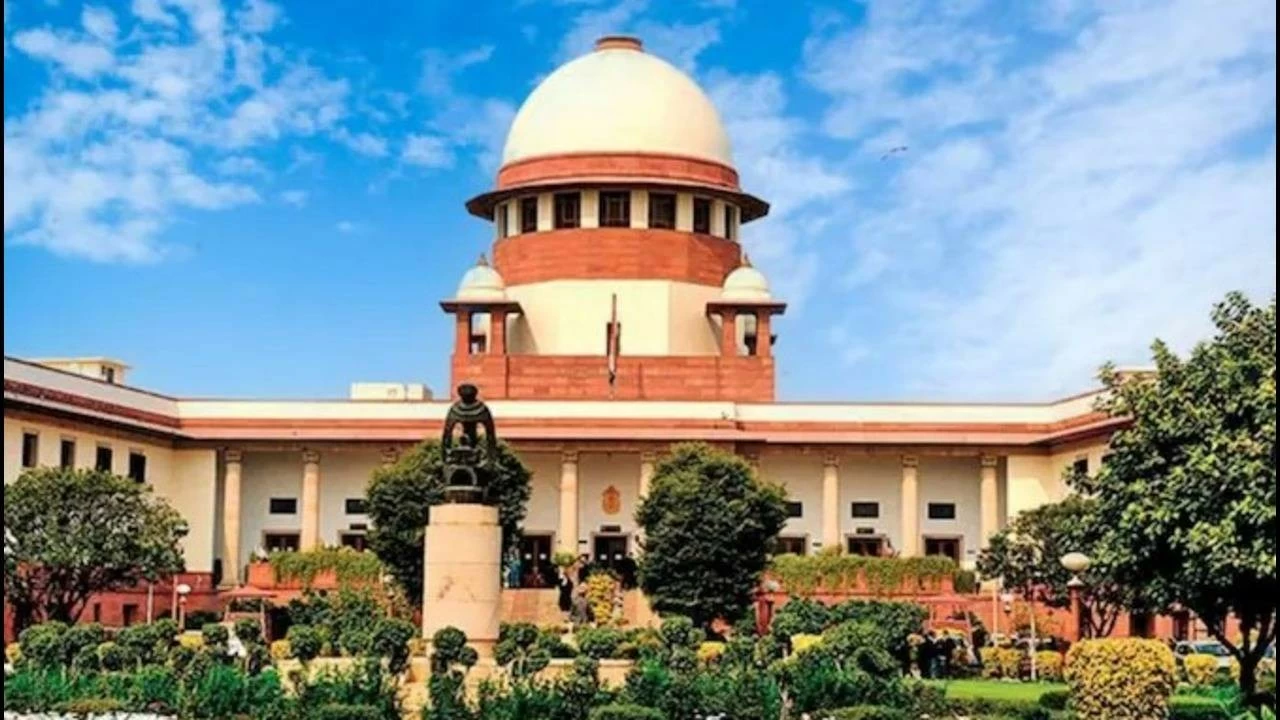

New Delhi: On September 14 the Supreme Court of India stayed (halted the execution) of certain provisions of the Waqf (Amendment) Act 2025. A bench comprising Chief Justice of India BR Gavai and Justice AG Masih decided to stay certain provisions of the Act, not currently enforcing it in its entirety.
‘Waqf’ has been defined as the permanent dedication by any person of any movable or immovable property for any purpose recognised by Muslim Law as pious, religious or charitable. Wafq properties have religious, social and economic significance in India and their regulation and protection has been an ongoing endeavour of the Indian state.



The first major law, the Waqf Act of 1954, laid the foundation for managing these properties. Over time, many updates and amendments have been undertaken to update the law, though many of them have been on various occasions been contentious.
Waqf (Amendment) Bill, 2025, and the Mussalman Wakf (Repeal) Bill, 2024 were the latest aims to modernize Waqf administration, reduce legal disputes, and improve its efficiency. It seeks to fix issues in the 1995 Act and the 2013 Amendment but it too has come under fire from many detractors who challenge its constitutional grounds and question its ulta-modernising spirit against Waqf traditions. The Centre meanwhile has maintained its intent of modernising the regulations to bring about more accountability, transparency and constitutionality to the rules.
Some important provisions of the Waqf (Amendment) Act 2025 have been stated by the Supreme Court on September 14 by a bench comprising Chief Justice of India BR Gavai and Justice AG Masih. Three major provisions that have been stayed (halted) are:
1- One of the most significant provisions that has been stayed refers to Section 3(1)(r) of the Act. It stipulated that a person should be a practitioner of Islam for 5 years to create a Waqf through a formal deed.
This is no longer enforceable until State Governments bring about proper frameworks to determine who can be said to be a person who has been practising Islam for 5 years or more. The court noted that unless such a mechanism is well articulated, the provision in its current state can lead to an "arbitrary exercise of power".
2- Another important provision that has been stayed pertains to Section 3C(2) of the Act. It states that a Waqf property will not be treated as a Waqf Property until the designated officer of the Government submits his report on whether there is any encroachment on it. The stipulation would have empowered district collectors to make the final decision on whether a property claimed as waqf actually belongs to the government.
This provision too will be stayed, with the Apex Court making the ruling that any final designation of a property to be defined as waqf should also be subject to adjudication by waqf tribunals and the concerned high courts.
In relation to this, the Court also stayed Section 3C(3) which says, "In case the designated officer determines the property to be a Government property, he shall make necessary corrections in revenue records and submit a report in this regard to the State Government". It also stayed Section 3C(4) which says that the State Government shall, “on receipt of the report of the designated officer, direct the Board to make appropriate corrections in the records".
The staying of these provisions broaden the scope of defining a property as ‘wafq’ or ‘government’ and do not provide district collectors and related government designated officers as the final arbitrator on deciding the question.
3- Another major provision that has been stayed pertains to who can, and should, be members of various waqf ruling committees. The court further directed that the Central Waqf Council, an advisory body under the Union Ministry of Minority Affairs, chaired ex officio by the Union minister, should not have more than four non-Muslim members.
Importantly the provision allowing the nomination of non-Muslim members to the Waqf Boards will still be enforced. The Court also observed that, as far as possible, the Chief Executive Officer of the Board should be a Muslim person.
Further the Court observed that for the Central Waqf Council, it shall not consist of more than 4 non-Muslim members, and for the State Waqf Board, not more than 3 non-Muslim members. Similarly, state waqf boards should not include more than three non-Muslim members.