Dehradun: In 2018, the Uttarakhand government passed the Uttarakhand Freedom of Religion Act (UFRA) to stop what it called “forced religious conversions.” The law was later strengthened in 2022 and again in 2025, with stricter punishments and longer jail terms. But nearly seven years later, court records show that the law is struggling to stand in court.
An investigation by The Indian Express, based on records obtained through 30 Right to Information (RTI) applications, reveals that of the 62 cases registered under the Act until September 2025, only five have gone to full trial. All five ended in acquittals. Judges repeatedly pointed out weak investigations, lack of evidence, and consensual relationships between couples.
Acquittals highlight gaps
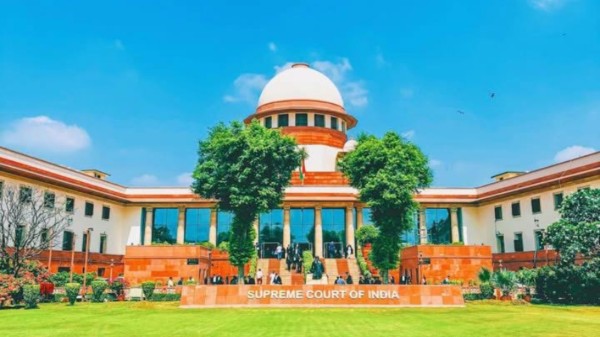
The five acquittals show how difficult it has been for the prosecution to prove coercion or inducement. In one case, a wedding arranged by two families led to the arrest of Aman Siddiqui alias Aman Chaudhary. His wife’s brother filed an FIR claiming Chaudhary hid his identity. But the Supreme Court granted him bail in May 2025, noting that the marriage was consensual and that the couple had submitted an affidavit confirming no conversion would take place.
In another case from Tehri Garhwal, a man was accused of promoting Christianity through Facebook videos. The prosecution produced witnesses and digital evidence, but the court found no proof of inducement. The judge observed that every person has the fundamental right to practice and propagate any religion, as long as it does not infringe on others’ rights.
Offering inducements for conversion
A third case involved pastor Narendra Singh Bisht and his wife in Nainital’s Ramnagar. They were accused of offering inducements for conversion. But the trial court acquitted them in September 2025, saying the prosecution failed to prove when and how any inducement took place. Bisht, who spent seven days in jail, later said the case had made life difficult for his family, but they eventually won in court.
Other acquittals involved allegations of kidnapping and forced conversion, but courts found that the women involved had left home willingly or married of their own choice. Judges noted contradictions in statements and lack of corroboration.
Bail in most cases
Of the 62 cases registered, the status of 51 is known. In 39 of these, the accused are out on bail. Courts often granted bail after noting consensual relationships, contradictory statements, or procedural lapses. Eleven accused obtained bail from the Uttarakhand High Court, and one from the Supreme Court.
In three cases, bail was denied, while hearings are pending in five. In two cases, the accused approached the High Court for a stay, and the state was asked to reply.
Law tightened but questions remain
The UFRA was amended in 2022 to increase jail terms, and again in 2025 to raise punishments further, up to 20 years or even life imprisonment in extreme cases. However, the 2025 amendment has not yet been notified because the Governor returned it to the government to correct clerical errors.
Despite these changes, the number of cases has continued to rise. The highest number was registered in 2023, with 20 cases, followed by 18 in 2025 up to September. But the repeated acquittals and bail orders show that the law is facing serious challenges in court.
Contradictions in ongoing trials
In ongoing trials, courts have often noted consensual relationships. In many cases, alleged victims changed their statements or refused to support the prosecution. Some cases involved allegations of concealment of identity, but courts questioned whether such claims could hold after years of relationships or marriages.
For example, in Haridwar’s Kankhal, a woman claimed she discovered after nine years of marriage that her husband was Muslim. The High Court granted bail to the accused, questioning how she had not known his religion for so long.
In another case from Nainital, a woman alleged concealment of identity by a man she had been in a relationship with for five years. The court noted that the couple had even applied for marriage under the Special Marriage Act earlier, raising doubts about the allegations.
Debate over effectiveness
The repeated acquittals have sparked debate about whether the law is effective. Supporters argue that the Act is necessary to prevent forced conversions and protect vulnerable communities. Critics say the law is being misused to target interfaith couples and minorities, and that it fails to stand up in court because of weak evidence.
Silence from authorities
Despite the growing number of cases and repeated acquittals, the Uttarakhand Police has declined to comment. Observers say the silence reflects the sensitive nature of the issue, which has political and social implications.
As of now, the law remains in place, and cases continue to be filed. But the record of acquittals and bail orders raises serious questions about its future. Whether the government will revisit the law or continue to strengthen it remains to be seen.