
Sign In
By signing in or creating an account, you agree with Associated Broadcasting Company's Terms & Conditions and Privacy Policy.
By signing in or creating an account, you agree with Associated Broadcasting Company's Terms & Conditions and Privacy Policy.
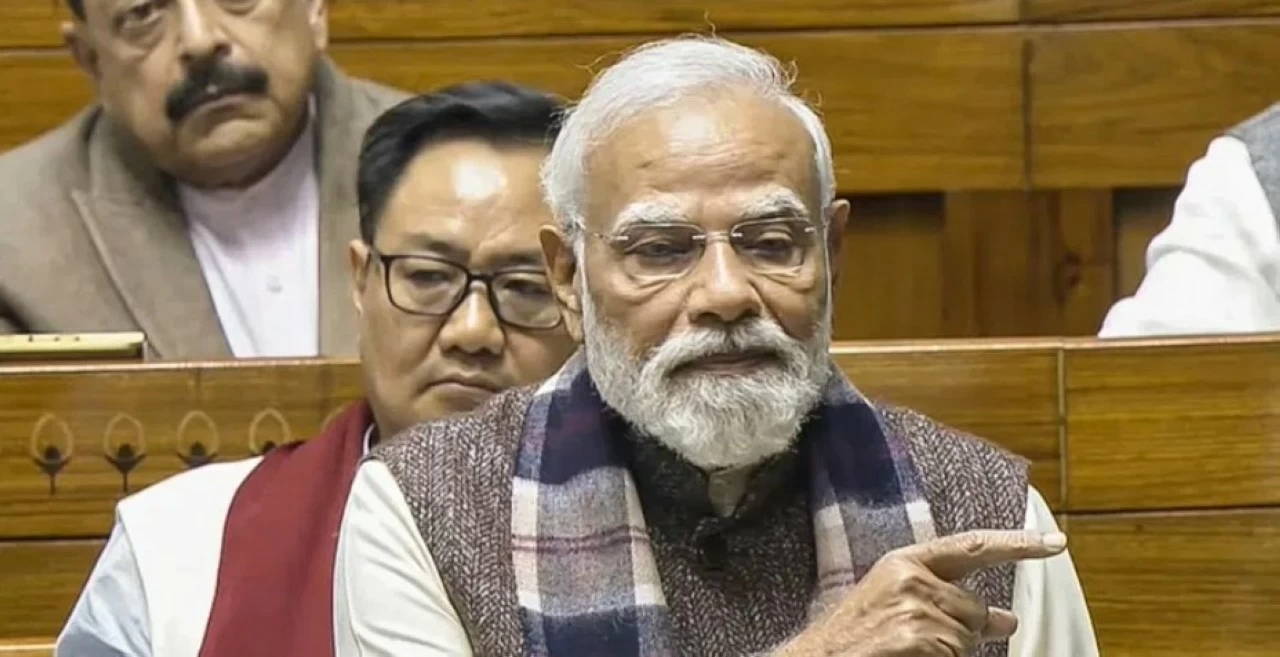


New Delhi: As the hallowed halls of Parliament convened for a special session dedicated to India's cherished national song, "Vande Mataram," commemorating its 150th anniversary, Prime Minister Narendra Modi set the tone, opening the debate with a powerful homage to its enduring legacy.
The Prime Minister highlighted the song's pivotal role as an unwavering source of inspiration for freedom fighters, asserting that its spirit remains the driving force behind the nation's aspirations. "Vande Mataram is the force that drives us to achieve the dreams our freedom fighters envisioned. Vande Mataram energised our freedom movement," the Prime Minister declared, expressing profound pride that the nation was collectively witnessing this 150-year milestone.


Delving into the song's historical footprint, PM Modi recalled Mahatma Gandhi's sentiments, quoting from the South African weekly 'Indian Opinion' dated December 2, 1905. Gandhi had observed how Bankim Chandra Chattopadhyay's "Vande Mataram" had soared to immense popularity in Bengal, becoming akin to a national anthem.
"Its sentiments are great, and it is sweeter than the songs of other countries. It's one mission is to awaken the spirit of patriotism. It looks at India as a mother and praises her," Modi recounted, channeling the Mahatma's words.
The Prime Minister highlighted the song's resilience, noting how it stood firm even amid the tumultuous 1905 partition of Bengal, which the British sought to undermine. "Bengal was epicentre of India, and the British sought to undermine it. They partitioned it in 1905. But Vande Mataram stood firm," Modi said.
He further detailed its evolution into the resounding slogan of the independence movement, gaining such potency that it eventually faced a draconian ban on its singing, publication, and even the mere utterance of its words. In a testament to its power, Sarojini Naidu famously vowed not to wear bangles until the ban was lifted, he highlighted.
Tracing the genesis of "Vande Mataram," PM Modi revealed its origins in 1875, penned by Bankim Chandra Chattopadhyay during a period of intense British oppression following the 1857 revolution. It emerged as a profound nationalist counterpoint to the British anthem, 'God Save The Queen,' which was then being popularised across India. Chattopadhyay later immortalised the song by incorporating it into his seminal novel, 'Anand Math,' in 1882.
Bringing the discussion to contemporary relevance, PM Modi urged for an opportunity to restore "Vande Mataram's" glory. He then delivered a veiled critique of the Congress party, contrasting historical periods with the song's journey.
"When Vande Mataram celebrated 50 years, we were still under oppression. When it finished 100 years, we were in a dark period of history," he remarked, alluding to the Emergency era by adding that "the Constitution was choked, with those fighting for the country’s freedom placed behind bars."
Prime Minister Modi emphasised the profound honour it was for the Parliament to engage in this historic discussion. "It is the honour of the Parliament to discuss Vande Mataram, he said.