


Sign In
By signing in or creating an account, you agree with Associated Broadcasting Company's Terms & Conditions and Privacy Policy.
By signing in or creating an account, you agree with Associated Broadcasting Company's Terms & Conditions and Privacy Policy.
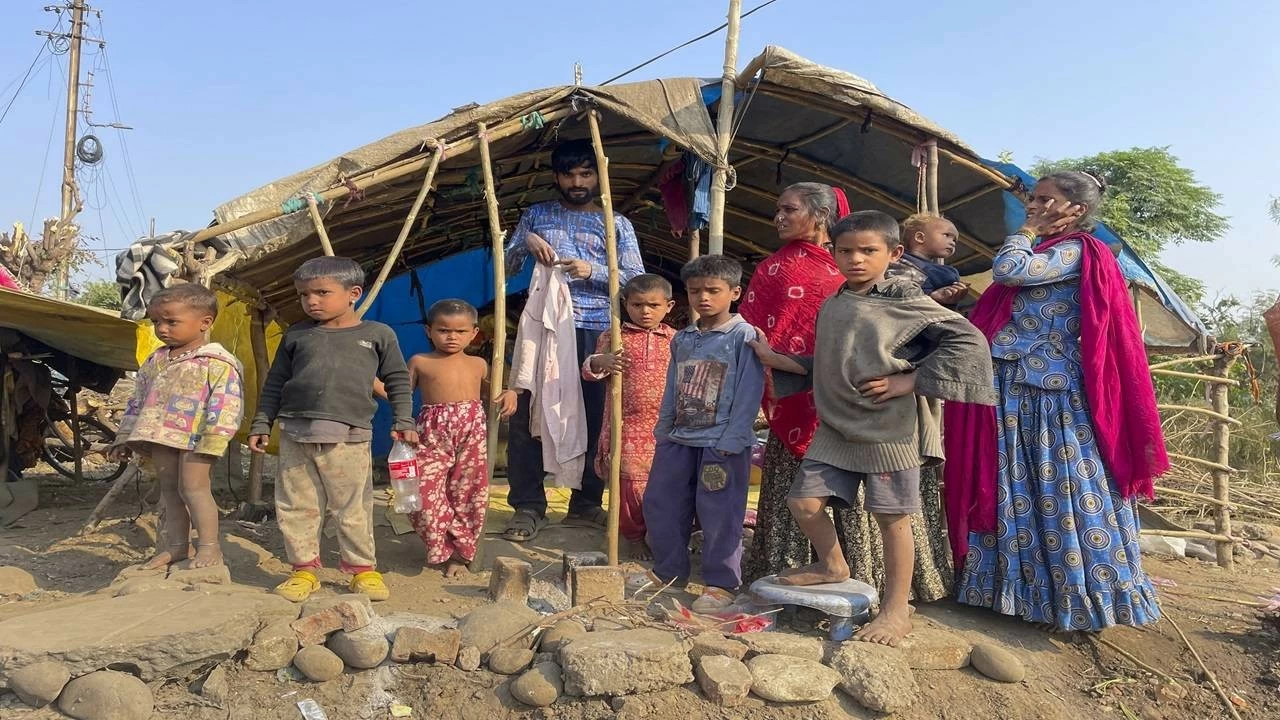


New Delhi: A recent UN report has indicated that there is a link between the April 22 Pahalgam attack and how Myanmar’s refugees are treated in India after the terror incident. The report has drawn the wrath of New Delhi.
It has been released by the UN Special Rapporteur on human rights in Myanmar. The report alleged that Rohingya refugees in India have faced “severe pressure” since the attack, even though they had no role in it. The Indian government, however, rubbished the findings as “biased and baseless”. It has accused the UN of presenting a “blinkered analysis”.
In his recent report on the state of Myanmar’s human rights, UN Special Rapporteur Thomas H Andrews made a controversial reference to the terror attack in Pahalgam that claimed the lives of at least 26 tourists in Kashmir’s Baisaran valley.
Andrews pointed out that “following the April 2025 terrorist attack on Hindu tourists in Jammu and Kashmir, refugees from Myanmar have been under severe pressure in India even though no individuals from Myanmar were involved in the attack”.
He went on to claim that in recent months, a number of Myanmar refugees in India “have been summoned, detained, interrogated and threatened with deportation by Indian authorities”.
The United Nations High Commissioner for Refugees (UNHCR) says that at present, over 1.5 million refugees and asylum seekers from Myanmar are spread across Bangladesh, India, Malaysia, Indonesia and Thailand.
Thousands of Rohingya refugees have taken shelter in India. A majority of these refugees fled Rakhine state in Mynamar after military carried out a crackdown in 2017. Many of these refugees are staying in camps in Delhi, Jammu and Kashmir, and the Northeast.
India is not a signatory to the UN Refugee Convention. Despite that, it has allowed these refugees to stay in the country on humanitarian grounds, even though their legal status is yet to be established.
During a session of the Third Committee of the UN General Assembly, India hit out at the UN report. Lok Sabha MP Dilip Saikia criticised the claims made by Andrews. Saikia averred that the report had “no factual basis whatsoever”. He dubbed the remarks as “biased and prejudiced” against India.
“My country rejects such prejudice and blinkered analysis by the Special Rapporteur,” he underlined. Saikia added that the suggestion linking the Pahalgam attack to Myanmar refugees had “no factual bearing whatsoever”.
He asked the UN official not to rely on “unverified and skewed media reports whose sole purpose appears to be maligning India”.
Saikia also voiced concern over the worsening security situation in Myanmar. He cautioned that it carries serious “cross-border implications” for neighbouring countries, including a rise in drug smuggling, arms trafficking, and human trafficking. He pointed out that India has seen “an alarming level of radicalisation among some displaced persons”, which, has affected local law and order in certain areas along the border.
Saikia pointed out that India continues to support efforts that encourage trust and a “Myanmar-owned and Myanmar-led path toward peace, stability, and democracy”, in close partnership with ASEAN and the UN Secretary-General’s office.
The Indian representative also highlighted India’s humanitarian efforts following the March 2025 earthquake in Myanmar, when it launched Operation Brahma, dispatching over 1,000 metric tonnes of relief supplies and medical teams as part of its initial response.
He also mentioned earlier initiatives such as Operation Sahayata, carried out during Typhoon Hiyaki, and Operation Sadbhav, part of India’s ongoing support to the people in Myanmar.










