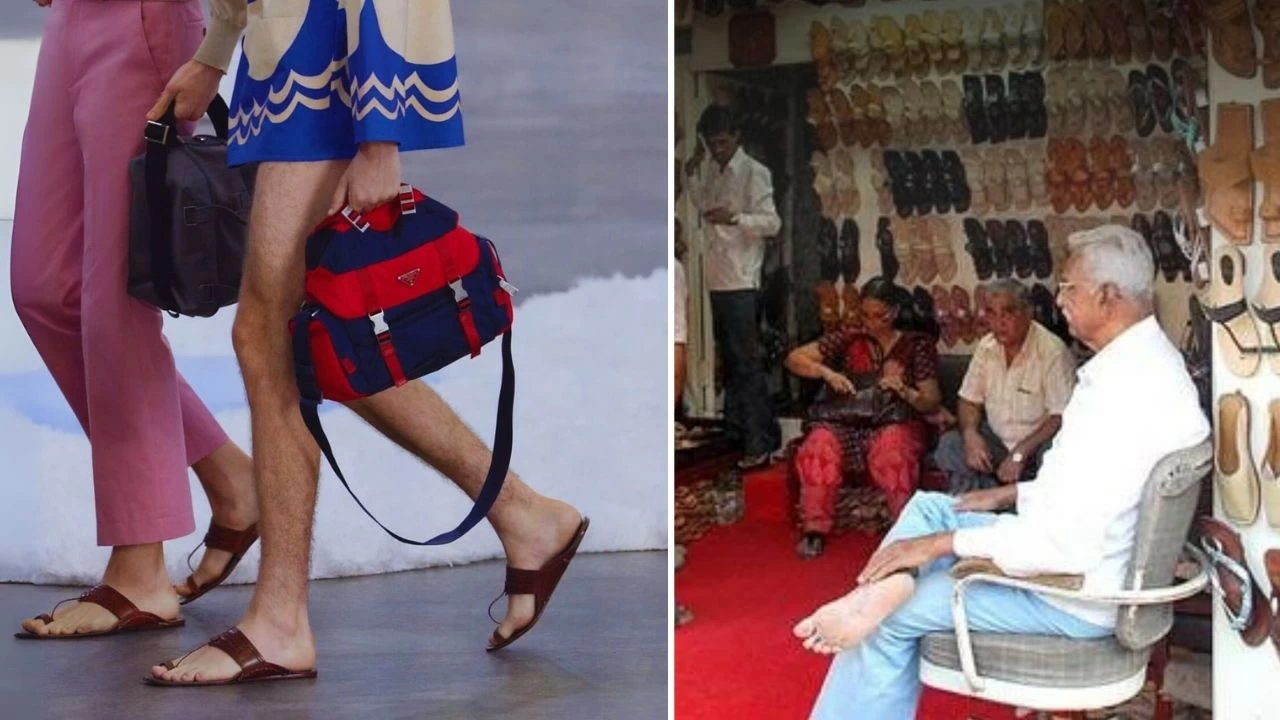
New Delhi: Italian luxury brand Prada is launching a limited-edition line of Made in India sandals after facing criticism over cultural appropriation of traditional Indian footwear, Reuters reported. The company said the collection, inspired by historic Kolhapuri chappals, blends local craftsmanship from Maharashtra and Karnataka with Prada’s own techniques. Around 2,000 pairs will be produced and sold globally from February 2026, marking a shift from controversy to collaboration. Earlier this year, Prada included sandals at its Milan fashion show that closely resembled India’s 12th-century Kolhapuri chappals.
Images went viral on social media, drawing strong reactions from Indian artisans and public figures who called out the brand for cultural insensitivity. Prada acknowledged that its design drew from ancient Indian styles and began discussions with artisan groups. Here is a detailed report on the collaboration.
Working with Indian artisan bodies
Prada has inked agreements with two Indian organisations called the Sant Rohidas Leather Industries and Charmakar Development Corporation or LIDCOM), and the Dr Babu Jagjivan Ram Leather Industries Development Corporation or LIDKAR. These bodies support India’s traditional leather craft heritage.
Lorenzo Bertelli, Prada’s chief marketing officer and head of corporate social responsibility, told Reuters the project will combine local makers’ skills with Prada’s manufacturing standards. “We want to be a multiplier of awareness for these chappals,” he said.
What this collaboration includes
1. Limited-edition collection
The sandals will be made in Maharashtra and Karnataka, where Kolhapuri chappals originated. Prada plans to release about 2,000 pairs in 40 stores worldwide and on its online platform beginning February 2026.
2. Training and exchange programmes
As part of a three-year partnership, Prada plans to invest several million euros in training programmes for local artisans. This includes workshops in India and opportunities for craftspeople to learn at Prada’s Academy in Italy.
Bertelli highlighted that artisans will be paid fairly and that the project aims to raise the craft’s profile globally.
3. Artisan hopes for revival
Kolhapuri chappals are traditionally handcrafted by marginalised communities, and many artisans worry that cheap imitations and shrinking demand threaten their livelihoods. Prerna Deshbhratar, managing director of LIDCOM, told Reuters that Prada’s endorsement as a luxury product could spark wider interest and help sustain the craft for future generations.
What Prada plans next
1. Retail expansion cautious
Despite opening its first beauty store in Delhi this year, Prada said it has no immediate plans to open standalone fashion stores or factories in India.
“We have not planned any store openings in India yet,” Bertelli told Reuters. He added that such expansion could happen in three to five years, as the company gauges long-term market potential.
2. India’s luxury market outlook
India’s luxury goods market was estimated at $7 billion in 2024 and is expected to grow to nearly $30 billion by 2030, supported by rising incomes. However, it remains smaller than the luxury demand in China.
Bertelli said Prada prefers to enter new markets independently rather than through partnerships, even if it takes longer, calling India “the real potential new market.”
By turning controversy into cooperation, Prada’s new India-made sandal collection signals a growing respect for cultural heritage and artisan skill, while offering a fresh model for global brands navigating tradition and modern design.