
Sign In
By signing in or creating an account, you agree with Associated Broadcasting Company's Terms & Conditions and Privacy Policy.
By signing in or creating an account, you agree with Associated Broadcasting Company's Terms & Conditions and Privacy Policy.

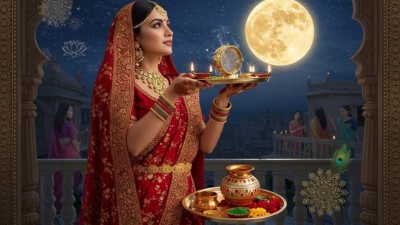
New Delhi: Karwa Chauth, one of the most revered festivals for married women in India, is more than a ritual—it is a symbol of devotion, love, and faith. The sight of women dressed in bright sarees, adorned with henna and jewellery, waiting to catch a glimpse of the moon through a sieve (chhanni), remains one of the most iconic images of Indian tradition. But have you ever wondered why women look at their husband’s face through a sieve on this night?
The act may seem simple, but its roots are deeply spiritual, symbolic, and steeped in centuries of belief.
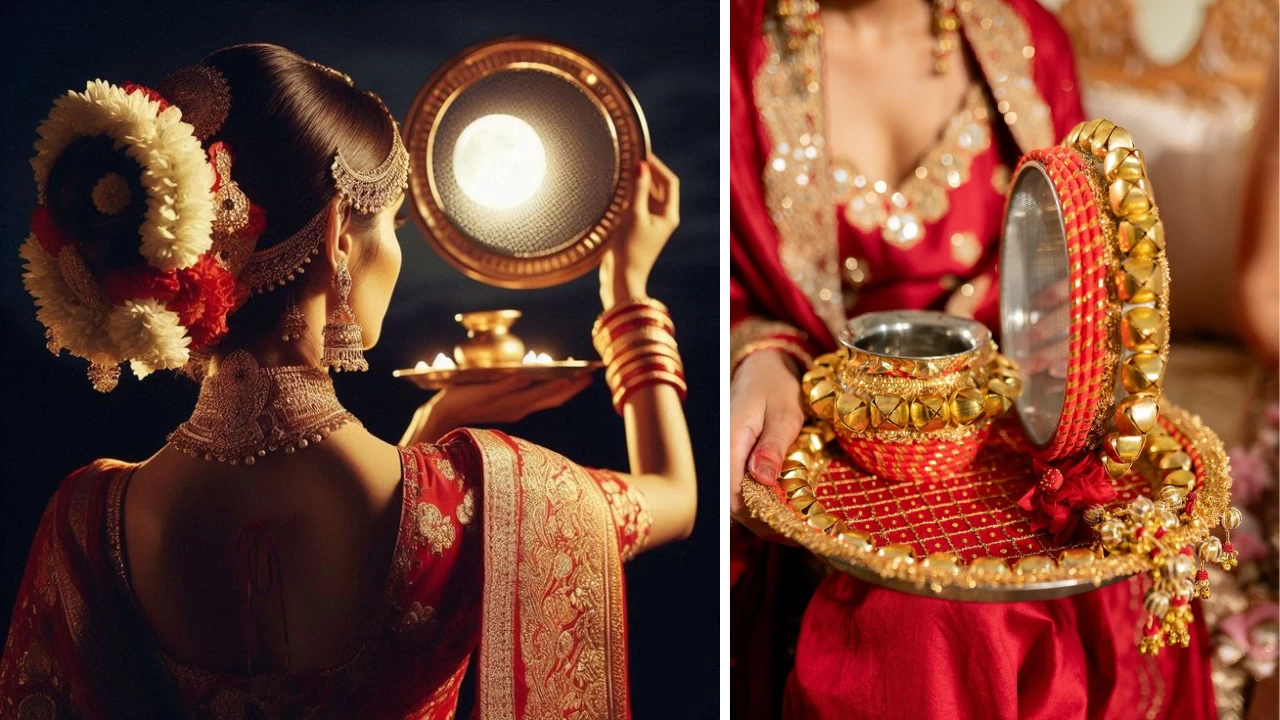
During Karwa Chauth, women fast from sunrise to moonrise for their husband’s long life and prosperity. When the moon appears, they offer Arghya (water) using an earthen pot filled with water and brass straws, symbolizing purity and divine connection. After the offering, the woman looks at the moon through a sieve and then at her husband, marking the shift from worship to devotion. The sieve, with its many tiny holes, serves as a veil between illusion and truth—allowing her to view the divine presence with modesty and reverence.
When a wife looks at her husband through the sieve, each hole is believed to represent countless blessings for his long life and happiness. Through this simple act, she offers a silent prayer that his years be multiplied, while bridging devotion and desire.
The ritual embodies faith, patience, and the sacred unity of their bond, merging earthly love with spiritual grace.
In the Karwa Chauth puja, certain items hold deep symbolic importance. The earthen pot (karva) represents stability, endurance, and the nurturing aspect of womanhood. Water, which is poured from this pot to offer Arghya to the moon, signifies emotional purity and devotion.
A few brass straws are often placed in the pot during this offering. Scriptures say that water offered through brass quickly reaches the gods, carrying the devotee’s prayers with it. This practice, though ancient, is still observed with devotion in many households.
The roots of Karwa Chauth can be traced back to the Puranas, where it is referred to as Karak Chaturthi. According to one legend, when Prajapati Daksha cursed the moon to lose its brilliance and strength, the moon sought refuge in Lord Shiva. Lord Shiva then declared that anyone who worships the moon on the Krishna Paksha Chaturthi of the Kartik month would be freed from all blemishes and misfortunes.
This belief later became intertwined with the tradition of women observing fasts for the well-being and longevity of their husbands. Hence, the moon holds a sacred place in Karwa Chauth rituals, symbolizing beauty, calmness, and eternal devotion.
Another well-known tale associated with Karwa Chauth tells the story of Karva, a devoted wife who lived near the river Bhadra. One day, her husband was attacked by a crocodile while bathing in the river. In her desperation, Karva prayed to Yamraj, the Lord of Death, to save her husband.
Moved by her faith and purity, Yamraj granted her wish and blessed her husband with a long life. He also declared that any woman who observes a fast in Karva’s name on this day would receive the same blessing for her husband’s well-being.
This story highlights the essence of Karwa Chauth—the belief that sincere devotion and selfless love can overcome even death.
The moon in Hindu philosophy represents emotions, calmness, and the rhythm of life. It governs cycles, tides, and even human temperament. When women gaze upon the moon during Karwa Chauth, they are symbolically aligning their emotional and spiritual energy with the divine lunar rhythm, seeking peace, harmony, and longevity in their marital bond.
After offering Arghya, the fasting woman views the moon through the sieve, followed by her husband’s face. This act connects the divine and the earthly—the moon symbolizing divine presence and the husband symbolizing the life companion blessed by that divinity.
The husband then helps his wife break the fast by offering her water and the first morsel of food, usually a sweet or fruit. This gesture signifies love, gratitude, and the mutual respect that sustains their relationship.
The ritual of looking at the husband through a sieve on Karwa Chauth may appear traditional, but it is deeply symbolic of faith, humility, and devotion. The sieve stands as a bridge between the human and the divine, reminding couples that love, when anchored in prayer and gratitude, becomes timeless.
In today’s world, where relationships often move at the pace of convenience, the Karwa Chauth ritual continues to remind us of something ancient yet enduring—the sacred strength of commitment and the quiet beauty of devotion under the silver light of the moon.