


Sign In
By signing in or creating an account, you agree with Associated Broadcasting Company's Terms & Conditions and Privacy Policy.
By signing in or creating an account, you agree with Associated Broadcasting Company's Terms & Conditions and Privacy Policy.



New Delhi: Ever dreamt of a Shiva temple that vanishes into the sea twice daily, only to re-emerge like a divine miracle? Stambheshwar Mahadev Temple in Gujarat captivates with its mystical tides, drawing pilgrims and wanderers to witness the disappearing temple phenomenon. As waves perform jalabhishek on the sacred Shivling, feel the blend of faith and nature's rhythm—perfect for spiritual seekers exploring Kavi Kamboi's wonders. Discover the vanishing Shiva temple's allure and plan your pilgrimage.
Imagine standing awestruck as high tide engulfs the shrine, leaving just its pinnacle above water—ready for this surreal spectacle? Stambheshwar Mahadev offers a rare glimpse of impermanence echoing Lord Shiva's dance of creation and destruction. Time your visit to behold the Shivling's dramatic reveal!
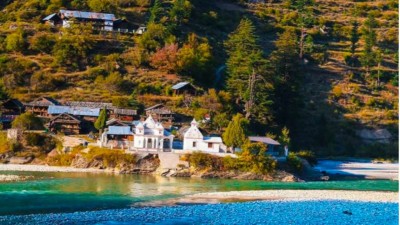
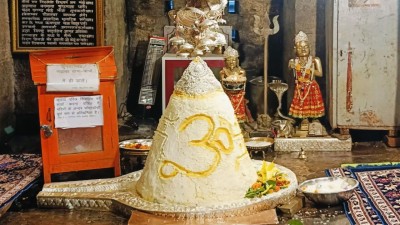

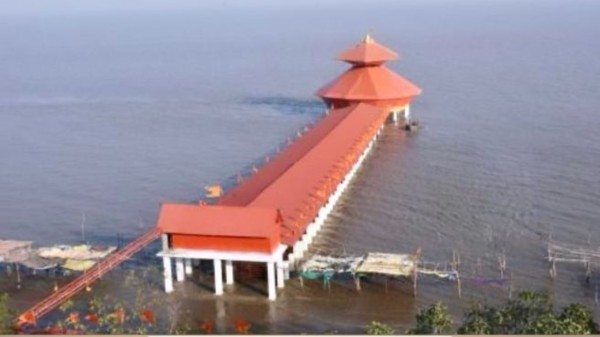
Stambheshwar Mahadev Temple, an ancient 150-year-old shrine in Gujarat, enshrines a 4-foot Shivling that submerges under Arabian Sea tides twice daily, emerging pristine during low tide—a testament to nature's devotion. Legends link it to Lord Kartikeya installing the Linga post-killing demon Tarakasura, seeking Shiva's forgiveness, or Pandavas during exile.
This simple yet profound site, also called Gayab Mandir or disappearing Shiva temple, draws millions for its unique interplay of sea and sanctity, with flowers offered during darshan floating atop waves as divine abhishek.
Nestled in Kavi Kamboi village, Jambusar tehsil, Bharuch district, Gujarat, Stambheshwar Mahadev sits on the Gulf of Khambhat's shore, mere metres from the Arabian Sea. Coordinates 22°14′59″N 72°31′35″E place it 60 km from Vadodara and 40 km from Bharuch, near Mahi and Narmada rivers' confluence.
The Stambheshwar Mahadev Temple's roots plunge into ancient mythology, referenced in Skanda Purana as Vishwanandak Stambh—a divine pillar erected by Devas at Mahi-Sagar Sangam Teerth Kshetra. Though the current structure dates to about 150 years ago, possibly built by Maratha commander Sadashivrao Bhau post-victory over Ahmed Shah Abdali before Panipat's third battle, the 4-foot Shivling predates it by millennia.
Central legend features Lord Kartikeya, Shiva's son, who slew demon Tarakasura—a Shiva devotee boon-protected against all but Shiva's offspring. Remorseful despite Vishnu's counsel, Kartikeya commissioned Vishwakarma for three divine Shivlings, installing one here as Kapaleshwar (later Stambheshwar), sprinkling sesame-water to pacify Tarakasura's soul and atone his sin.
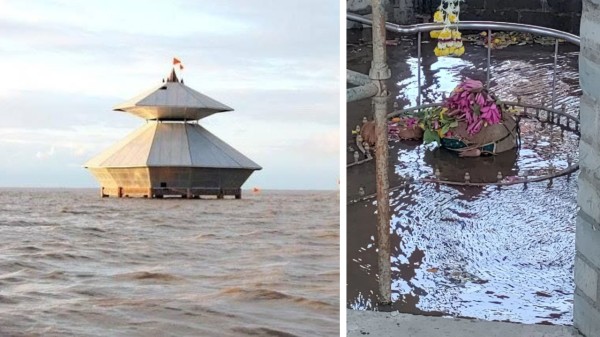
Alternative tales link Pandavas to the site during Mahabharata exile, where Krishna and they worshipped Shiva for Kurukshetra victory blessings, or Raja Bhoj's unfinished grand plans halted by structural collapse, later conserved by ASI in 2006-07. Local fishermen have preserved this Moksha Tirtha across eras, blending Puranic lore with resilience against tides.
1. Tidal submersion phenomenon
Twice daily, high tides fully engulf the garbha griha, submerging the Shivling under 12 feet of seawater while the modern pinnacle peeks above—reappearing spotless at low tide, symbolising Shiva's cosmic cycle and drawing awe from devotees witnessing nature's jalabhishek.
2. Floating offerings spectacle
Flowers and garlands placed on the Shivling during low tide rise buoyantly during high tide, dotting the sea surface in vibrant hues—believed Mother Nature's ritual blessing, amplifying the temple's mystical vanishing Shiva temple aura.
3. Kartikeya's redemption legend
Post-slaying Tarakasura, a Shiva devotee, Kartikeya erected three Lingas including Stambheshwar for atonement on Vishnu's advice; the sea's eternal abhishek absolves his guilt, embedding deep mythological resonance in every tidal embrace.
4. Pandava exile connection
Alternative lore credits Mahabharata's Pandavas with installing the Linga during vanvas, praying to Shiva amid their trials—highlighting the site's ancient sanctity predating the 150-year structure.
5. Resilience amid tides
Despite relentless daily submersion for millennia, the Shivling endures unscathed, showcasing geological marvel where sea currents cleanse rather than erode, underscoring the temple's enduring divine protection.
Visit between November-February for pleasant weather; prime slots 2-3 PM before high tide blocks access, varying by Gujarati tithi—check stambheshwarmahadev.com for daily low tide windows like Pancham (sunrise-7 AM, 1-4 PM). Shravan, Maha Shivratri, Purnima/Amavasya ideal; avoid monsoons/summers.
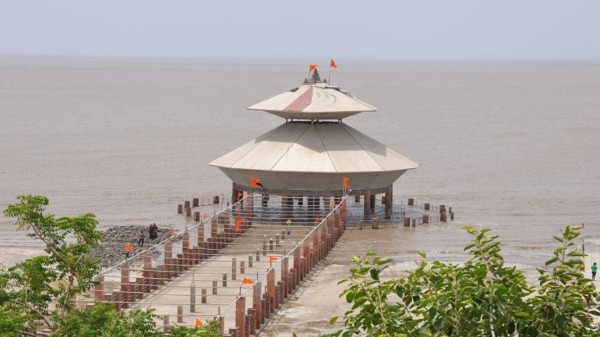
Stambheshwar Mahadev Temple holds profound status as a sacred teerth kshetra, revered as Mahi-Sagar Sangam Teerth Kshetra per Skanda Purana, where Narmada and Mahi rivers merge with the Arabian Sea. This holy confluence amplifies its spiritual potency, drawing pilgrims for ritual baths that wash sins, akin to Triveni Sangam.
Ancient scriptures hail it as Vishwanandak Stambh Teerth, a Moksha Puri granting salvation through darshan, puja, and sea-offered jalabhishek—believed to rival Kashi's redemption power. Devotees immerse in nearby waters pre-darshan for purification, especially during Shravan, invoking Shiva's grace amid tidal miracles.
Local traditions reinforce its teerth significance with parikrama paths and yagnas, positioning it among Gujarat's 51 Shakti Peethas and Jyotirlinga-linked sites, a beacon for spiritual renewal.
Embrace Stambheshwar Mahadev Temple's timeless allure where sea meets divinity in Kavi Kamboi. From tidal vanishings to ancient teerth blessings, plan your visit to witness nature's eternal puja.

