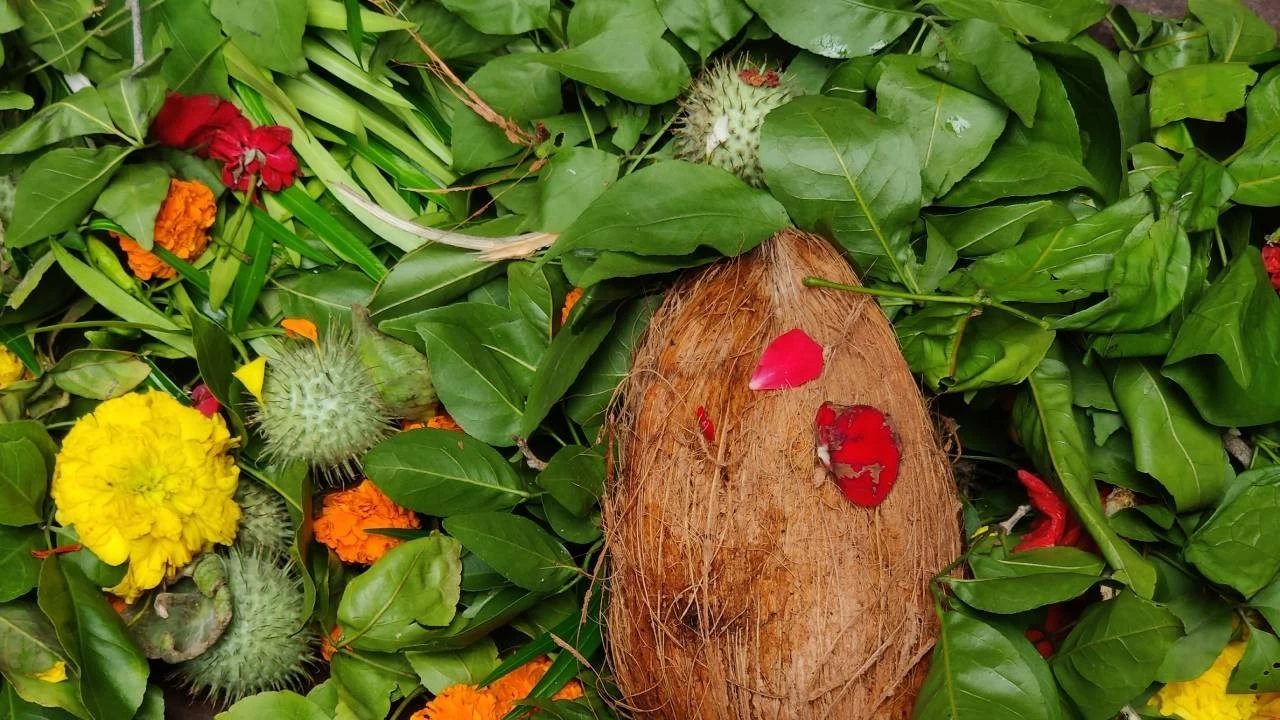
Every ritual or act of worship is considered incomplete without offering something to the deity. Different Gods and Goddesses are believed to have their own preferred offerings. As the holy month of Sawan continues, let’s focus on Lord Shiva and his most beloved offering — the Bel Patra.
It is said that Lord Shiva can be pleased even with a single Bel Patra, if offered with true devotion. Read on to learn why this sacred leaf holds such special significance for Mahadev.
What is Bel Patra?
Bel patra, also called bilva patra in Sanskrit, is a type of plant. "Bilva" means the bel tree and "patra" means leaf. Bel patra includes the bel fruit, which has a hard shell and a slightly tangy taste. People in different regions of India have various names and pronunciations for bel patra. This plant holds cultural, social and medicinal value.
Why do we offer bel patra to Lord Shiva?
When worshipping Lord Shiva, the bel patra is one of the most important offerings. It is believed that bel patra leaves are his favourite. The three leaves symbolise the Trinity: Brahma, Vishnu and Mahesh (Shiva). According to scriptures, the three leaves also represent Lord Shiva's three eyes.
Shivapriyam bilva dalam, tridalam trigunakaram
Trinetram cha tridevasya, tripunyam cha bilva patra
Meaning: The Bilva leaf is dear to Bhagwan Shiva. Its three leaflets represent the three gunas (Sattva, Rajas and Tamas), the three eyes of Shiva, and the three primary forms of the Divine. It is sacred and brings good fortune.
History of Bel Patra
According to the Skanda Purana, Devi Parvati sweated and some drops fell on Mount Mandrachal, causing the tree to grow. It is said that Devi Parvati resides in the bael tree in all forms, which is why Shiva is fond of bael leaves. Some believe that bael leaves symbolise the three Gods: Brahma, Vishnu, and Mahesh. The Shiva Purana and other Vedic texts describe Belva Patra as highly auspicious. Even a single leaf offered with devotion can greatly please Lord Shiva.
Spiritual Significance: Symbolic Meaning
Bilva Patra holds a special place in the Vedic tradition due to its three-leaf structure, which reflects Shiva's three eyes and the Trishula. Each leaf carries symbolic meaning:
- Three eyes of Shiva representing the past, the present and the future.
- Trishul symbolising creation, preservation and destruction, and
- Three gunas: Sattva (purity), Rajas (activity) and Tamas (inertia).
The central leaf is linked to Shiva's third eye, symbolising wisdom, awakening and change. Offering Bilva Patra is more than just a ritual; it reflects the devotee's wish to transcend illusions and achieve mental clarity.
Bilva Patra also has cooling properties. It helps calm Shiva's Rudra aspect, which represents intense energy. By placing this leaf on the Shiva Linga, devotees seek Shiva’s compassion, forgiveness and peace.
Inner Meaning of the Offering
Offering Bilva Patra shows deep spiritual intent. It symbolises:
- Surrender of ego.
- Desire for divine insight.
- Need for transformation and protection.
This offering is a silent prayer to align with the universe and move beyond life's dualities. It represents the devotee’s wish to let go of attachments and pursue inner awakening.
Each leaf serves as a metaphorical bridge between humans and the divine. This simple gesture shows that the divine values humility, truth and devotion over grand gestures.
The tradition of offering Bilva Patra to Bhagwan Shiva is more than just a ritual; it is a sacred conversation between the seeker and the Divine. It is grounded in ancient wisdom and spiritual symbolism that remains relevant today.