Sign In
By signing in or creating an account, you agree with Associated Broadcasting Company's Terms & Conditions and Privacy Policy.
By signing in or creating an account, you agree with Associated Broadcasting Company's Terms & Conditions and Privacy Policy.
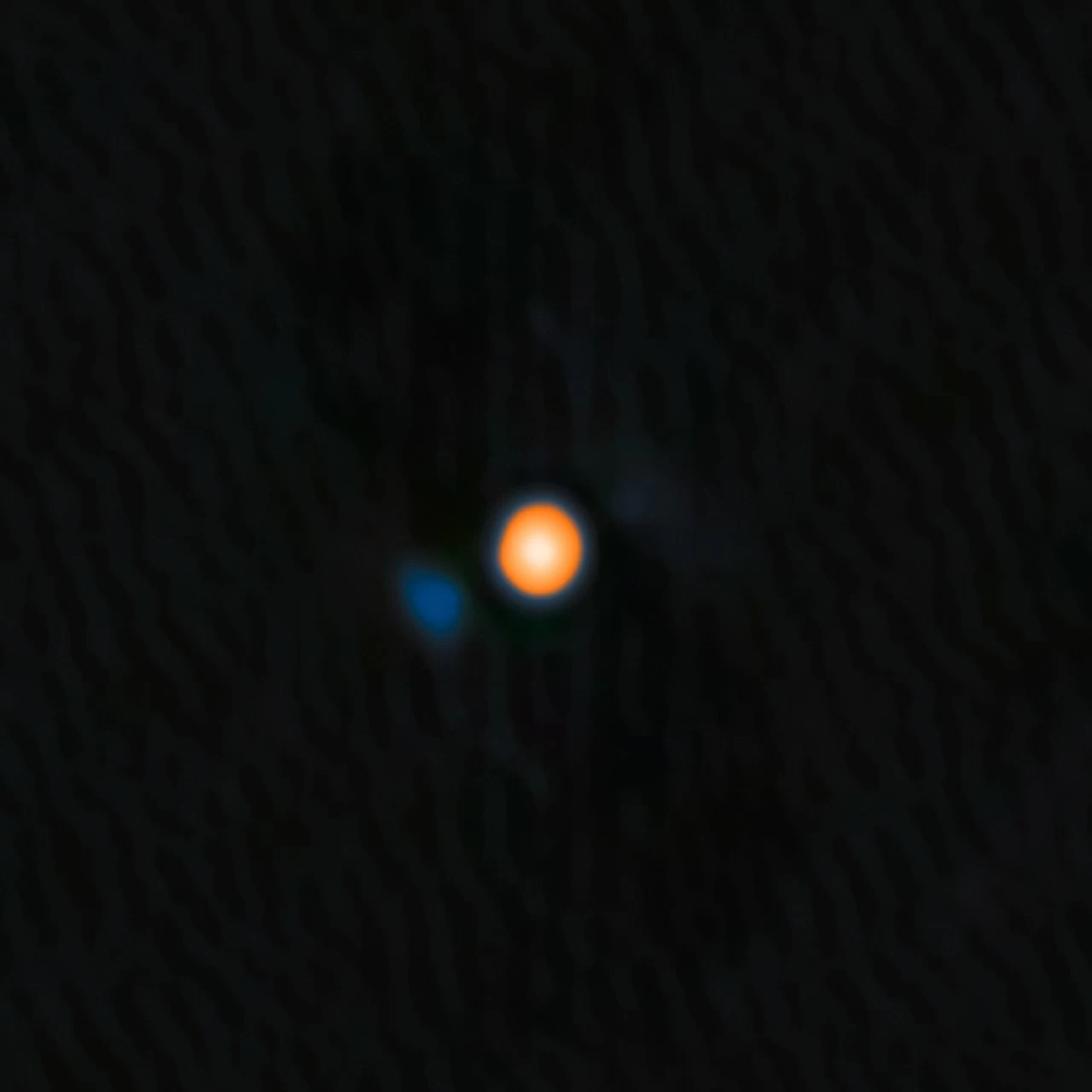


Betelgeuse is a bloated star in the final stages of its life known as a red supergiant, the closest such star to the Earth. The size makes it the tenth brightest star in the night sky. It demonstrates an unusual pattern in changes to luminosity, that cannot be explained by the inherent pulsation cycle of the star, of 400 days. Astronomers had first proposed that the unusual variation in brightness was caused by a hidden companion, early in the 20th century. Two teams of scientists recently revived the hypothesis, using over 100 years of observation, to predict the location and luminosity of the companion. These studies suggested a small window of opportunity, lasting a few months every three years, when the companion would be visible near the edge of the supergiant, before moving behind it in its orbit.
Searches with space-based telescope did not reveal the hidden companion. NASA scientists developed a special instrument to attempt to detect the companion using ground based observatories, despite the distortions of the atmosphere. The instrument was used to capture thousands of images to determine the interference caused by the atmosphere, and remove it from the observations of the telescope. The team of researchers managed to spot the very faint companion to Betelgeuse right where previous studies had predicted it would be, orbiting close to the outer edge of Betelgeuse. The discovery can explain why other similar red supergiant stars undergo periodic variations in their luminosities across many years. The team plans to continue studying the stellar companion of Betelgeuse, to better understand its nature.
The previously hidden companion is expected to reach its greatest separation from Betelgeuse in November 2027, at which time it will be the easiest to spot. Betelgeuse, pronounced as Beetlejuice, is derived from Arabic, and means 'the hand of al-Jazwa', a female figure in Arabian legends. The companion has been named Siwarha, which means 'her bracelet'. A paper describing the findings has been published in The Astrophysical Journal Letters. Lead researcher Steve Howell says, "I hope our discovery excites other astrophysicists about the robust power of ground-based telescopes and speckle imagers — a key to opening new observational windows. This can help unlock the great mysteries in our universe."