Sign In
By signing in or creating an account, you agree with Associated Broadcasting Company's Terms & Conditions and Privacy Policy.
By signing in or creating an account, you agree with Associated Broadcasting Company's Terms & Conditions and Privacy Policy.
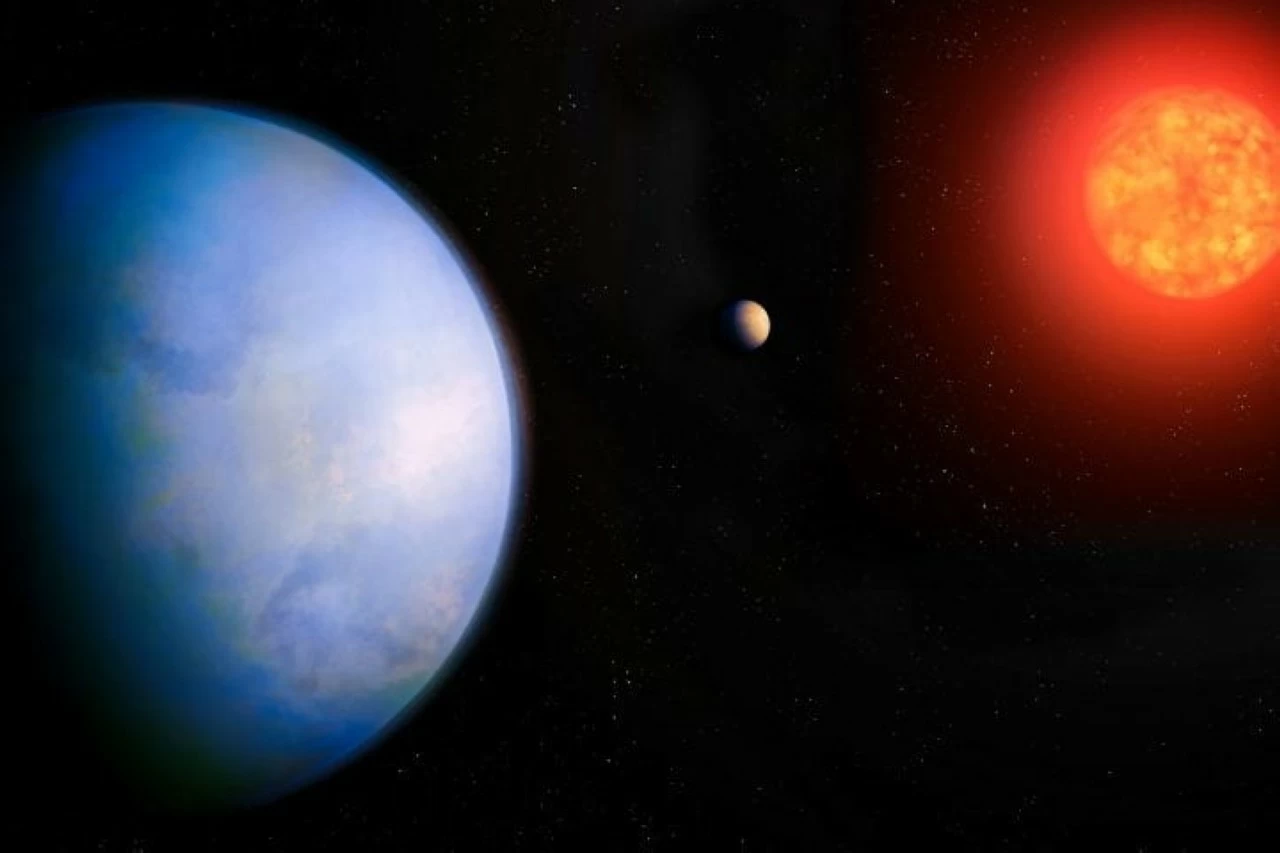


Astronomers from the University of California in Irvine have identified a habitable zone exoplanet at a distance of 18 lightyears from the Earth, designated as GJ 251 c. It orbits a cool M-dwarf star, which are among the oldest and most common type of star in the Milky Way. Especially in their infancy, such M-dwarf stars, that are smaller and cooler than the Sun exhibit high levels of stellar activity such as starspots and flares, that can mimic subtle signatures used to detect planets in orbits around stars. The proximity of GJ 251 c to the Earth makes it a promising target for capturing direct images by powerful future telescopes, such as the Thirty Meter Telescope being developed by the University of California.
The exoplanet was discovered using the radial velocity method, looking for subtle shifts in the position of the host star because of the gravitational influence of exoplanets in orbit around it. The gravity of GJ 251 c creates small, rhythmic shifts in the light from the host star. The stellar activity from red dwarf stars can confuse these radial velocity signatures. The scientists used infrared instruments to overcome some of the stellar activity issues, with sophisticated modelling being used to identify GJ 251 c as an exoplanet candidate. The researchers hope that the discovery prompts other researchers to further investigate the exoplanet in preparation for direct-imaging by the next-generation of ground-based telescopes.
Scientists know of over 6,000 exoplanets, many in orbits in the habitable zones of their host stars, or the right distance for water to exist on the surface. To determine the habitability, it is necessary to characterise the atmosphere of the exoplanet, which can change considerably depending on the mass of a planet. A planet with a higher mass will maintain a denser and larger atmosphere. Determining the mass of the planet accurately is challenging and requires complementary forms of observations such as direct imaging as well as radial velocity measurements. As the 74th closest star system to the Sun, GJ 251 is an excellent target for direct imaging. GJ 251 c contains between three and four times the mass of the Earth, and is a super-Earth with a higher gravity than the Earth. A paper describing the findings has been published in The Astronomical Journal.