
Sign In
By signing in or creating an account, you agree with Associated Broadcasting Company's Terms & Conditions and Privacy Policy.
By signing in or creating an account, you agree with Associated Broadcasting Company's Terms & Conditions and Privacy Policy.


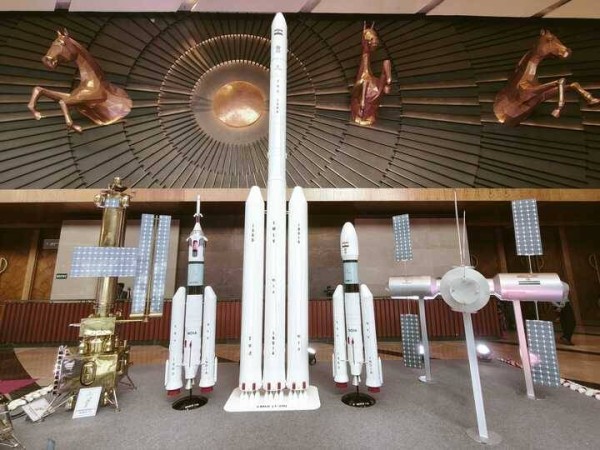
On Friday, 22 August, ISRO hosted the National Space Meet 2.0 to understand the requirements of state governments to ensure that the benefits of space technology reaches the citizens of India at a grassroots level. There was an exhibition of exciting space hardware at the Bharat Mandapam conference centre in Pragati Maidan in New Delhi, including ISRO's rocket for crewed Moon missions, the Lunar Module Launch Vehicle (LMLV), the Heavy Lift variant of the LVM3, and the Chandrayaan 4 stack.
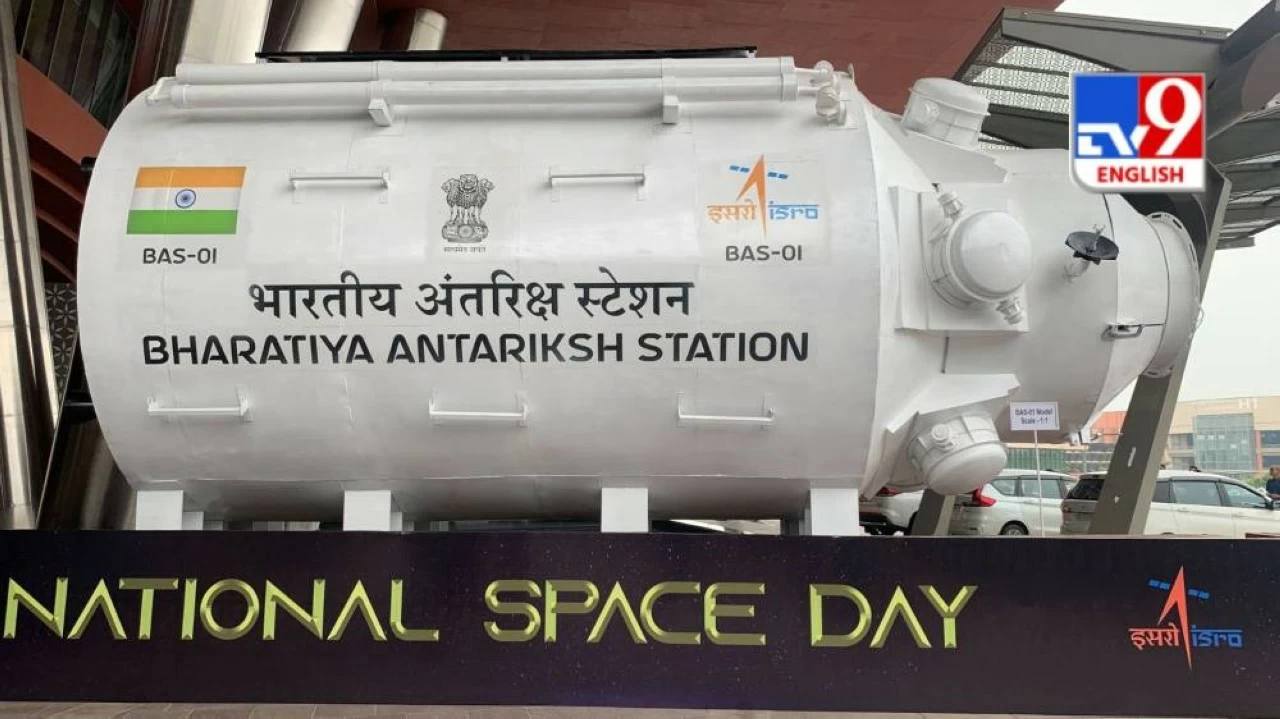
Outside the venue, the 1:1 scale model of the base module of the Bharatiya Antariksh Station (BAS) was displayed on the back of a truck. India plans to assemble its own orbital complex between 2008 and 2035, with the launch of BAS-1 planned on an LVM3 rocket in 2028. This mission is flight 7 of the planned Gaganyaan programme in its present form, with the final flight being an uncrewed docking with the BAS-1 module by a Gaganyaan spaceship. The interior volume available for human occupancy is about 27 cubic metres.
The thrusters on the back are more extruded than they appear in design schematics. The solar panels are also arrayed flat, but will be perpendicular to the structure when actually used in space. The BAS-1 module has a diameter of 3.8 m, with the scale model being slightly smaller than the planned final structure. In the interior, there are equipment and subsystems on the ceiling, batteries under the floor, operations area towards the front, and the propulsion system at the back. There are storage racks on one side and sleeping quarters for the crew on the other. There are internal hatches for both the docking hatches as well.