Sign In
By signing in or creating an account, you agree with Associated Broadcasting Company's Terms & Conditions and Privacy Policy.
By signing in or creating an account, you agree with Associated Broadcasting Company's Terms & Conditions and Privacy Policy.
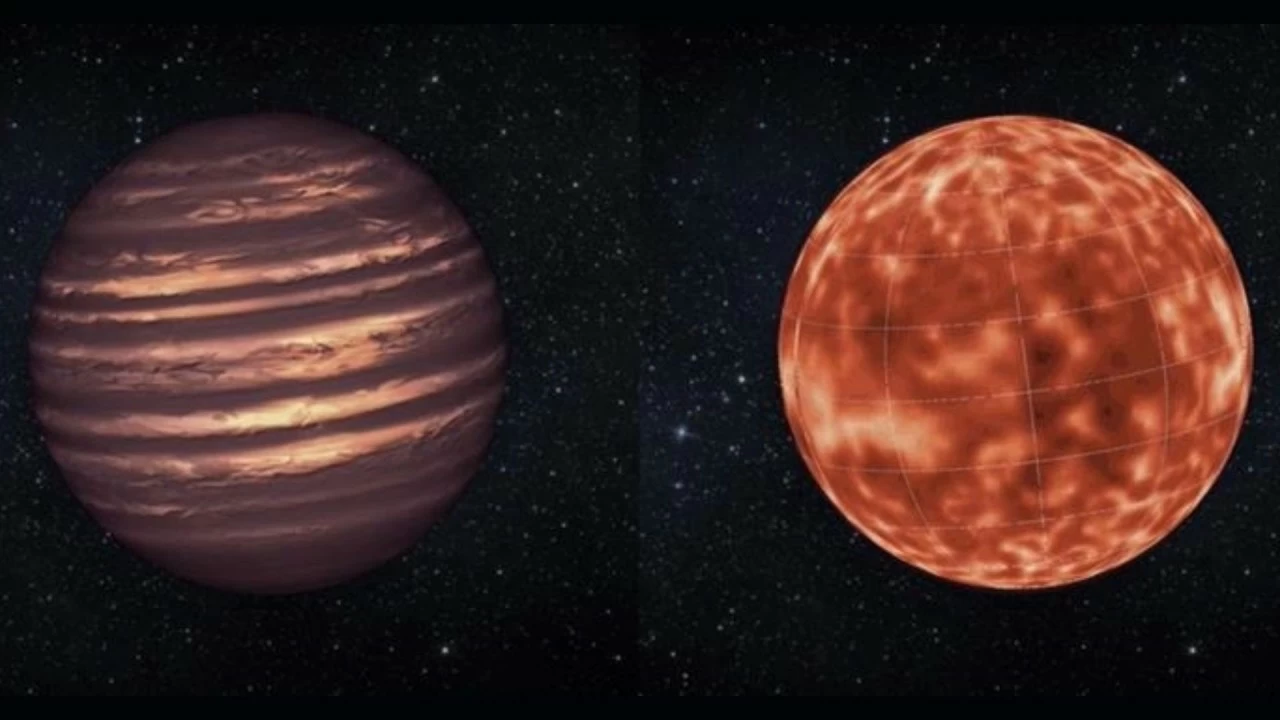


Stars form from dense knots in molecular clouds that grow by accreting gas and dust, till the temperatures and pressures rise sufficiently to sustain the fusion of hydrogen and helium. Brown dwarfs are exotic objects that begin to form in the same way as stars, but are unable to sustain hydrogen fusion. They cool off over billions of years, and end up as objects similar to gas giants, but containing many times the mass of Jupiter. Astronomers have discovered atmospheric storms on brown dwarfs, as well as dust clouds.
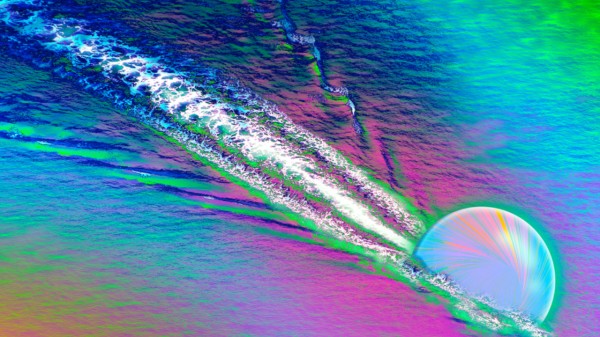
Scientists had assumed that the storms on brown dwarfs were similar to the storms on Jupiter, with clear bands and storms that can remain stable for long durations. The researchers focused on a warm or young brown dwarf, designated as VHS 1256B. Webb had directly detected dust in the clouds of this brown dwarf, that produced a high variation in luminosity over time. These fluctuations indicate dramatic atmospheric features, such as large dust storms. The researchers simulated the atmosphere of the brown dwarf, which were then reconciled with the observations leading to a surprise.
The researchers discovered that the large-amplitude variability of the brown dwarf was caused by a process unlike anything seen on Jupiter. The variability was caused by large-scale equatorial waves, created by a temperature imbalance of the clouds near the equator that heat up the atmosphere, producing large dust storms that move east to west. The phenomenon is known as cloud-radiative feedback and explains the both the periodic variations in luminosity as well as the long-term shifts in the light curve from the brown dwarf. A paper describing the research has been published in Science Advances.