Sign In
By signing in or creating an account, you agree with Associated Broadcasting Company's Terms & Conditions and Privacy Policy.
By signing in or creating an account, you agree with Associated Broadcasting Company's Terms & Conditions and Privacy Policy.
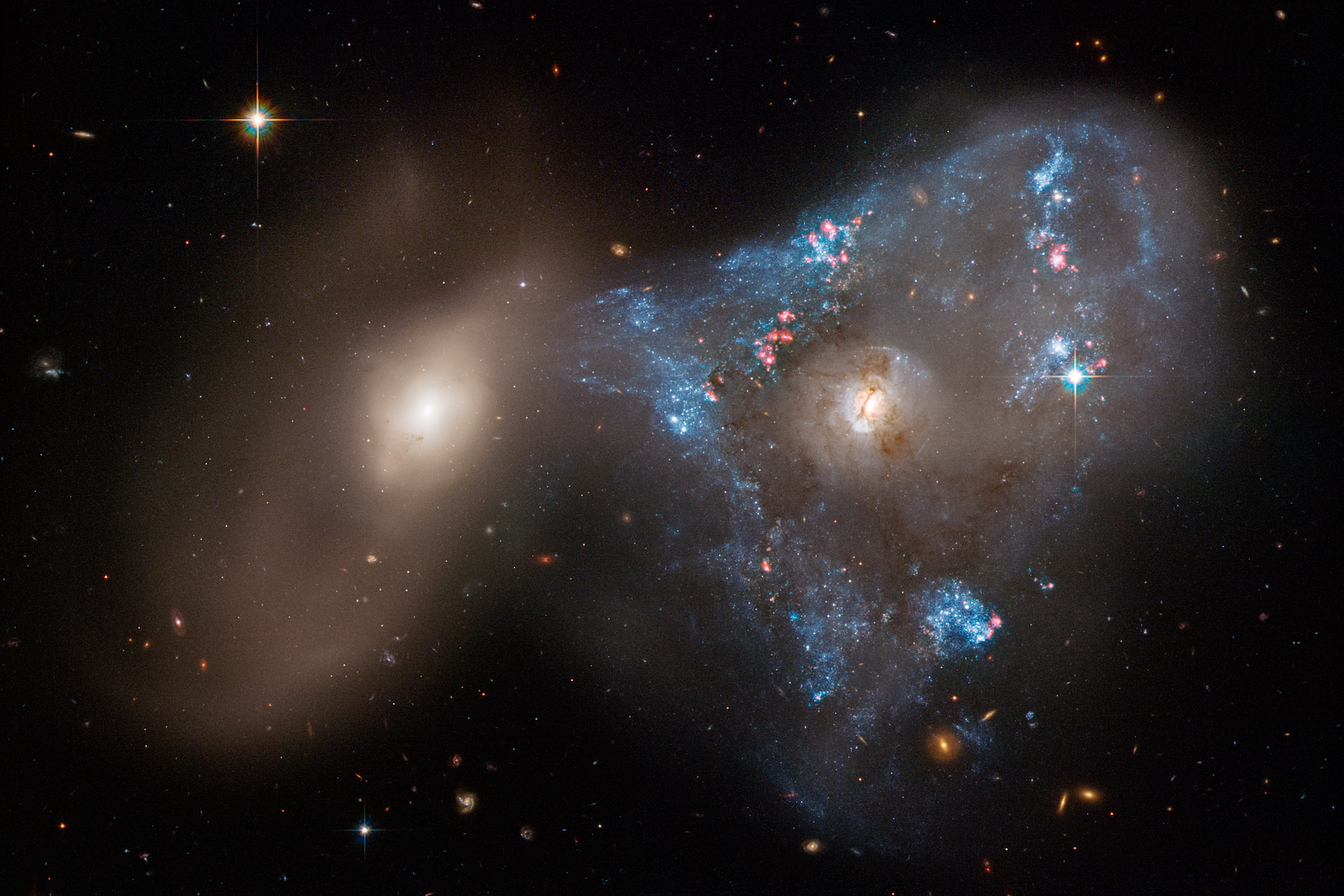


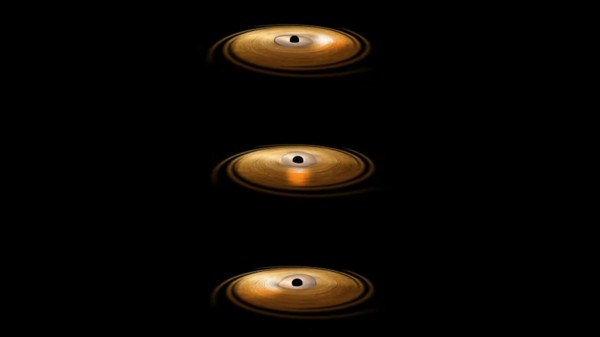
New data confirms that collisions between galaxies drive the most powerful active galactic nuclei. Most large galaxies contain supermassive black holes in their cores. If these black holes are actively feeding on the surrounding gas and dust, they form an accretion disk of infalling material where the tortured material glows in frequencies across the electromagnetic spectrum because of the extreme friction. The process results in 'bright' black holes, unlike Sagittarius A* at the heart of the Milky Way, which is currently inactive. These bright black holes can outshine all the stars in the surrounding galaxy.
Astronomers had suspected that the black holes co-evolve and grow with the surrounding galaxies, with new observations from the Euclid telescope providing evidence in support of this hypothesis. The researchers examined hundreds of thousands of galaxy mergers from up to ten billion years ago, and discovered that AGNs are between two and six times more common in merging galaxies as compared to counterparts that are not merging. The mergers are most strongly linked to bright black holes that are shrouded in dust, these are the very brightest AGNs.
A paper describing the research has been published in Astronomy and Astrophysics. one of the study authors, Allison Man says "We’re starting to explore just how supermassive black holes form and evolve, and to pin down the connection between galaxy mergers, supermassive black hole mergers and how they contribute to building up the most massive black holes in the universe." The astronomers believe that the quiescent supermassive black holes that are not voraciously feeding on the surrounding gas and dust may have been formed and evolved very differently in comparison to the actively feeding 'bright' black holes.