Sign In
By signing in or creating an account, you agree with Associated Broadcasting Company's Terms & Conditions and Privacy Policy.
By signing in or creating an account, you agree with Associated Broadcasting Company's Terms & Conditions and Privacy Policy.


In a written response to a question posed at the Rajya Sabha, State Minister for Space Jitendra Singh revealed that ISRO's Chandrayaan 4 mission is aiming to land closer to the lunar south pole than the Chandrayaan 3 mission. Singh noted, "The targeted landing site for Chandrayaan-4 is in the southern polar region of Moon (~84˚ to 86˚ south latitudes). This region is expected to be geologically diverse, having close proximity to Permanently Shadowed Regions (PSR) and having possibility of finding water ice, also the polar regions of Moon remain largely unexplored and global scientific community is focused on exploring it in detail.”
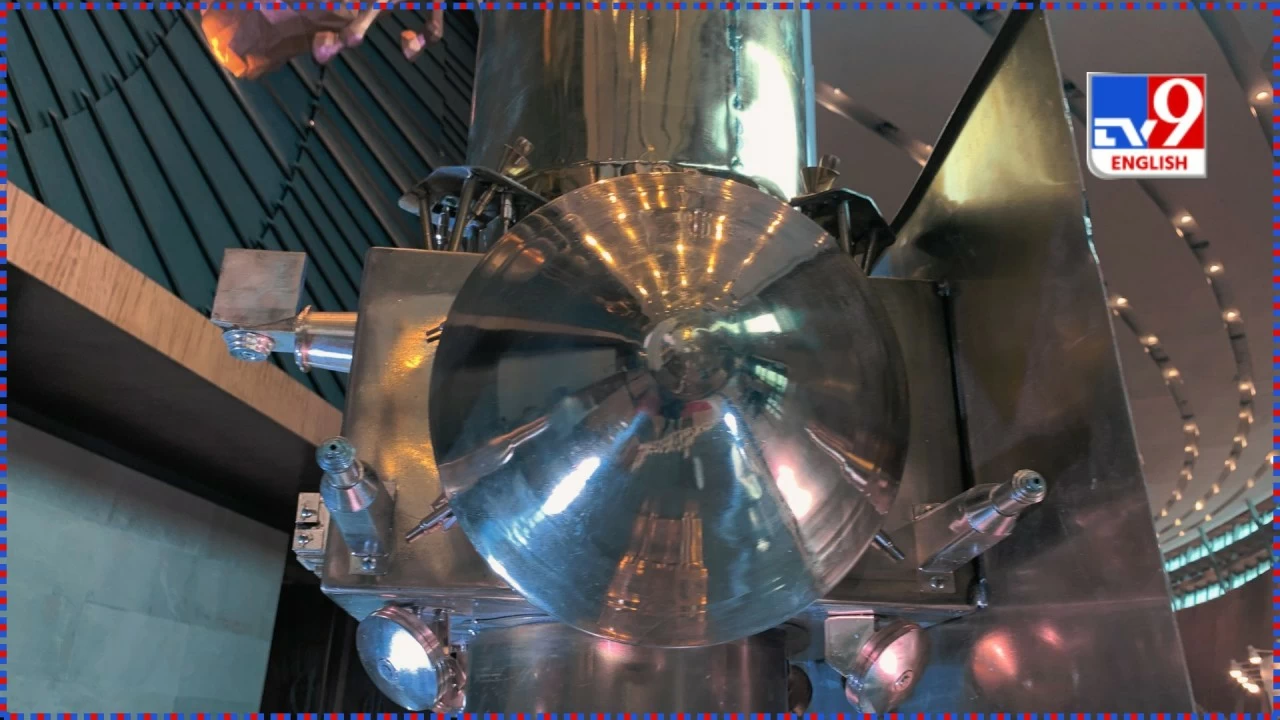
ISRO was previously considering landing close to the Chandrayaan 3 lander because of the favourable thermo-physical properties in the region, but is now aiming to land farther south. ISRO has finalised the configuration for the mission. The mission has a complex profile and requires five hardware elements, a Reentry Module, a Transfer Module, an Ascender Module, a Descender Module and a Propulsion Module. All of this hardware cannot fit into a single rocket, so ISRO has two use a pair of LVM3 launches to deploy all the elements into space. The two stacks will dock in orbit before making the trip to the Moon.
The Chandrayaan 4 lander will attempt to land closer to the south pole of the Moon than Chandrayaan 3. The highlands surrounding the south pole of the Moon have permanently shadowed craters that have not been exposed to sunlight since the infancy of the Solar System. Scientists believe that water delivered to the inner solar system soon after the birth of the Sun may persist in the floors of these craters. Chandrayaan 4 is equipped with a scoop for gathering surface material, as well as a drill to access deeper subsurface material. The samples will be isolated in the container, which will then be delivered to Moon orbit by the ascender. The Reentry Module will then deliver the samples back to the Earth. ISRO is aiming to launch the Chandrayaan 4 mission by 2027.