Sign In
By signing in or creating an account, you agree with Associated Broadcasting Company's Terms & Conditions and Privacy Policy.
By signing in or creating an account, you agree with Associated Broadcasting Company's Terms & Conditions and Privacy Policy.
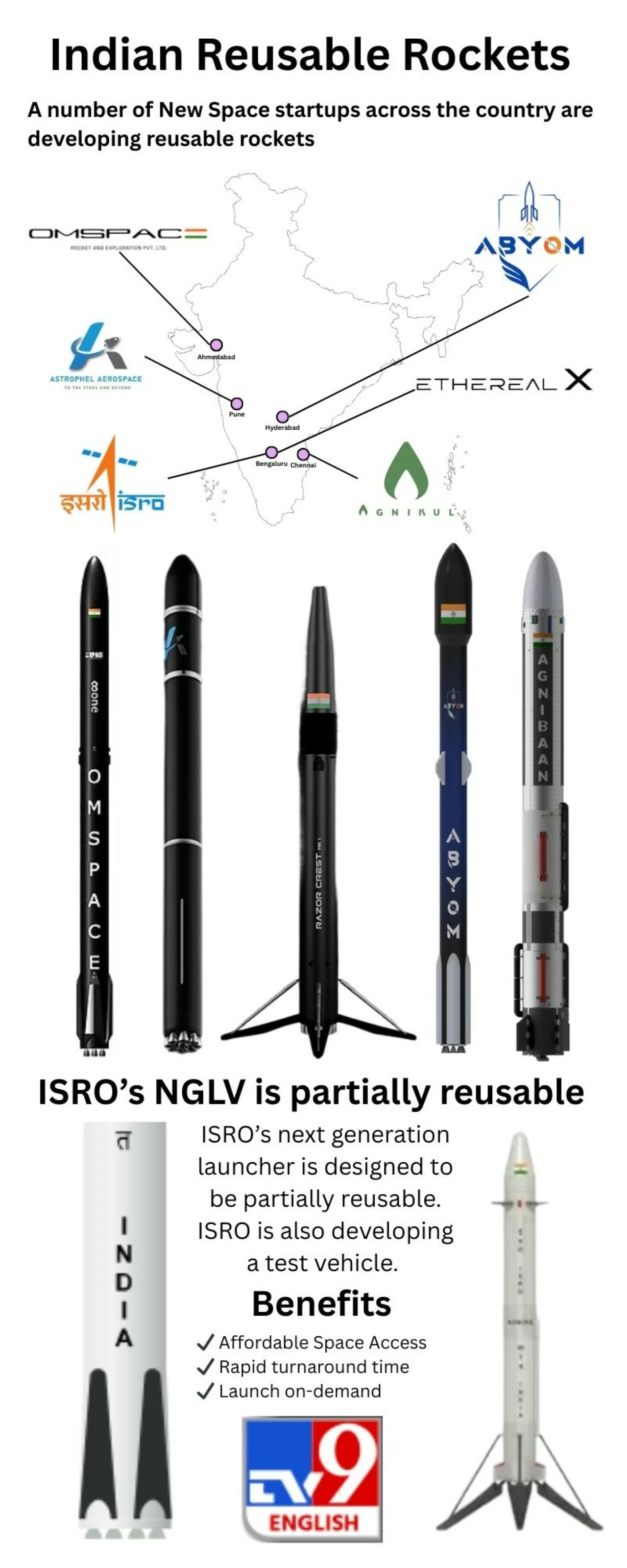


Since the launch of the Sputnik 1 in 1957, rockets have been discarded after they have delivered their payloads. This was how satellites were launched till SpaceX recovered the first stage of the Falcon 9 in 2015, and then reused in 2017. The Space Shuttle was the first reusable spaceship, but SpaceX was successful in developing a commercially viable launch vehicle. Most of the cost of access to space is lifting the payload through the lower atmosphere of the Earth, and reusing the first or 'booster' stage of rockets after recovering them can significantly bring down the the cost. A number of New Space startups across India are developing reusable rockets.
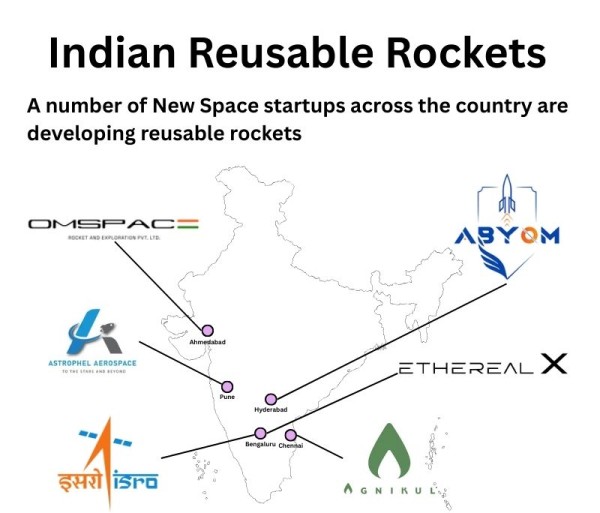
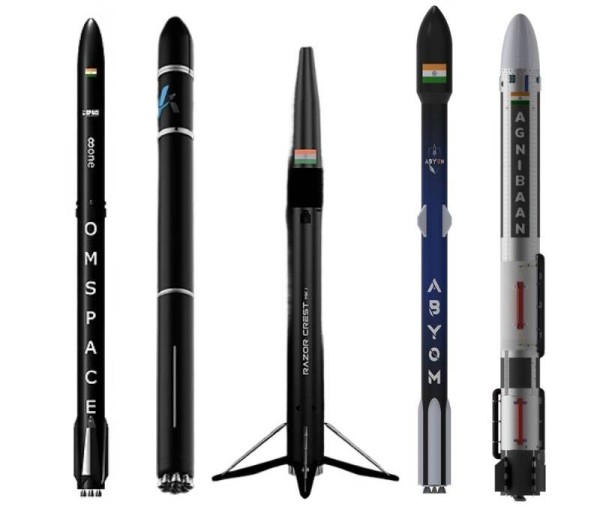
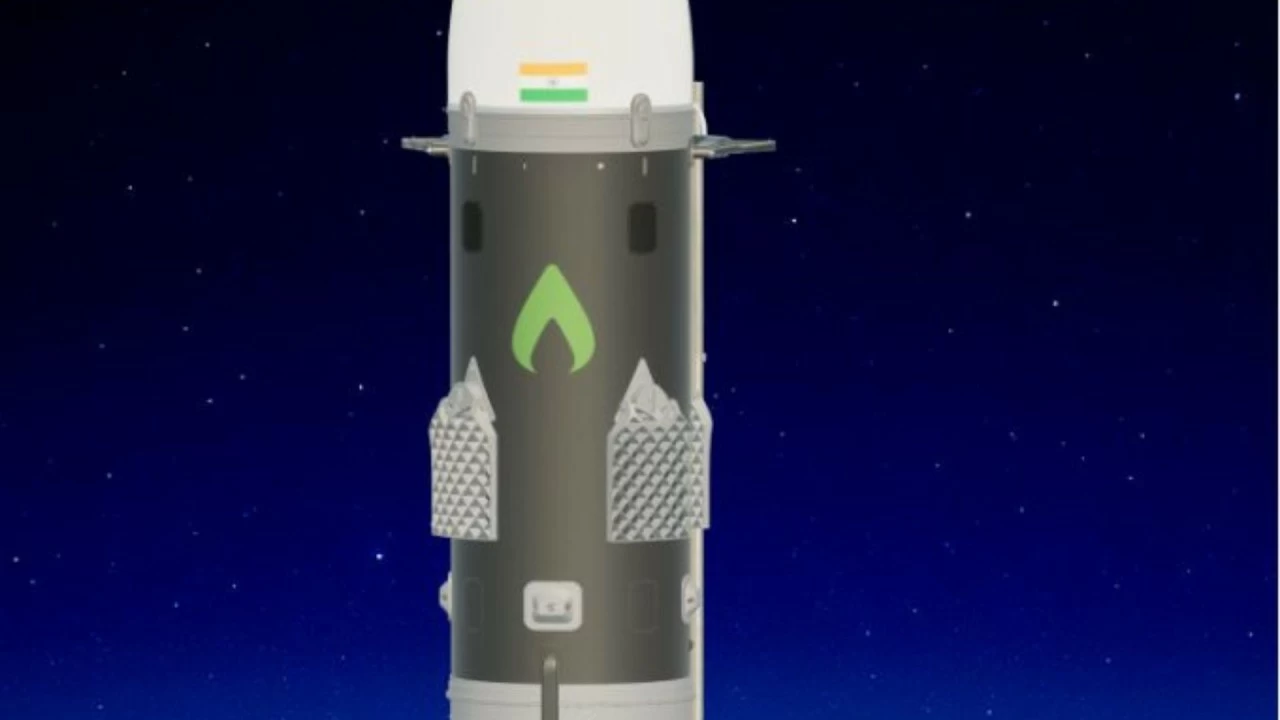
Agnikul Cosmos is aiming for full reusability in a unique way. The first stage is recovered and reused, while the upper stage is converted to a satellite that hosts payloads, ensuring that no part of the rocket is discarded. Agnikul Cosmos is expected to execute its first orbital flight next year. EtherealX is aiming for complete reusability with the Razor Crest launch vehicle, a two-stage-to-orbit rocket. If successful, this will be the first fully reusable medium-lift rocket in the world. Abyom aims to be the first to develop reusable rockets in India, gradually scaling up from reusable sounding rockets. Abyom is planning to test its Vertial Takeoff Vertical Landing (VTVL) prototype next year.
The first step towards developing reusable rockets is to demonstrate VTVL capabilities, which is typically done through a purpose-built test vehicle or prototype. Omspace is developing a 3D printed rocket called Infinity One with a reusable first stage booster, with the capability for relaunch within a day. Astrophel Aerospace is developing the Astra rocket with a recoverable booster and an optional kick stage that delivers the payload precisely to its intended orbit. VTVL capabilities are essential to recover first stage boosters. This allows for the first stage to return to the Earth and land at a launchpad or an ocean barge, for subsequent reuse.

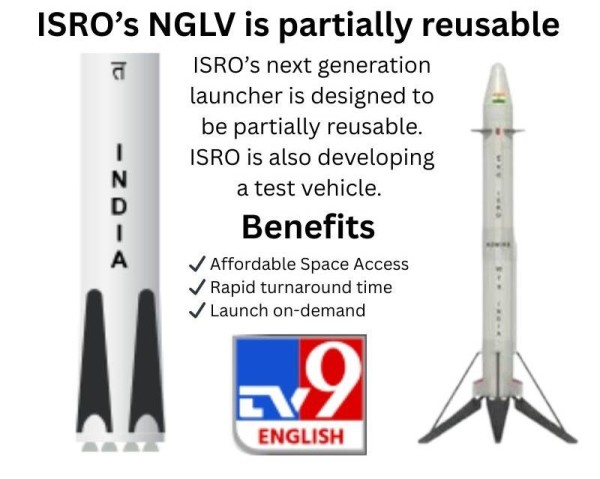
All the New Space startups in the country developing reusable or partially reusable rockets depend on VTVL capabilities for recovering their first stage boosters. VTVL capabilities were actually demonstrated by ISRO on the Moon with the short hop during the Chandrayaan 3 mission. The planned Chandrayaan 4 sample return mission will require the lander to takeoff from the surface of the Moon. In theory, VTVL capabilities allows for 'planet-hopping' spaceships that can move rapidly across the surface of a world, or jump between terrestrial surfaces. ISRO is developing a number of reusable orbital launch vehicles, and plans to demonstrate a VTVL test vehicle towards the development of its next generation launcher.
ISRO's Next Generation Launch Vehicle (NGLV) dubbed 'Soorya' has undergone a considerable design evolution since its development was formally approved by the Union Cabinet last year. Funding of Rs 8,240 crore has been allocated for the development of the NGLV, with a planned timeline of eight years. ISRO considered a number of options for recovering the first stage booster, including parachutes, catching the falling booster by a net strung across drones, using a hook from a helicopter, and ocean splashdowns, before setting on a design that returns to the launchpad. ISRO aims to demonstrate a VTVL vehicle towards the development of the NGLV.