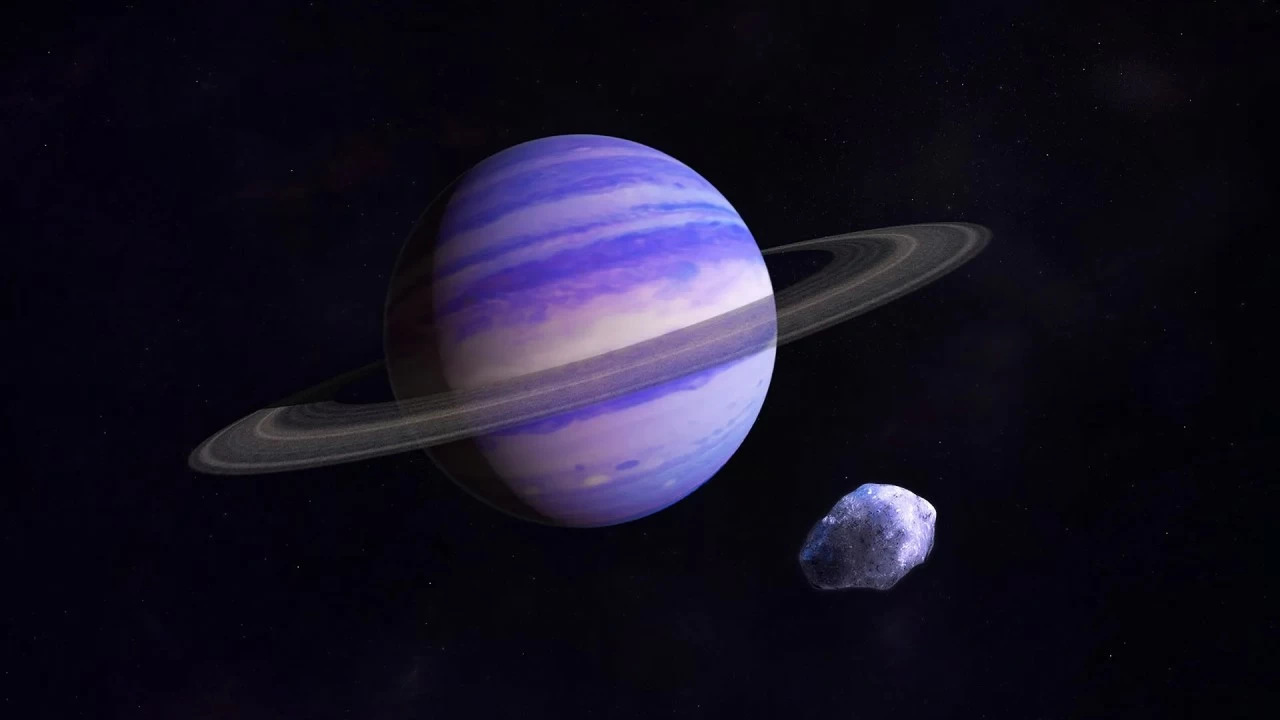
Exoplanets or extrasolar planets are worlds in orbits around stars other than the Sun. The Sun hosts terrestrial worlds in the inner system and giant planets in the outer system, but this architecture is not the same across the 5,500 known exoplanets that humans have discovered so far. These worlds vary widely in size, composition and orbital characteristics. In the 16th century, before The Enlightenment, the Italian philosopher Giordano Bruno proposed that the other stars were like the Sun with their own planets, potentially hosting life. Bruno was prosecuted for this daring suggestion, but this is the conventional understanding of the cosmos today.
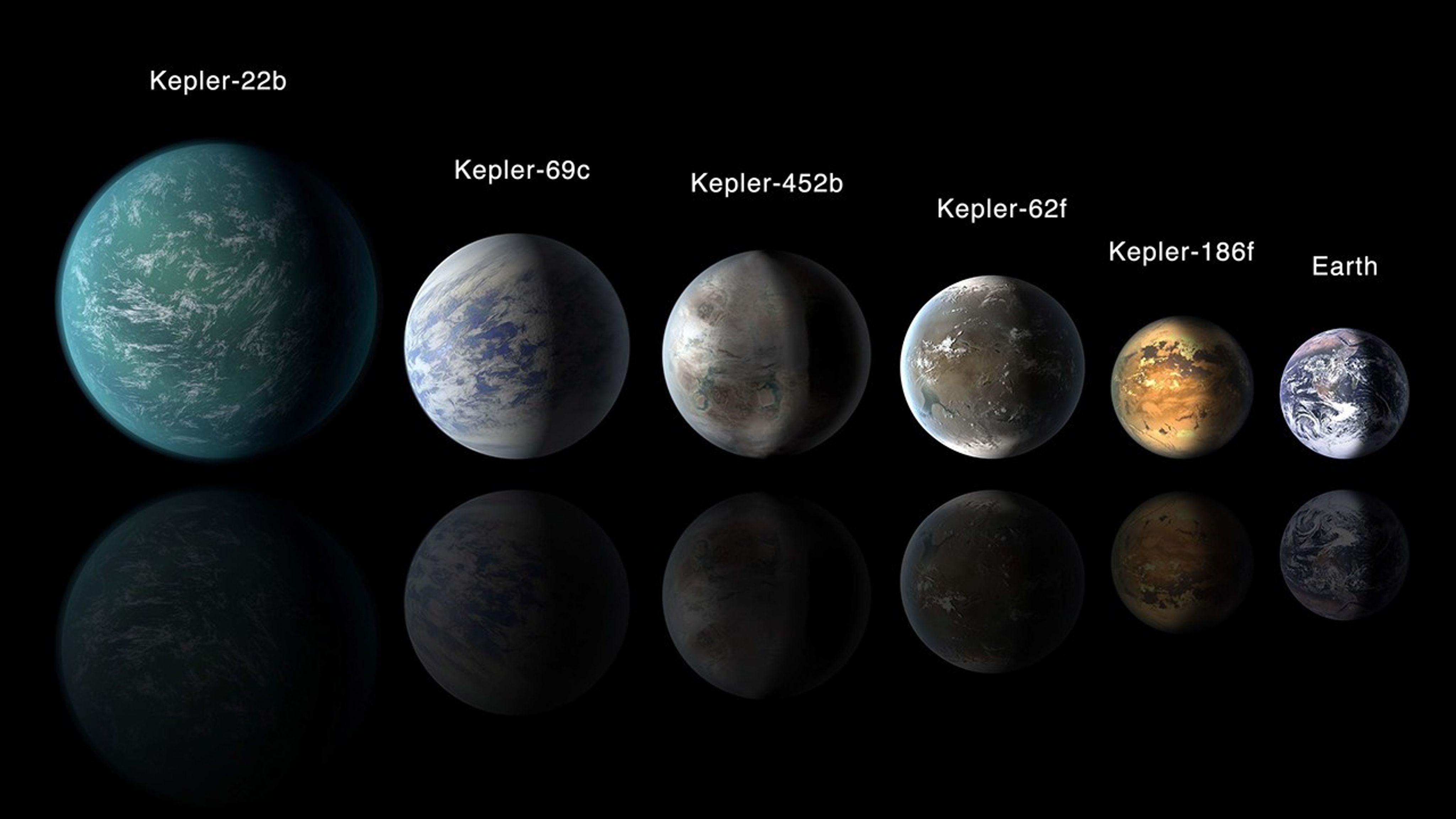
The size ranges of terrestrial, rocky worlds like the Earth. (Image Credit: NASA).
Based on the nebular hypothesis of star and planet formation, astronomers such as Immanuel Kant and Pierre-Simon Laplace suggested that planets could be assembled from the waste material that was leftover after the birth of stars. These predictions were made centuries before the technology to directly discover exoplanets was developed. The first exoplanet discovery was in 1992, when astronomers discovered a pair of worlds in orbit around a pulsar, that are rapidly rotating neutron stars. The pulsar in question was designated as PSR B1257+12. In 1995, astronomers discovered the first exoplanet in orbit around a Sun-like star, 51 Pegasi b, a Hot Jupiter, or a gas giant in close orbit around the host star.
How to detect exoplanets
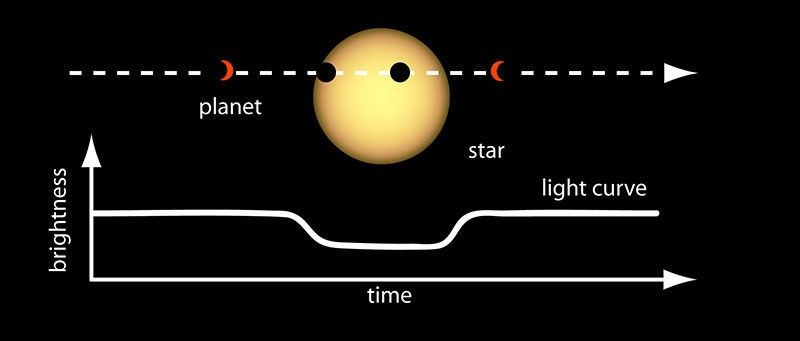
Directly imaging exoplanets is still beyond the sensitivity of the most advanced, powerful and expensive astronomical instruments. Exoplanets are primarily discovered using two methods, the radial velocity method, and the transit method. In the radial velocity method, the slight gravitational influence that orbiting planets have on host stars is determined by measuring slight wobbles in the host star in relation to the Earth. The transit method looks for subtle dips in brightness of a star as a planet passes in front of it from the vantage point of the Earth. Both of these methods favour the discovery of large planets in tight orbits around small stars. Humans have now discovered over 5,500 exoplanets.
Most exoplanets have been discovered using the transit method, by measuring the dip in the brightness of the host star as the planet passes in front of it from the vantage point of the Earth. (Image Credit: NASA).
Before exoplanets were discovered, scientists believed that planets were rare and followed an architecture similar to that of the Solar System, with rocky planets close to the star, and gas giants in wide, stable orbits. The lack of observational tools reinforced the heliocentric bias, and other planetary systems were not mainstream. The discovery of Hot Jupiters, Super Earths, Mini Neptunes and planets in tight or eccentric orbits challenged our models of planet formation. The discovery of Hot Jupuiters such as 51 Pegasi b indicated that planets can migrate inwards, prompting novel theories on planet formation and planetary system dynamics.
A new era of exoplanetary science
The discovery of exoplanets revolutionised humanity’s perspective on the universe. The unexpected diversity of exoplanets continuously challenge existing models of planet formation. Estimates indicate that there are billions of exoplanets in the Milky Way, many in habitable zones where liquid water can exist on the surface. We know of at least 20 worlds that can potentially host life, but not a single temperate terrestrial world has been discovered in orbit around a yellow dwarf star like our Sun so far.
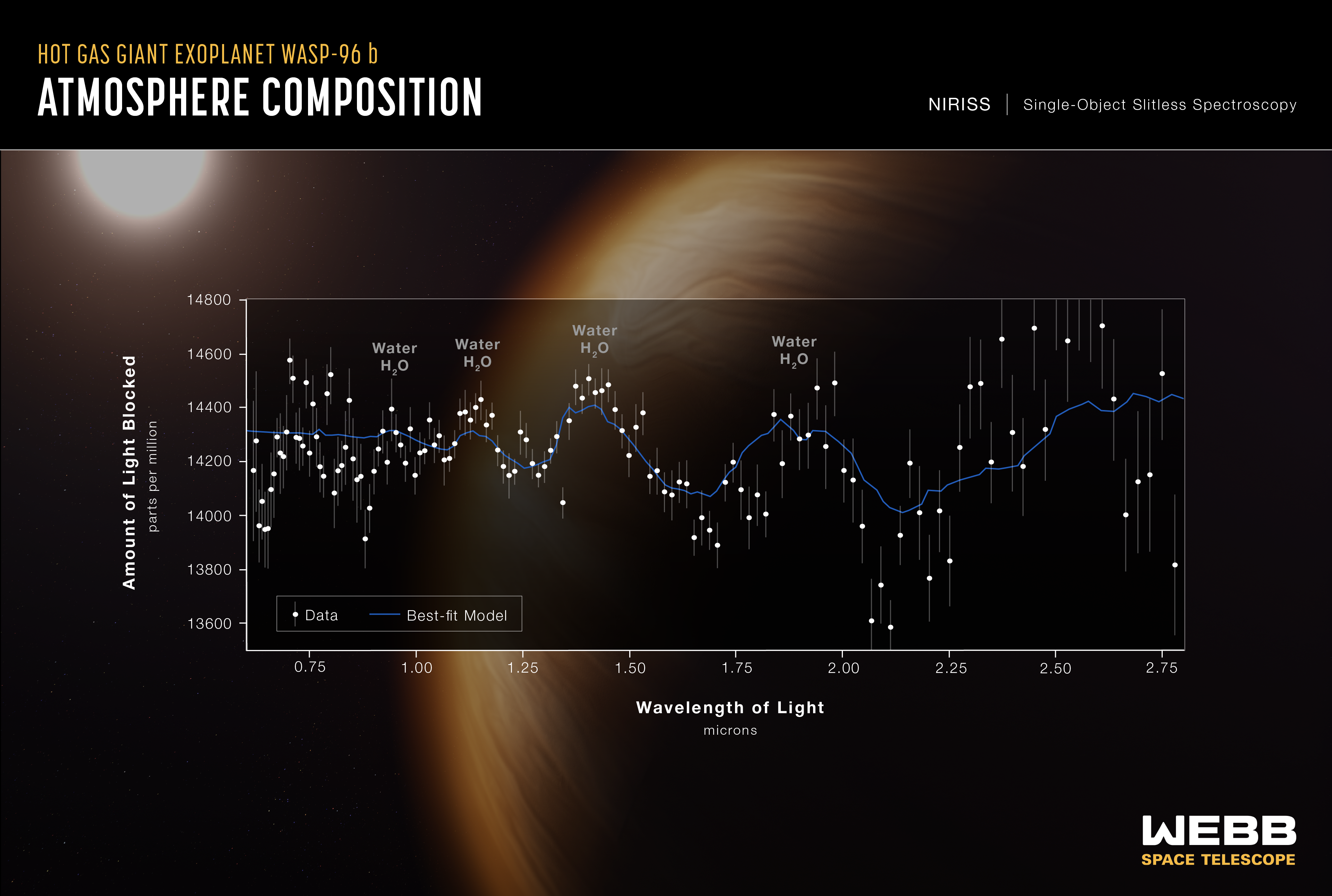
Webb peering into the atmosphere of a Hot Jupiter exoplanet, WASP-96 b. (Image Credit: NASA, ESA, CSA, STScI).
So far, humans have merely been finding exoplanets, discovering which worlds exist around which stars. The search for exoplanets has now become a quest to understand the diversity of planets and the wide range of conditions in which life can thrive. The launch of the James Webb Space Telescope on 25 December, 2021 ushered in a new era of exoplanetary science, one of characterisation rather than discovery. The exquisitely sensitive infrared instrument is peering into the skies of alien worlds, to assess the available chemical inventory and determine its habitability. We have already found biosignatures in some worlds that hold the promise to harbour life. The once Sun-centric view has given way to a galaxy brimming with possibilities.