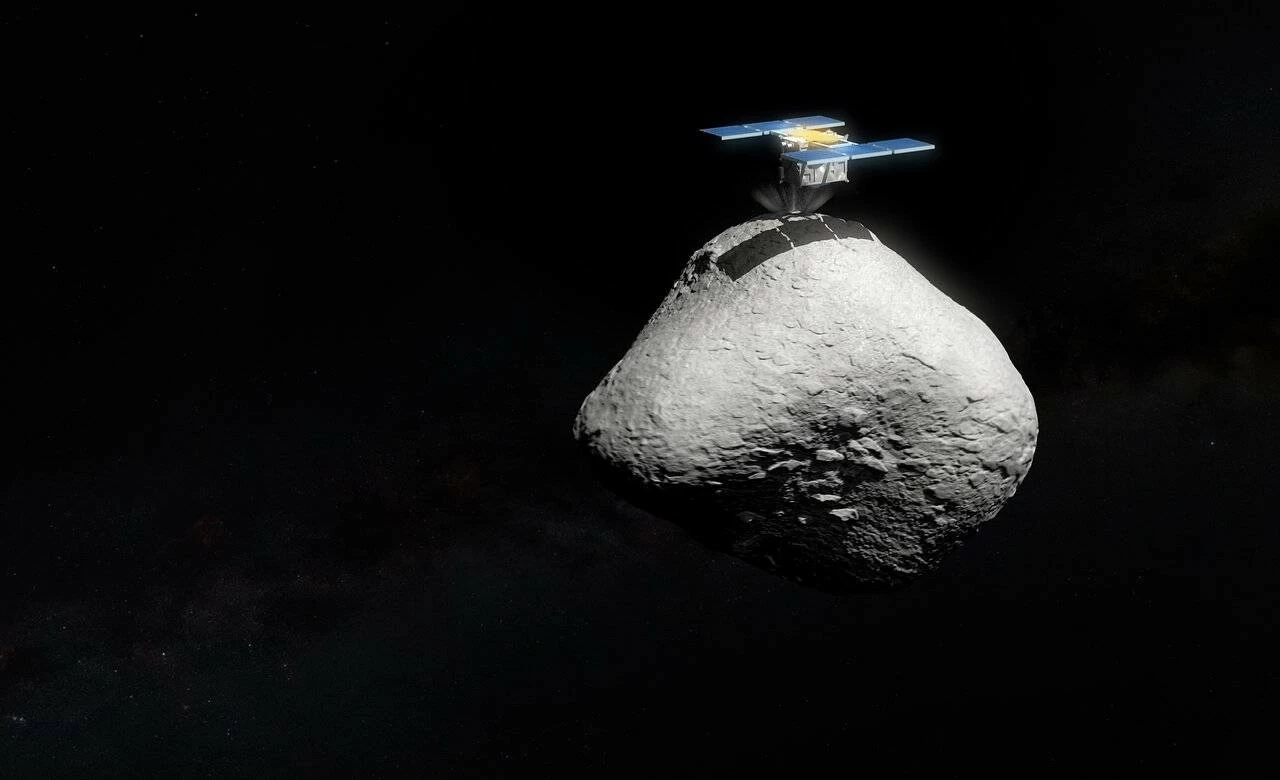
Japan's Hayabusa2 mission is headed to the asteroid 1998 KY26, for a scheduled encounter in 2031. The target asteroid is much smaller and spinning much more rapidly than the estimates available when the mission was designed and launched. The asteroid is just 11 metres wide, and the asteroid is spinning so rapidly that a single day lasts five minutes. Previously, scientists believed that the asteroid was about 30 metres wide, with a rotation period of 10 minutes. The spacecraft is scheduled to execute a touchdown manoeuvre, that the ground teams may now find more challenging to execute.
The Hayabusa2 spacecraft has already explored the 900-metre wide asteroid Ryugu in 2018, delivering the collected samples to the Earth in 2020. Japan dispatched the probe on an extended mission to another asteroid to use up the remaining fuel on board and maximise the science returns from the mission. Even at that stage, the planned encounter with 1998 KY26 was the smallest asteroid to be visited by a human probe. Now, it has emerged that the target is a third the size of the original estimates.
The nature of 1998 KY26
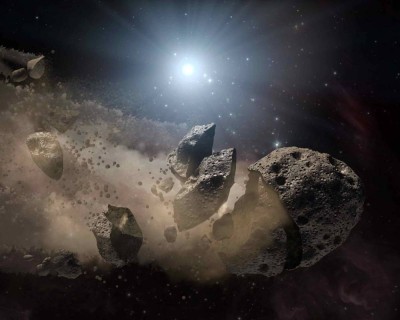
The study was conducted to better understand the target before the encounter with Hayabusa2. Because of how small the asteroid is, the teams had to wait for a close approach to the Earth. The observations revealed that the asteroid has a bright surface, and is made up of a homogenous chunk of rock, not a rubble-pile asteroid held together under the tenuous influence of weak gravity. The asteroid may be a fragment of a larger planet or asteroid that got battered to bits in the chaotic infancy of the Solar System. The observations does not entirely preclude the possibility that the object is a rubble-pile asteroid. We can expect to learn more about the object during the encounter with Hayabusa2.