Sign In
By signing in or creating an account, you agree with Associated Broadcasting Company's Terms & Conditions and Privacy Policy.
By signing in or creating an account, you agree with Associated Broadcasting Company's Terms & Conditions and Privacy Policy.


Our host star, the Sun, is a hot ball of gas, mostly hydrogen. Hydrogen is the most abundant element in the universe, and the primary component of all stars. At the core of the Sun, hydrogen is being fused into helium, producing the energetic radiation that takes thousands or even millions of years to reach the surface and escape outwards into space. The Sun has complex, tangled magnetic fields, and their twisting and snapping results in solar outbursts that come in a variety of forms.
Temper tantrums of the Sun include solar flares and filament eruptions. These cause solar radiation storms, particle storms and coronal mass ejections that cause geomagnetic storms on washing over the Earth. All of these are together known as solar storms. There can also be high speed streams emanating from coronal holes that when aimed at the Earth, can induce geomagnetic disturbances or even storming. These violent outbursts are more frequent during the peaks of the well-understood 11 year solar cycles. The Sun is currently going through the peak of Solar Cycle 25, which started in October 2024, and can last for as much as two years.
Geomagnetic storms can confuse migrating birds, but the impact of solar storms on most humans is minimal, even for the most extreme events. This is because Earth offers a safe haven for life, with the thick atmosphere and the ozone layer absorbing most of the harmful ultraviolet radiation that can damage cells. Additionally, the geomagnetic field of the Earth generated by the internal dynamo, a liquid ocean of iron and nickel swirling around the solid core of the Earth, traps energetic radiation from space within the Van Allen belts.
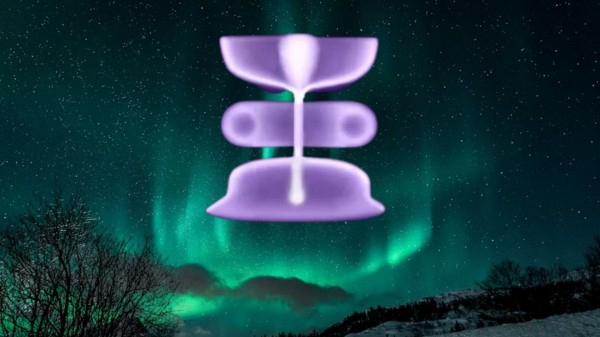
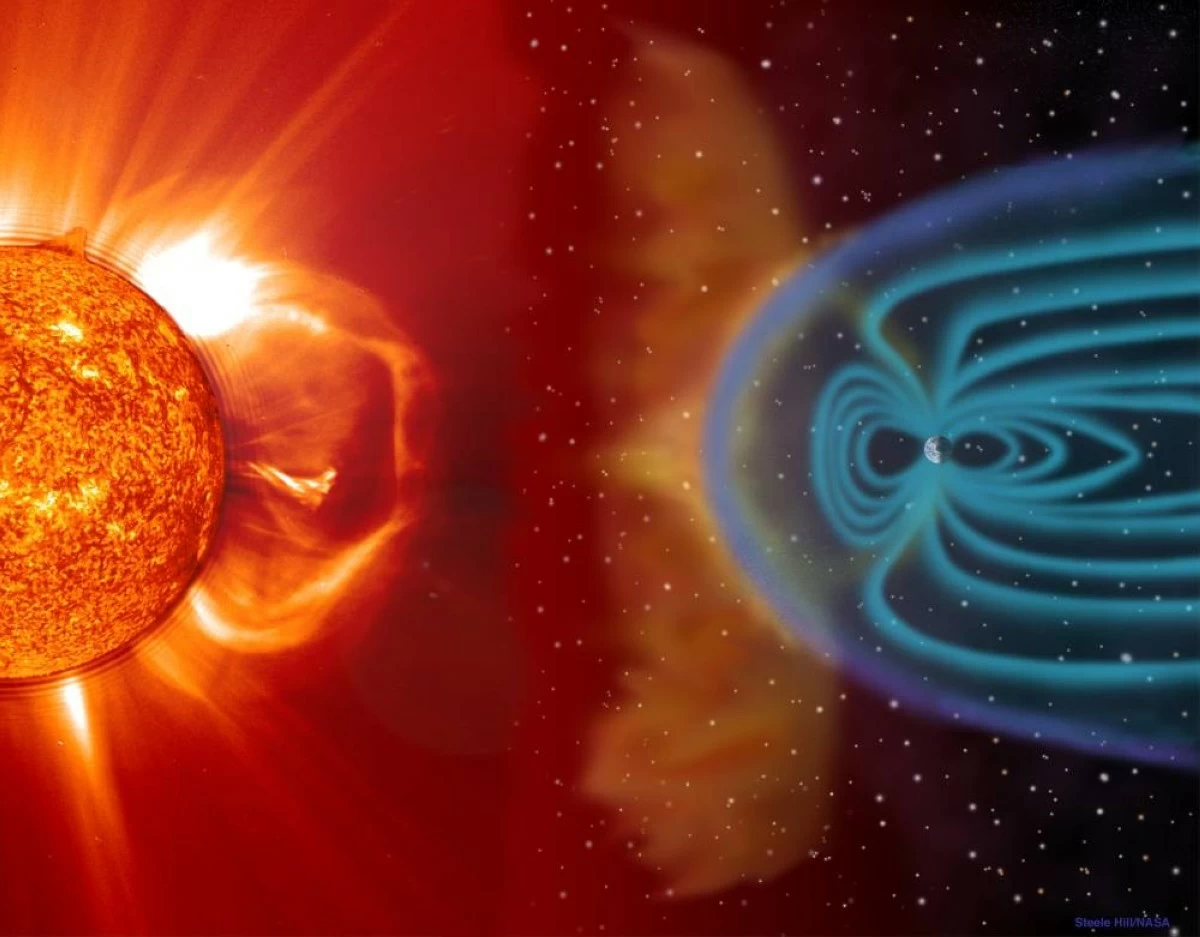
A CME approaching the Earth. (Image Credit: NASA).
During particularly violent events, such as the May 2024 solar storms, additional radiation belts can be formed around the Earth where the energetic particles are trapped. For centuries humans believed that solar activity was intimately tied to human moods, and was blamed for causing all kinds of things from fights to riots to wars. Such a connection has been debunked, though some studies have found hints of impact on the nervous system, causing headaches, mood swings and cardiovascular issues. These effects are not well-established.
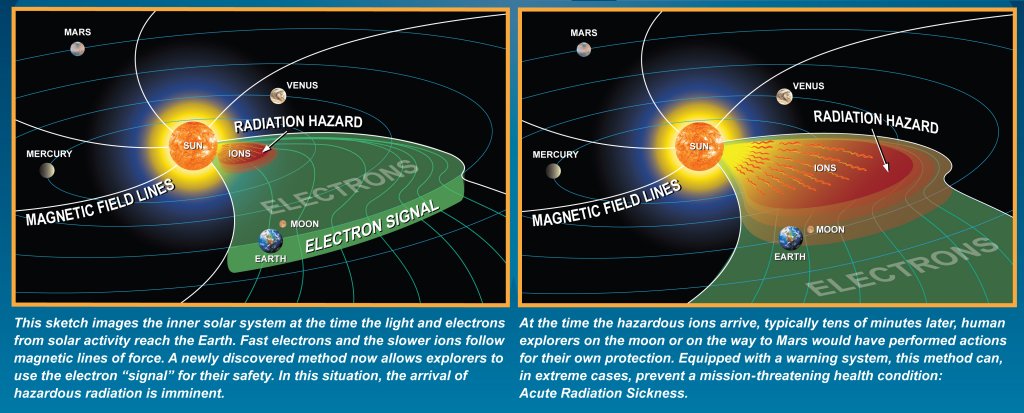
While the heliophysics observatories can provide humans with an early warning of a geomagnetic storm, such alerts are not possible for solar flares and radiation storms, that are sudden, violent events. The light reaches the Earth in eight minutes and 20 seconds, while the energetic particles, mostly protons, can be accelerated to relativistic speeds, close to the speed of light, reaching the Earth in a few minutes to hours. These radiation storms can expose some humans to particularly high doses of radiation.
While most of the humans on Earth are protected from Solar Radiation Storms, the passengers of high-altitude jets and the crew can be more exposed. The same is also true for any polar flights, which offer an economical route between North America and Asia after China and Russia started opening up their airspace for commercial use. Astronauts on board the International Space Station can also be exposed to elevated levels of radiation, and there have been times when the crew on board has sought refuge in the more shielded areas of the orbital complex, following a solar outburst. NASA is developing shields to protect astronauts, particularly those on spacewalks, from sudden exposure.
While the inhabitants of Earth are adequately protected from solar storms, they can still have an indirect effect on human health and wellbeing. Solar storms can degrade navigation signals, disrupt communications and cause power blackouts. Those using medical devices or relying on technologies can be more exposed to the threat of violent solar outbursts.
Even the most violent solar storms do not pose a threat to humans on Earth, and have no tangible effect on human health. However, a superflare accompanied by a superstorm can potentially have a devastating impact. There have been only six such solar superstorms over the last 15,000 years, that have been identified through tree rings and ice cores. These solar superstorms can release energies between 10 and 100 times that of the most severe solar storms, and the potential impact for life on Earth is not well-understood. These solar superstorms are known as Miyake events, and the last one took place over 1,000 years ago.