Sign In
By signing in or creating an account, you agree with Associated Broadcasting Company's Terms & Conditions and Privacy Policy.
By signing in or creating an account, you agree with Associated Broadcasting Company's Terms & Conditions and Privacy Policy.


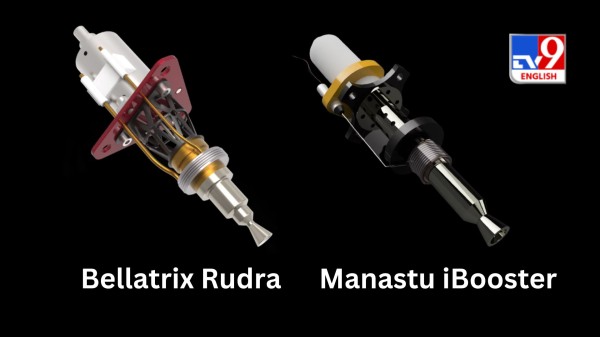
On 30 December, ISRO launched the SpaDEx mission to demonstrate space docking, a capability required for the Chandrayaan 4 sample return mission as well as assembling the Bharatiya Antariksh Station. Also on board the PSLV rocket was the the PSLV Orbital Experimental Module (POEM-4) that carried with it a number of technology demonstrations from ISRO's own labs, academic institutions and New Space startups across the country. Bengaluru-based Bellatrix flew its Rudra green propulsion system, and Mumbai-based Manastu Space flew its VYOM-2U thruster, also a green propulsion system. Also on board was the GLX-SQ SAR payload from Bengaluru-based GalaxEye, Ahmedabad-based Piersight's Varuna SAR payload, and an AI-lab from Hyderabad-based TakeMe2Space.
All of these innovative technologies got flight heritage with the flight during the first few months of 2025, allowing these companies to attract customers. Bengaluru-based Pixxel, along with Hyderabad-based Dhruva Space, Piersight and Bengaluru-based Satsure bagged the contract from IN-SPACe to develop India's first Earth Observation Constellation under a Private-Public Partnership model. The companies will be investing Rs 1,200 crore in deploying the constellation, with the bid for IN-SPACe apparently being Rs 0.
Dhruva Space and XDLinx offer rapid, turnkey satellite manufacturing in India with a variety of platforms or satellite buses. Bellatrix and Manastu have both developed thrusters of various capacities for small satellites, with the founders having witnessed the extreme measures with full-body SCAPE suits necessary to handle hydrazine, the conventional fuel of choice for satellites. The propellents developed in India have the toxicity of table salt. TakeMe2Space is offering to take care of comms and power on satellites while labs focus on the payloads, in a service similar to a space rickshaw. Agnikul Cosmos and Skyroot Aerospace have both opened up quarterly rides to space on their launchers.
Reaching Earth Orbit need not me much more complex than hailing a cab, and in fact, there are rocket pooling services available where satellites can share a ride to space. Ahmedabad-based Omspace is developing its Infinity One launcher, Pune-based Astrophel is developing its reusable Astra rocket, Hybderabad-based Abyom is developing a Small Reusable Launch Vehicle along with reusable sounding rockets, while Bengaluru-based EtherealX is developing the Razor Crest. Skyroot Aerospace, also based in Hyderbad is looking to launch its Vikram I rocket in February 2026, while Chennai-based Agnikul Cosmos is also planning to launch its Agnibaan rocket next year.
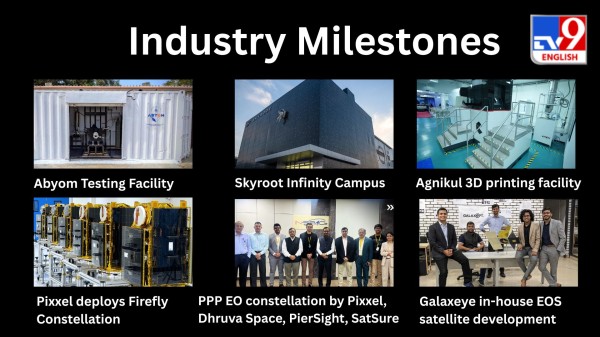
All of these launch vehicle manufacturers expanded their facilities, with Skyroot opening up the Infinity Campus close to Hyderabad Airport, and Agnikul Cosmos setting up a second manufacturing facility close to the Kulasekharapatnam spaceport, a second launch complex being constructed by ISRO specifically for small launchers. Among all of these launchers, Skyroot is the only one going with an expendable design, with all the other New Space startups aiming to develop reusable launchers with recoverable first-stage boosters to bring down the launch costs further, and providing democratic, on-demand access to space.