ISRO's GSLV-F16 rocket has precisely injected the NASA-ISRO Synthetic Aperture Radar (NISAR) satellite into the intended orbit, about 18 minutes after lifting off from India's Sriharikota spaceport. The highly anticipated launch of the sophisticated Earth observation satellite is the first partnership of its kind between NASA's Jet Propulsion Laboratory (JPL) in California and ISRO's Space Applications Centre (SAC) in Ahmedabad. The satellite has been stowed away for the launch, and will be deployed over the course of the next eight days. The commissioning of the satellite and the calibration of the instruments is expected to take place over nearly three months, after which the satellite will commence regular operations.
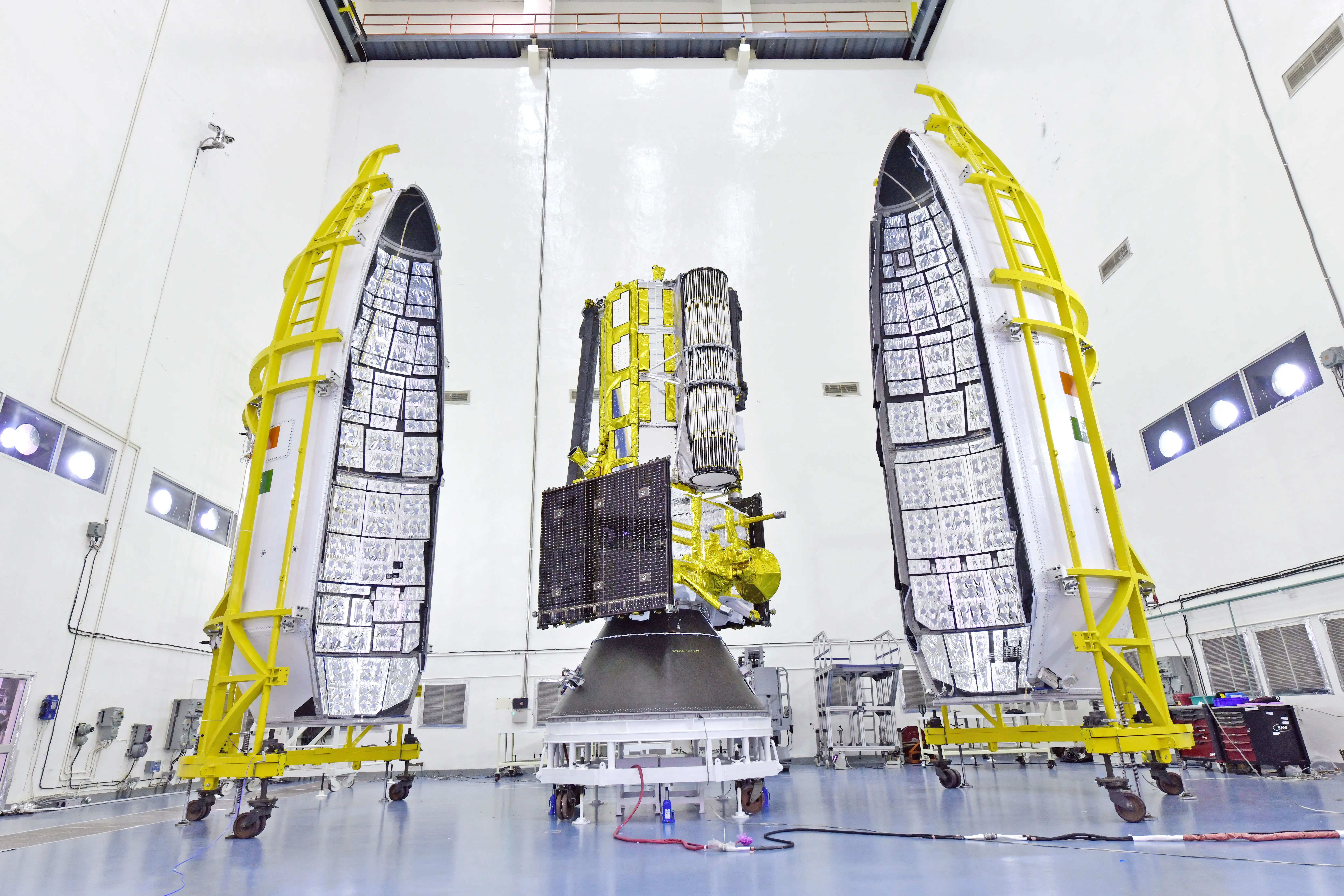
The NISAR satellite being encapsulated within the nose cone of the rocket. (Image Credit: ISRO).
Apart from the launch vehicle, ISRO has contributed the S-band radar payload, the solar panels and the satellite itself. NASA has provided the L-band radar payload, the nine metre long boom and the 12 metre wide radar reflector antenna, which will be used by both the radar payloads on board. NASA and ISRO have been working closely together towards realising the satellite, after the collaboration officially began in 2014. The planned mission duration is five years, which may be extended if the instruments on board perform nominally. Both ISRO and NASA plan to disseminate the data gathered by the mission to the general public. NASA is using Amazon Web Services to process and distribute the data, while ISRO will be providing the data through its Bhoonidhi geoinformatics portal.
The GSLV-F16 flight
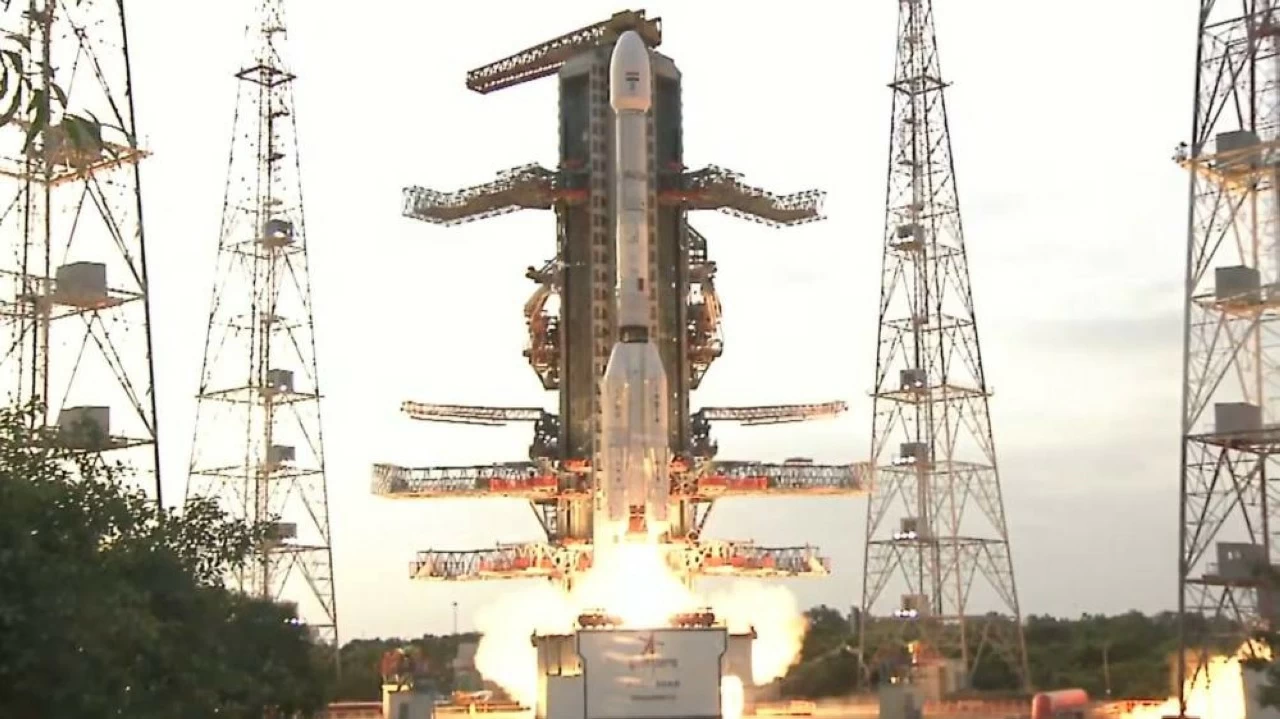
The long countdown for the launch was commenced at 14:10 hours IST yesterday. The evening launch took place in favourable weather conditions. A delegation from NASA was present at the launch, with the general public witnessing the flight from the Launch Viewing Gallery (LVG). Former ISRO chairmen K Radhakrishnan and AS Kiran Kumar were also present for the launch. The 51.7 metre tall GSLV rocket is the tallest in ISRO's fleet, but not as powerful as the LVM3 which is used for flagship missions and deploying constellations. This is a three stage to orbit rocket, with the first stage having four strap-on boosters. The automatic launch sequence was initiated about 20 minutes before liftoff, with the Mission Director giving the go-ahead for the launch. This was the 18th flight for the GSLV rocket, the 12th to use the indigenously developed cryogenic engine, and the 102nd flight from Sriharikota. The rocket performed nominally during the flight.