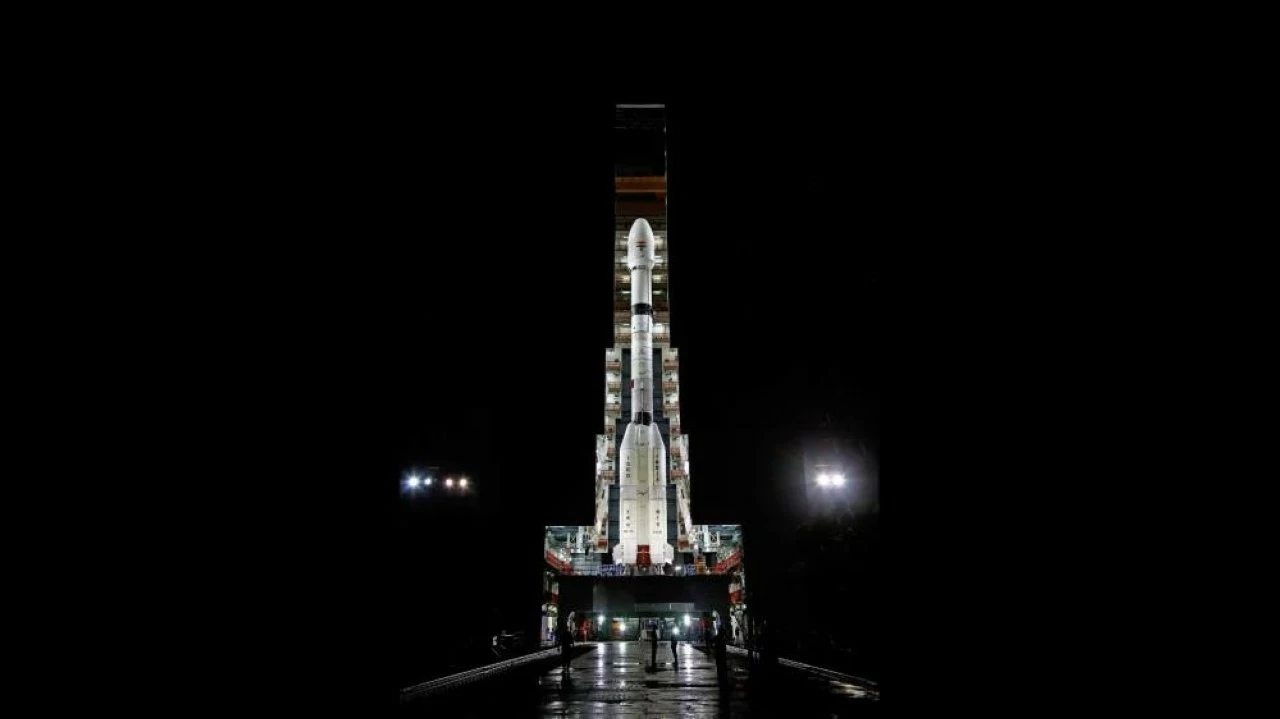
ISRO is launching the GSLV-F16 mission on 30 July at 17:40 hours IST, with the pre-launch programming commencing at 17:10 hours IST. The only payload on board is the NASA-ISRO Synthetic Aperture Radar satellite, the first collaboration of its kind between NASA's Jet Propulsion Laboratory (JPL) and ISRO's Space Applications Centre (SAC). The 12 metre wide reflector antenna on top of a nine metre long boom have been stowed away to fit into the payload fairing or nose cone of the rocket, and will be deployed over the course of several days after the satellite has been injected into its intended orbit.
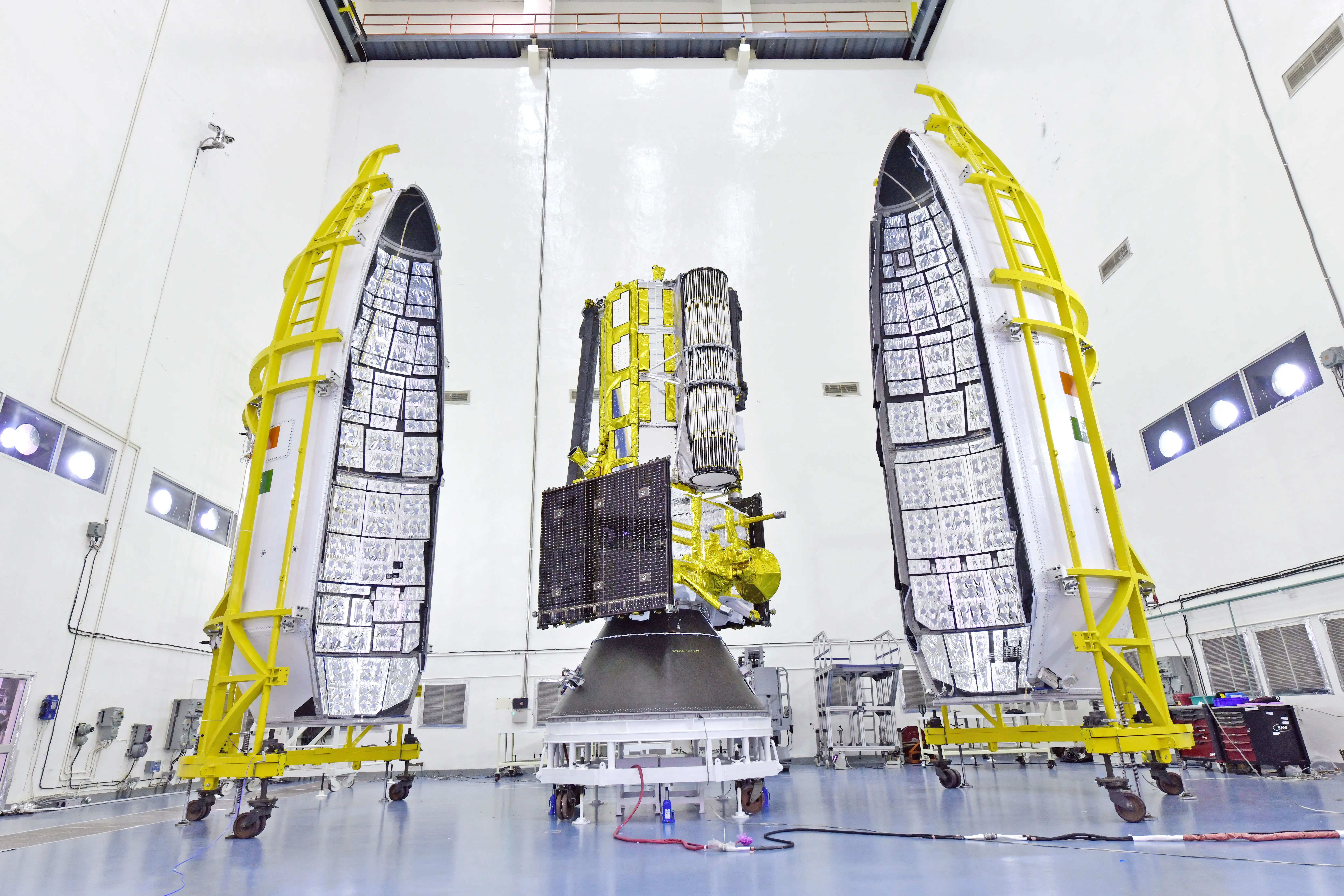
The NISAR satellite being enclosed within the payload fairing. (Image Credit: ISRO).
There are two radar payloads on board that both use the same reflector antenna, one realised by JPL and the other by SAC. ISRO is providing the satellite bus, as well as the launch vehicle for the mission, while NASA is providing the boom and the antenna. This is a complex mission that required NASA and ISRO to work closely together, with work on the satellite officially commencing in 2014. NISAR will be the most expensive Earth Observation Satellite ever deployed. Initially NASA approached ISRO with the plan of launching the payload on ISRO's satellite, but ISRO scientists wanted to learn something from the mission, and negotiated a
more equitable partnership.
Capabilities of NISAR
The NISAR satellite will be able to provide global coverage every 12 days, and can peer through clouds as well as vegetation. The satellite can be used to determine the health of vegetation, and track the carbon cycle. The radar instruments are sensitive enough to track minute changes to the ground, allowing ground water levels to be estimated. The satellite can also provide early warnings for earthquakes, volcanoes and landslides, and can track floods. NISAR will also be able to track changes in the cryosphere, including the deterioration of polar ice sheets and the movements of mountain glaciers. All the data captured by the mission will be made available to the public by both NASA and ISRO. It is likely that some novel applications will emerge that no one has thought of before.