Sign In
By signing in or creating an account, you agree with Associated Broadcasting Company's Terms & Conditions and Privacy Policy.
By signing in or creating an account, you agree with Associated Broadcasting Company's Terms & Conditions and Privacy Policy.
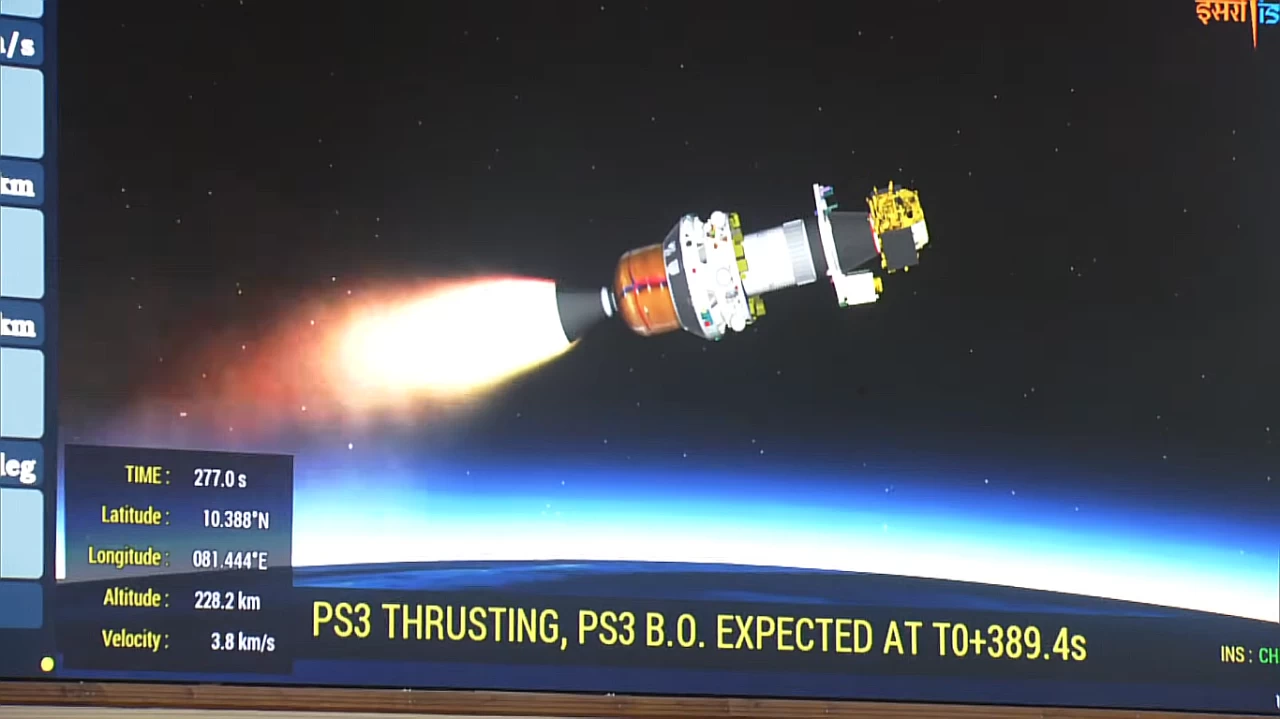


ISRO's PSLV-C62 mission lifted off as planned from the First Launch Pad at India's spaceport in Sriharikota to favourable weather conditions. The first and second stage performed nominally, but the third stage began to tumble uncontrollably, leading to loss of the mission. The primary payload on board was the hyperspectral Earth imaging satellite 'Anvesha' for the DRDO with strategic applications. ISRO Chairman V Narayanan said, “Today we had attempted the PSLV-C62/EOS-N1 mission. The PSLV vehicle is a four stage vehicle with two solid stages and two liquid stages. The performance of the vehicle up to the end of the coast stage of the third stage was as expected. Close to the end of the third stage, we were seeing little more disturbance in the vehicle roll rates, and subsequently there is a deviation episode in the flight path. We are analysing the data and we shall come back at the earliest.”
This is the second consecutive failure of ISRO's work horse rocket, the Polar Satellite Launch Vehicle (PSLV). The PSLV-C61 flight veered off course because of an anomaly in the third stage as well, on 18 May 2025. The PSLV is among the most reliable launchers in the world, having experienced 24 years of error-free operations between the first developmental flight on 20 September 1993 that failed because of an unexpected disturbance during the separation of the second stage and the PSLV-C39 on 31 August, 2017, where the heat shield failed to separate, leaving the payload, IRNSS-1H trapped within the nose cone of the rocket. This was the first time that ISRO has failed to deploy a customer satellite, with all previous failures seen on launches with domestic payloads only.
ISRO has destroyed a spotless record of foreign satellite launches with the loss of the PSLV-C62 flight. A national level probe on the loss of the PSLV-C61 mission was instituted last year, but the findings of the report and the steps taken by ISRO towards a permanent fix has never been disclosed. The failure analysis is typically conducted by independent experts. It is unclear if ISRO has identified the root cause of the failure of the upper stage in the PSLV-C61 flight, and if it has taken any steps to address the issue permanently. Whatever steps ISRO takes in the wake of this loss, needs to be communicated with clear technical details to the general public, to restore the eroding trust in India's national space agency.