Sign In
By signing in or creating an account, you agree with Associated Broadcasting Company's Terms & Conditions and Privacy Policy.
By signing in or creating an account, you agree with Associated Broadcasting Company's Terms & Conditions and Privacy Policy.
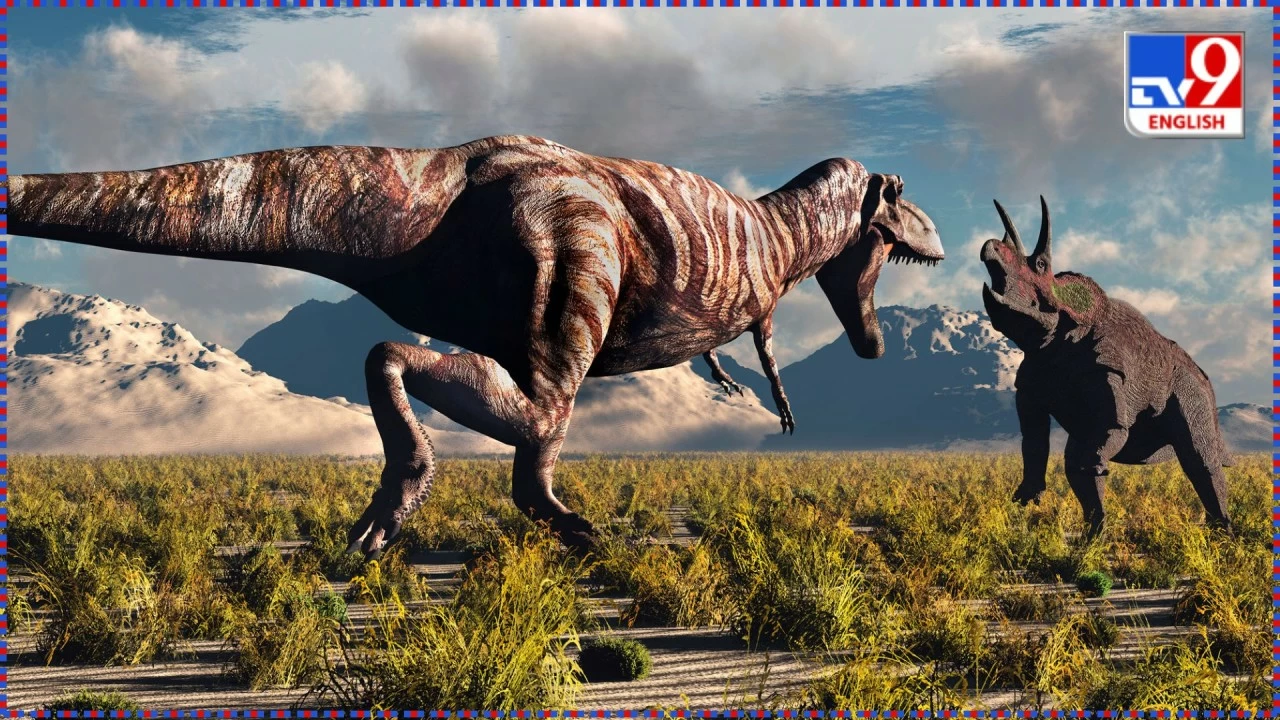


In 2006, fossil hunters in the Hell Creek Formation in Montana, USA discovered what is now a legendary specimen, a small tyrannosaur locked in combat with a Triceratops. Since then, a raging palaeontological debate has been if the tyrannosaur was a juvenile T. rex, or a new species entirely. Examination of the growth rings, spinal fusion data and developmental anatomy of the small tyrannosaur has revealed that it is a fully-grown individual, not a teenage T. rex, confirming Nanotyrannus lancensis as a new species. A number of skeletal features of the tyrannosaur, including larger forelimbs, the number of teeth and tail vertebrae, as well as distinct nerve patterns in the skull are biologically incompatible with T. rex.
The research has far-reaching implications as palaeontologists have been using Nanotyrannus fossils to model the growth and behaviour of the T. rex for years. The new research demonstrates that these studies were based on two different species, with multiple tyrannosaurs occupying the same ecosystems in the final million years before the asteroid impact that wiped out the non-avian dinosaurs 66 million years ago. The researchers examined over 200 tyrannosaur fossils and discovered that one was another small-bodied tyrannosaur distinct from Nanotyrannus lancensis, that has now been named Nanotyrannus lethaeus, after the hidden river Lethe from Greek mythology.
The confirmation of the new species indicates that the predator diversity in the Cretaceous period leading up to the mass extinction was much higher than previous estimates, and also indicates that other small-bodied dinosaur specimens may be misidentified as juveniles of larger species. The discovery calls into question decades of tyrannosaur research, despite the T. rex being among the most studied extinct vertebrates. The research calls into question existing hypotheses based on the assumption that Nanotyrannus was a juvenile T. rex. A paper describing the findings has been published in Nature.