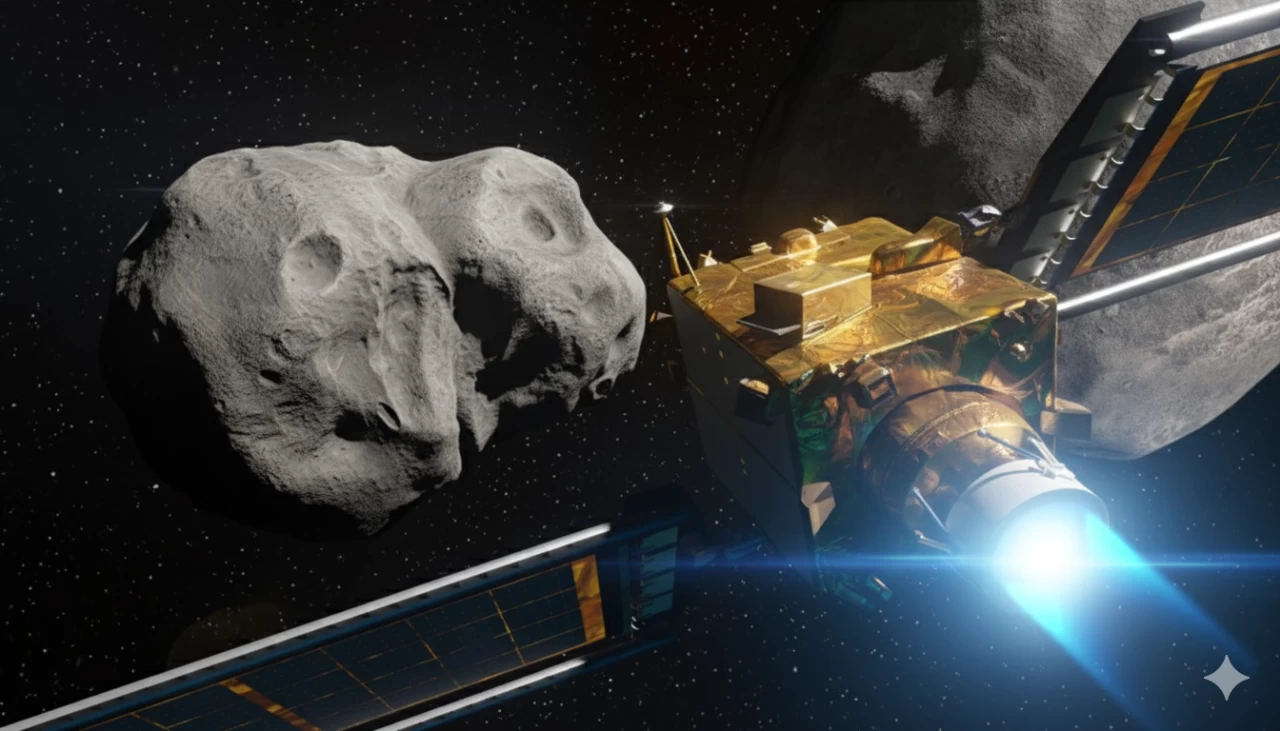
On 26 September, 2022, NASA rammed a Van-sized spacecraft into Dimorphos, a 160 metre wide moonlet in orbit around the 780 metre wide asteroid Didymos. The mission was a demonstration of a kinetic impactor to deflect an asteroid, and it worked. This was a bold step towards improving the capabilities of humans towards planetary defence, but is only one of the various technologies that NASA is exploring to deflect asteroids. Apart from kinetic impactors, NASA is also developing ion-beam shepherds, gravity tractors, and even good, old-fashioned nuclear explosives.
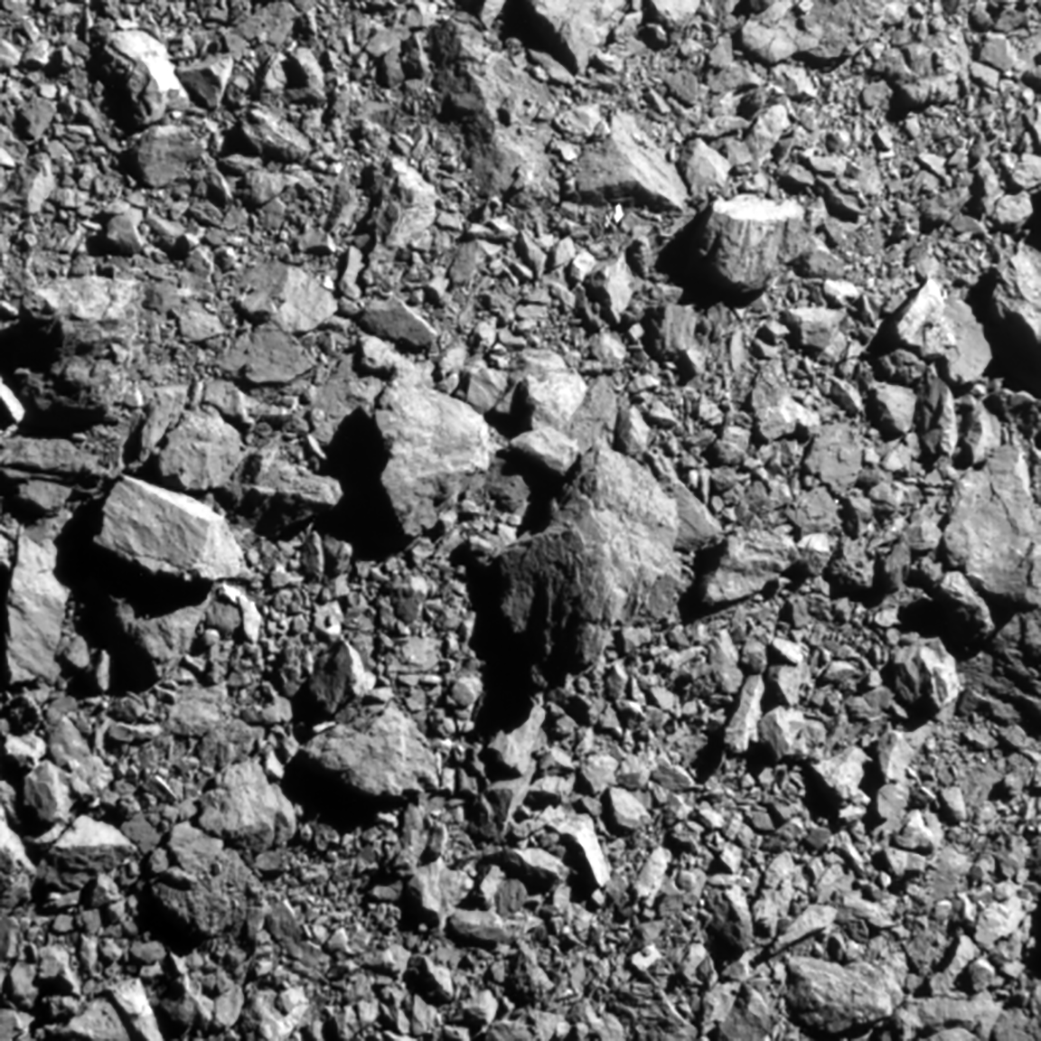
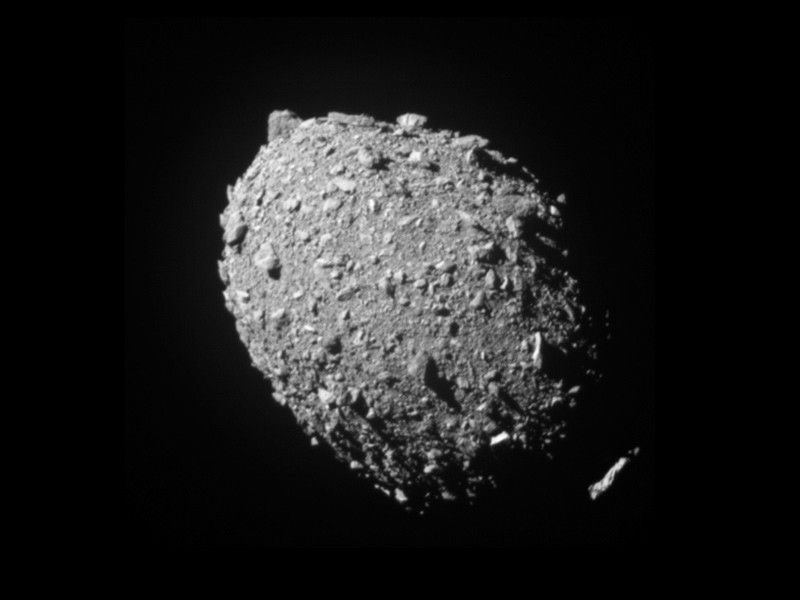
The final image captured by DART before the impact. (Image Credit: NASA).
Most of the asteroids occupy the main belt between Mars and Jupiter, and pose no threat to the Earth. The asteroids larger than 140 metres wide can cause significant damage on impacting the surface, and are called city-killer asteroids. At least one object of such size strikes the Earth every 25,000 years. The DART mission was a demonstration of human capabilities of deflecting a threatening impactor. No large impact events are expected for the next few centuries at least.
The planetary shield
The idea of deflecting asteroids is not new. Kinetic impactors are simple, feasible missions with a straightforward profile, slam a spacecraft into an asteroid at a high speed, transferring the momentum to the space rock. The approach is simultaneously brutal and elegant. The idea for DART was initially sketched out around 2001, designed as a proof-of-concept mission to evaluate if a kinetic impactor could alter the trajectory of the asteroid. The idea was to demonstrate the technology before it was necessary. Precision and timing were crucial for the mission.
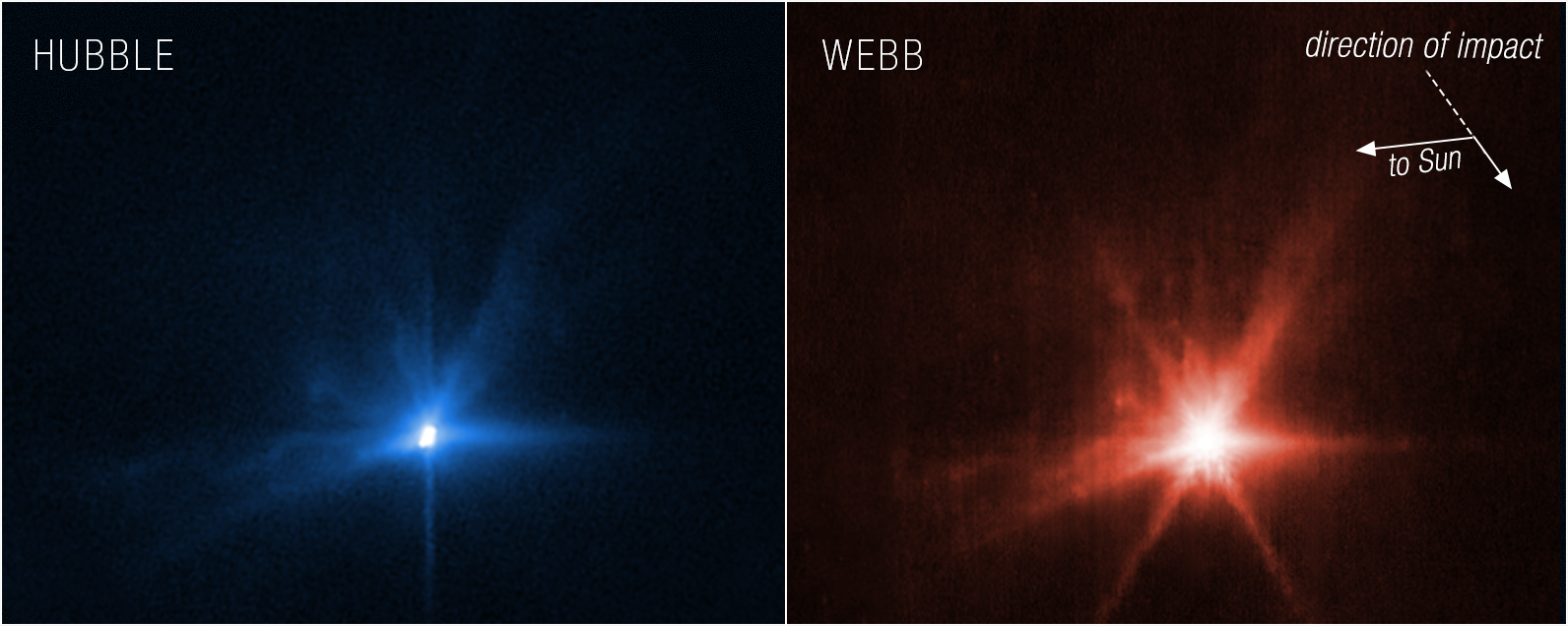
Hubble and Webb images of the impact. (image Credit: NASA).
The planning took years, with the scientists designing a boxy spacecraft about the size of a vending machine, equipped with Solar Arrays and a single camera. Realtime control was not an option as the asteroids would be millions of kilometres from the Earth. The navigation software, dubbed SmartNav, identifies its targets and adjusts its trajectory on its own. NASA greenlit the final design in 2018, and set the launch date to November 2021, on board a SpaceX Falcon 9 rocket. The hunt for a suitable target began.
Finding a suitable binary system
The operators of the DART mission made a focused search for objects small enough to be reliably deflected, close enough to be observed from the Earth, and not pose a threat to the planet. A binary system was necessary because measuring the change in the orbit of a lone asteroid would take too long, and challenging to detect. The smaller moonlet in a binary system orbiting its partner in hours of days would be an ideal target, the change in its orbit detectable over periods of weeks.
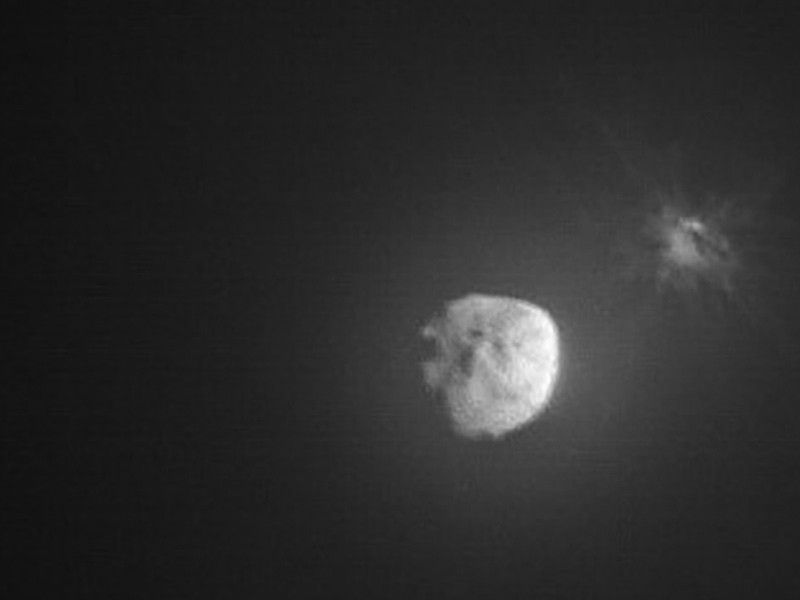
An image captured by Italy's LICIACube probe soon after the impact. (Image Credit: ASI/NASA).
The teams focused on Didymos after scouring catalogues of Near Earth Objects. The asteroid was discovered in 1996. Dimorphos orbits Didymos every 12 hours, and neither body posed an impact risk to the Earth. Their size and proximity made them perfect for testing the impactor. Still, the asteroid was too small to be directly and clearly imaged from the Earth, and its exact shape, mass and compositions were unknown. A metallic asteroid would behave very differently than a rubble pile of loose rocks barely held together under the influence of gravity.
The impact
The mission lifted off from the Vandenberg Space Force Base in California on 24 November, 2021, and closed in on its target with relentless precision. The autonomous system guided the impactor to the smaller moonlet at 24,000 km/h on 26 September, 2022, and was captured by the imaging instruments on board. Italy had dispatched a tiny CubeSat, LICIACube to capture images of the impact as well. A global network of telescopes turned towards Didymos in the aftermath of the impact, including the flagship deep space instruments, Hubble and the James Webb Space Telescope.
The asteroid Dimorphos, target of the DART mission, captured just before impact. (Image Credit: NASA).
Two weeks later, NASA announced the result, the orbital period of Dimorphos had shrunk by 30 minutes, the change was 25 times greater than the minimum threshold. Humans had demonstrated the capabilities of deflecting an asteroid. Further analysis indicated that the momentum transfer was enhanced by the ejecta, the debris blasting into space acting like a rocket booster. The rubble-pile composition of Dimorphos amplified the effect as the loose material was ejected easily. The European Space Agency’s Hera mission will conduct follow-up observations in 2026.