Sign In
By signing in or creating an account, you agree with Associated Broadcasting Company's Terms & Conditions and Privacy Policy.
By signing in or creating an account, you agree with Associated Broadcasting Company's Terms & Conditions and Privacy Policy.
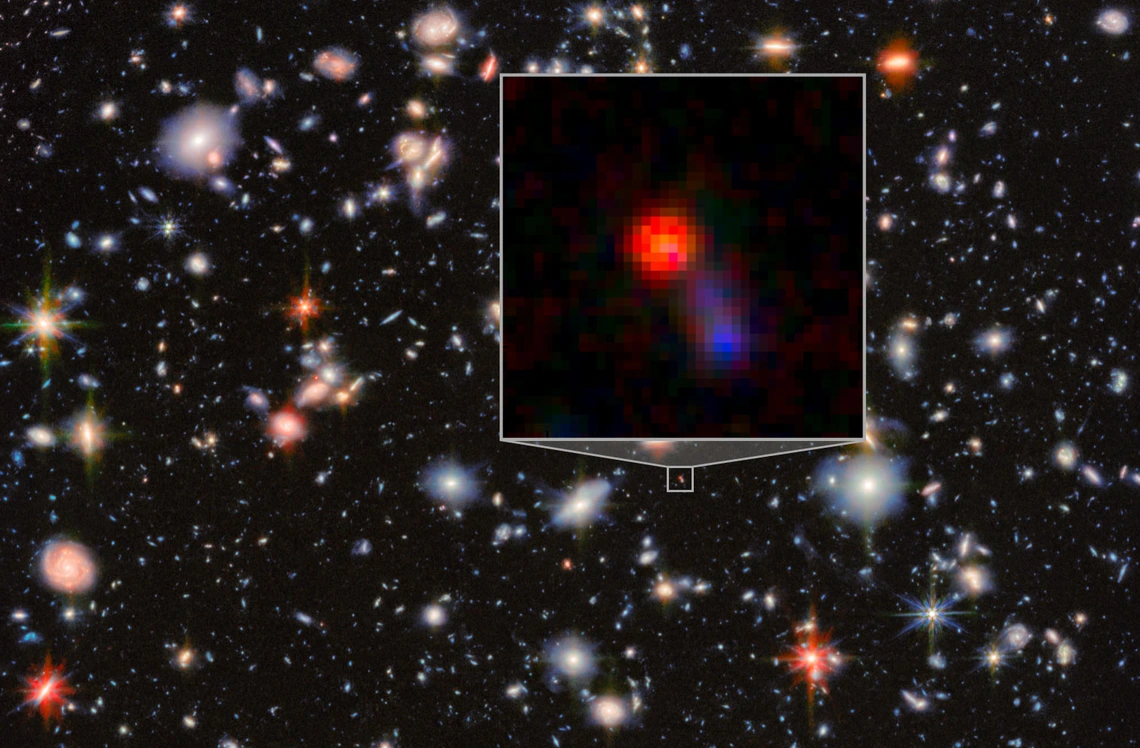

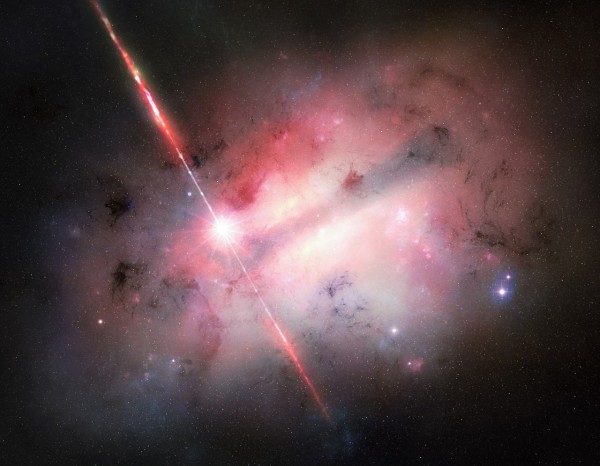
The James Webb Space Telescope has discovered extremely redshifted compact objects that appeared in large numbers within 600 million years after the Big Bang, and disappeared 1.5 billion years later. The exact nature of these Little Red Dots are debated. The reddest of these Little Red Dots is an object named Virgil, that is challenging conventional cosmological theories. Within the Little Red Dot is a supermassive black hole that is accreting the surrounding gas and dust at an extraordinary rate.
This black hole has a mass far larger than the capacity for the host galaxy to support. This is why Virgil is considered an 'overmassive' black hole. The conventional understanding of the evolution of black holes is that they grow through a series of mergers alongside their galaxies. However, there was not sufficient time for this process in the early universe, so the discovery of supermassive black holes at the dawn of time is challenging for scientists to explain. Scientists are also struggling to explain what kind of objects the Little Red Dots in the early universe evolved into.
Every time something new or unusual is discovered in space, a string of similar discoveries follow. It may be possible that astronomers have overlooked a population of dust-obscured black holes that had a major role to play in the infancy of the universe. The astronomers suspect that the lack of other sources with the traits of Virgil is not because of true rarity, but a reflection of observational limitations. As the James Webb Space Telescope conducts more observations, more such objects may be discovered. The energy output of Virgil is obscured by thick clouds of gas and dust, that the James Webb Space Telescope can peer through.