Sign In
By signing in or creating an account, you agree with Associated Broadcasting Company's Terms & Conditions and Privacy Policy.
By signing in or creating an account, you agree with Associated Broadcasting Company's Terms & Conditions and Privacy Policy.
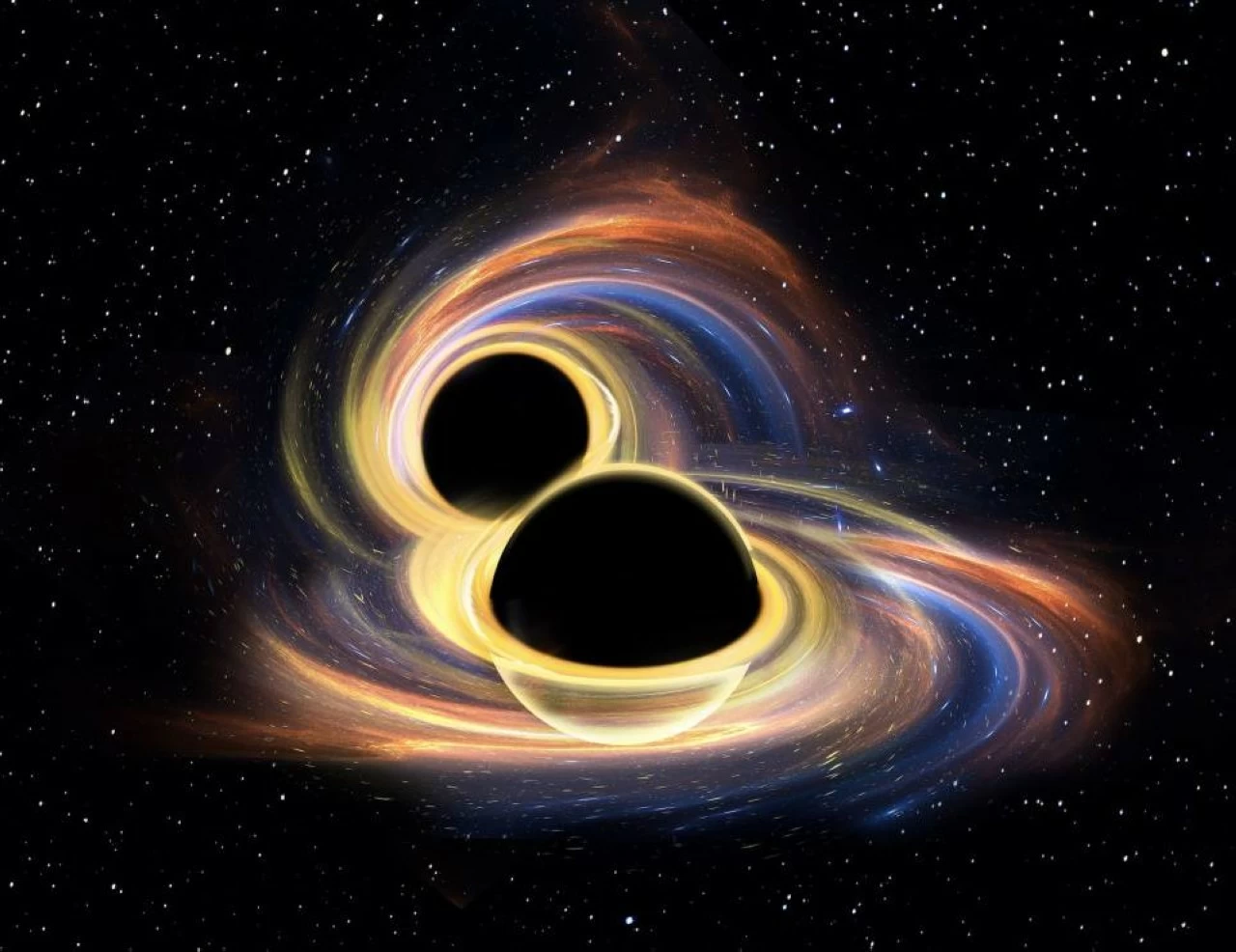


The LIGO-Virgo-KAGRA (LVK) collaboration of gravitational wave observatories have announced the discovery of the most massive binary black hole merger detected through gravitational waves. The event has been designated as GW231123. Both the black holes are on the edge of the theoretical limit for masses, and were spinning exceptionally fast. Apart from being the most massive black hole binary merger, the event also records the fastest spinning pairs of binary black holes. The detection is of a record-breaking event, suggesting that gravitational wave observatories continue to spot surprises in the universe ten years after they commenced observations.
One of the researchers studying the event, Margaret Millhouse says, "Most models don't predict black holes this big can be made by supernovas, and our data indicates that they were spinning at a rate close to the limit of what’s theoretically possible. Most models don't predict black holes this big can be made by supernovas, and our data indicates that they were spinning at a rate close to the limit of what’s theoretically possible". The signal was observed during the fourth run of the LVK collaboration, on 23 November, 2023, which is encoded in the designation of the event.
The two black holes that coalesced into a single black hole contained about 100 and 140 solar masses. The resulting black hole absorbed the characteristics of both the black holes, resulting in a black hole that contained about 225 solar masses. Theoretical predictions do not allow black holes of such masses to be formed from the gravitational collapse of even the most massive stars dying. Scientists suspect that each of the black holes in the merger were themselves formed by the mergers of two or more black holes. The previous record holder is an event designated as GW190521, detected in May 2021, with the resulting merged black hole containing 140 solar masses. The observations allow scientists to get a better handle on the formation and evolution of black holes.