Sign In
By signing in or creating an account, you agree with Associated Broadcasting Company's Terms & Conditions and Privacy Policy.
By signing in or creating an account, you agree with Associated Broadcasting Company's Terms & Conditions and Privacy Policy.
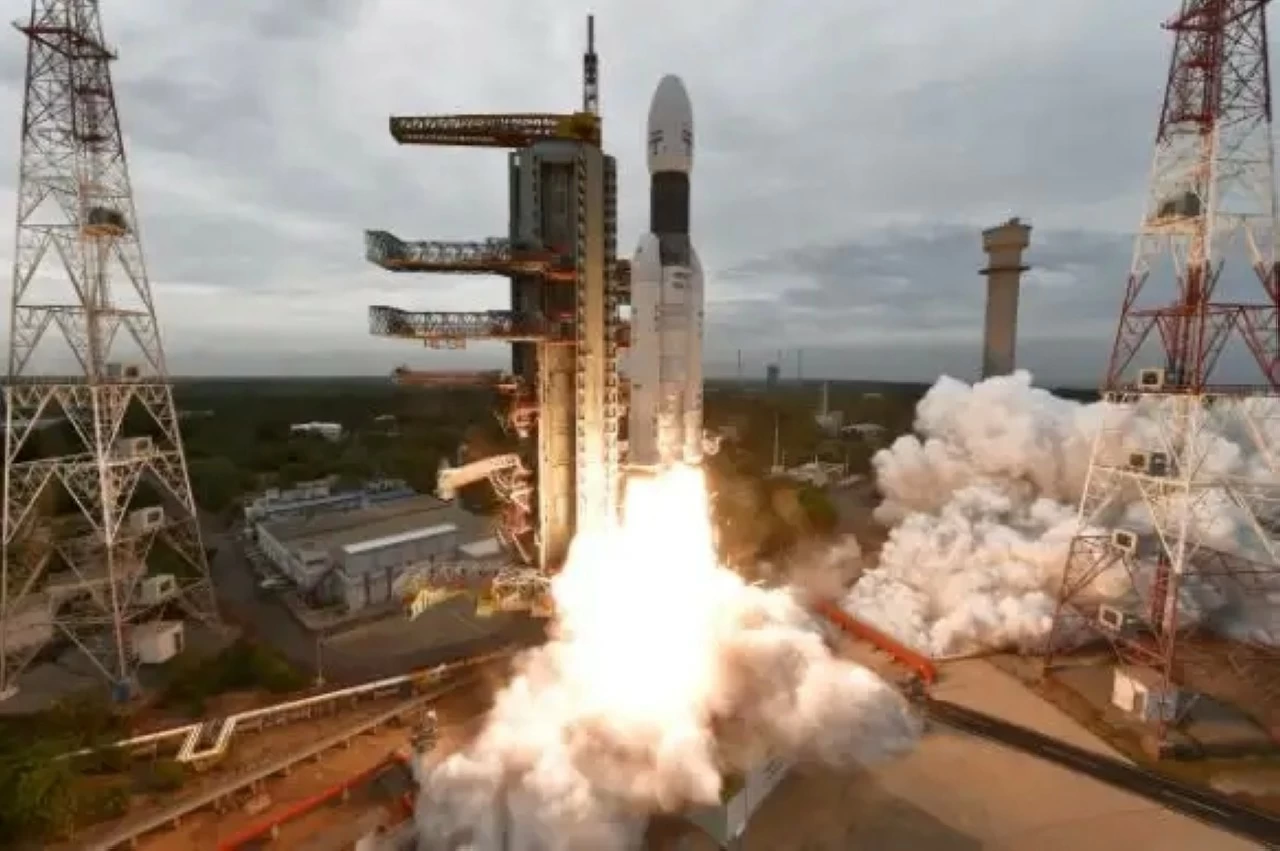


The Chandrayaan 2 mission aimed to execute a controlled, soft landing at the lunar surface, but instead executed a hard landing by crashing into the Moon on 6 September 2019. A day later, ISRO chairman K Sivan announced that ISRO had lost contact with the Moon lander during the terminal descent stage. Over the subsequent days, ISRO and NASA spotted the lander on the surface through their orbiters. ISRO has till date not formally announced that the Chandrayaan 2 mission crashed into the Moon.
The launch of the mission was originally scheduled for 14 July, 2019, but was scrubbed about an hour before the launch because of a technical snag in the cryogenic upper stage of the Launch Vehicle Mark 3 (LVM3) rocket, which at that time was still called the Geosynchronous Satellite Launch Vehicle Mark III (GSLV MkIII). The mission successfully launched at 14:43 hours IST from the Second Launch Pad at ISRO’s spaceport in Sriharikota on 22 July, 2019. The nominal flight took place in great visibility and calm wind conditions.
This was the first operational flight of the LVM3, and the rocket performed admirably, injected Chandrayaan 2 into Earth orbit after a 16 minute flight. The spacecraft then used on-board propulsion to gradually raise its orbit. On 14 August, 2019, the Chandryaan 2 mission executed a translunar-injection manoeuvre, bidding farewell to the Earth forever, after a 970 second burn. The approach allows ISRO to travel to the Moon with minimal fuel expenditure, and was subsequently used on the Chandrayaan 3 mission as well.
The spacecraft stack consisted of an orbiter, a lander and a rover packed inside the lander. The Chandrayaan 2 orbiter, dubbed Pradhan, was a successful element in the mission that continues to orbit the Moon gathering high quality images. The Chandrayaan 2 orbiter would go on to operate as the relay satellite for the Chandrayaan 3 mission as well, where the orbiter was replaced with a dedicated Propulsion Module as the Pradhan orbiter was performing as expected. The spacecraft entered into an elliptical orbit around the Moon on 20 August, 2019.
By 1 September, 2019, the Chandrayaan 2 orbiter had entered into a parking orbit around the Moon at an altitude of 100 kilometres, where it remains to this day. On 2 September, the Vikram lander separated from the Pradhan orbiter in preparation for the landing attempt. A software glitch prevented the lander from shedding velocity correctly, causing it to crash into the surface and lose communication. The Pradhan orbiter continued to map the Moon, unaffected by the failure of the Lander.
The control algorithm error was identified as the primary cause by the report of the Failure Analysis Committee, which has not been made public. An unwanted artificial limit beyond the planned parameters of the mission prevented the spacecraft from orienting itself to correct errors accumulated by the extra thrust. Fundamentally, the mission was designed in a manner that required all the elements to work precisely and perfectly, and everything to work exactly as intended for the landing. This approach was entirely changed for the Chandrayaan 3 mission, where the mission was designed to succeed even if multiple components failed and the sensor readings were off the planned parameters.
The loss of the Vikram lander on the Chandrayaan 2 mission taught ISRO the valuable approach of using a failure-oriented design. The Chandrayaan 3 lander was designed to reach the lunar surface even if sensors tripped up, algorithms failed, and if everything that could go wrong did go wrong. About a 100 modifications were made to the lander. Since the generated thrust was known to be excessive, the central retrothruster was removed, with a cluster of four retrothrusters being more favourable. Only two of these retorthrusters were required for the lander.
The Propulsion Module did not need the same capabilities as the Pradhan orbiter, which allowed it to be larger and lighter, and carry more fuel. The lander was also loaded with new sensors and redundant electronics. The data from the Chandrayaan 2 orbiter was physically stored on the Chandrayaan 3 lander. The target landing zone of the Chandrayaan 2 mission measured 500 metres across, while that of the Chandrayaan 3 mission was a generous strip, measuring 4x2.4 kilometres. The software algorithms were improved and tested through multiple simulations. ISRO also fortified the legs of the lander, to allow Vikram to safely touch down while moving at higher velocities.