Sign In
By signing in or creating an account, you agree with Associated Broadcasting Company's Terms & Conditions and Privacy Policy.
By signing in or creating an account, you agree with Associated Broadcasting Company's Terms & Conditions and Privacy Policy.
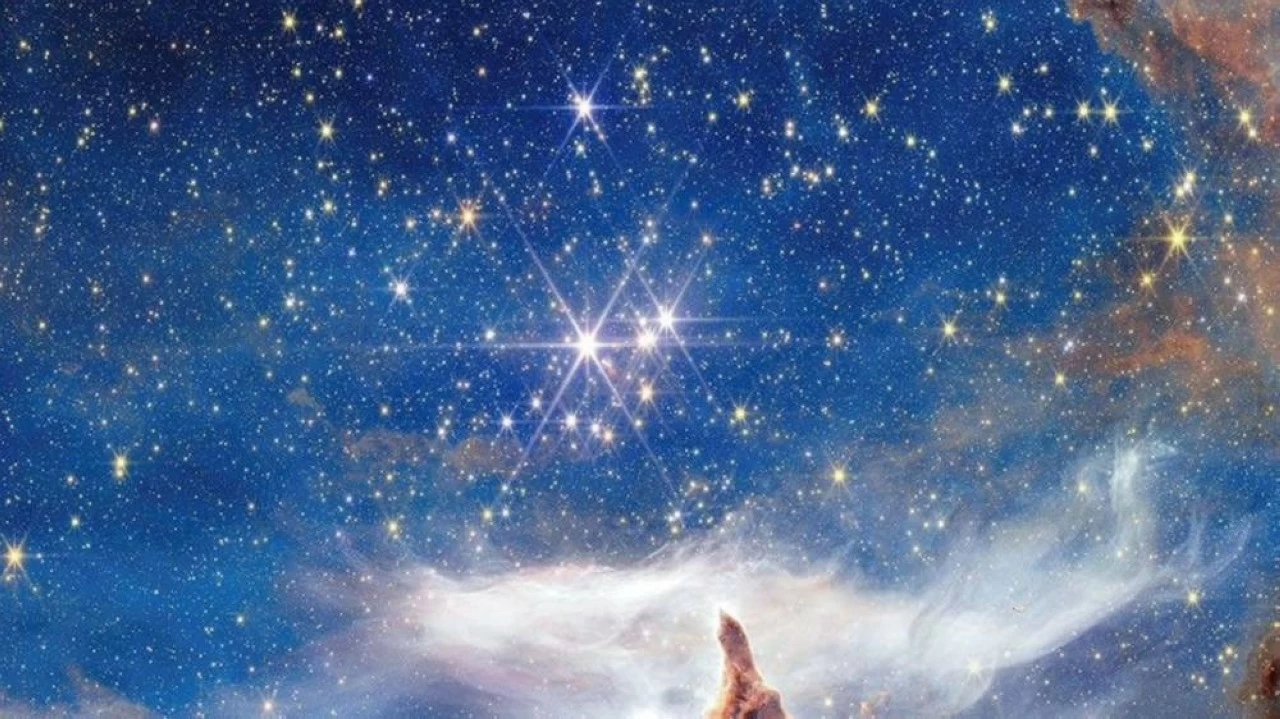


The James Webb Space Telescope has captured an image of the Pismis 24 star cluster located at a distance of 5,500 lightyears from the Earth in the direction of the constellation of Scorpius. The young star cluster is within the heart of the Lobster Nebula, which is home to a massive stellar nursery where new stars are being born at an incredible rate, and one of the closest to the Earth. The proximity of the star cluster makes Pismis 24 an attractive target for observations by astronomers who want to investigate the earliest stages of star formation. All of the stars in the new cluster are large and massive, that burn through their nuclear fuel rapidly, and live short lives.
At the core of the glittering cluster is a star designated as Pismis 24-1, which was at one time believed to be the most massive star known. Scientists have now learned that the object is a binary system made up of two stars, that have not been individually resolved in this image. Containing 74 and 66 times the mass of the Sun, the pair of stars are still among the most massive and luminous stars known. All the stars in the cluster are similar to the giant stars that were spawned in the infancy of the universe.
Apart from being massive, the stars in the cluster are also newborn. Young stars are particularly energetic, with some burning at temperatures nearly eight times that of the Sun. The intense stellar wind from these stars are sculpting out a cavity in the surrounding nebula, made up of gas and dust, the raw material from which stars are formed. The hydrogen gas in the environment is being heated by the energies pouring out of the star. There are thousands of stars in the image of varying sizes and colours, with the most massive stars sporting the six-pointed diffraction spikes that are a signature of Webb. This diffraction spike is caused by light interacting with the tripodal internal support structure of the telescope, as well as the hexagonal mirror segments.