Sign In
By signing in or creating an account, you agree with Associated Broadcasting Company's Terms & Conditions and Privacy Policy.
By signing in or creating an account, you agree with Associated Broadcasting Company's Terms & Conditions and Privacy Policy.
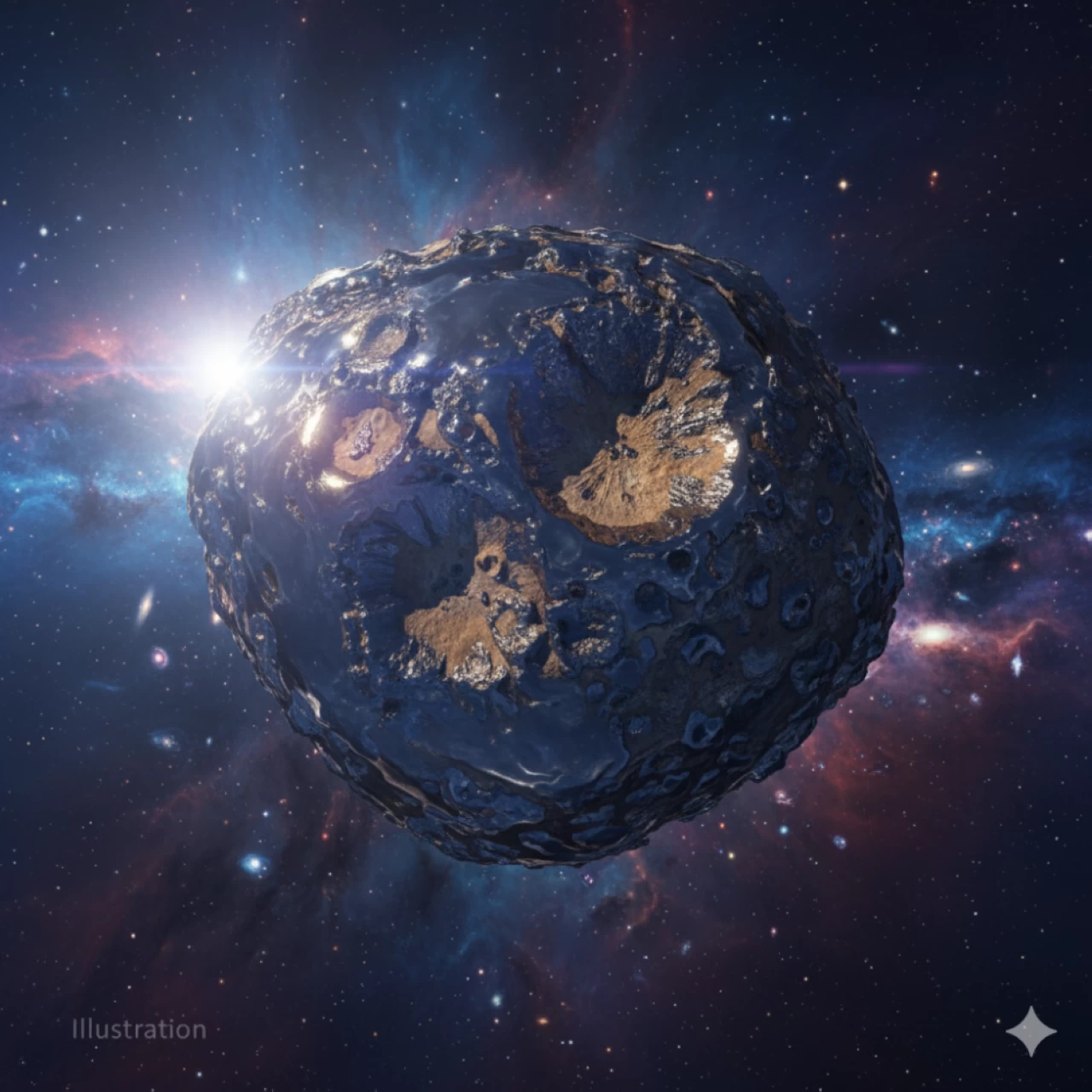


Asteroids are rocky, airless bodies orbiting the Sun. When they were first discovered, they were called minor planets, a term that stuck. The asteroids are primarily found in the main belt between the orbits of Mars and Jupiter, but there are swarms distributed all across the Solar System, including in the same neighbourhood around the Sun as the Earth. Most asteroids are leftovers from the formation of the Solar System 4.6 billion years ago, fragments of rock and metal that either never clumped together into a world, or the remains of fragmented, differentiated protoplanets that once existed in the infancy of the Solar System.
Asteroid families refers to groups of asteroids sharing similar orbits and compositions that can often be traced back to a common origin or a parent object. They formed through a mix of primordial processes and interactions in the early Solar System, as well as later collisions, including seeds of worlds being battered to bits. The planets were assembled in the material leftover from the formation of the Sun, a swirling disk of gas, dust and ice. The particles in this disc started clumping together, forming rocks then boulders, and planetesimals, the precursors to planets.
In the asteroid belt, the massive gravity of Jupiter stirred the swirling material, preventing planetesimals from coalescing into a single planet. The tug of war between the gas giant and the Sun prevented the formation of a world, as the primordial material remained in the form of scattered asteroids. Depending on where they formed, the initial compositions differed. In the inner belt, closer to mars, the conditions favoured the creation of asteroids rich in silicates, such as Eros or Vesta. These are called S-type asteroids.

Gaspra, an S-type asteroid. (Image Credit: NASA).
In the outer belt, closer to Jupiter, at greater distances from the Sun, the temperatures were cooler. The carbon was not blown away by the energies pouring out of the Sun. These asteroids are carbon rich and laden with volatiles, such as Ceres and Hygiea. These are called C-type asteroids. Then there are the asteroids that appear to be the stripped cores of planetesimals that were either partially melted or differentiated before being smashed apart. The Earth has layers, like the rocky crust, the molten mantle and the metallic core. Such layering could have formed the metallic M-type asteroids in the Solar System such as Psyche and Kallíope.
Over billions of years, asteroids slammed into each other, fragmenting and creating groups sharing spectral signatures and orbital parameters, hinting at shared parent bodies. Modelling indicates that the debris cloud created by an asteroid shattered by a high-velocity impact spread out but remains in the same orbit, for example the Eos family was created by the breakup of a C-type parent between one and two billion years ago.
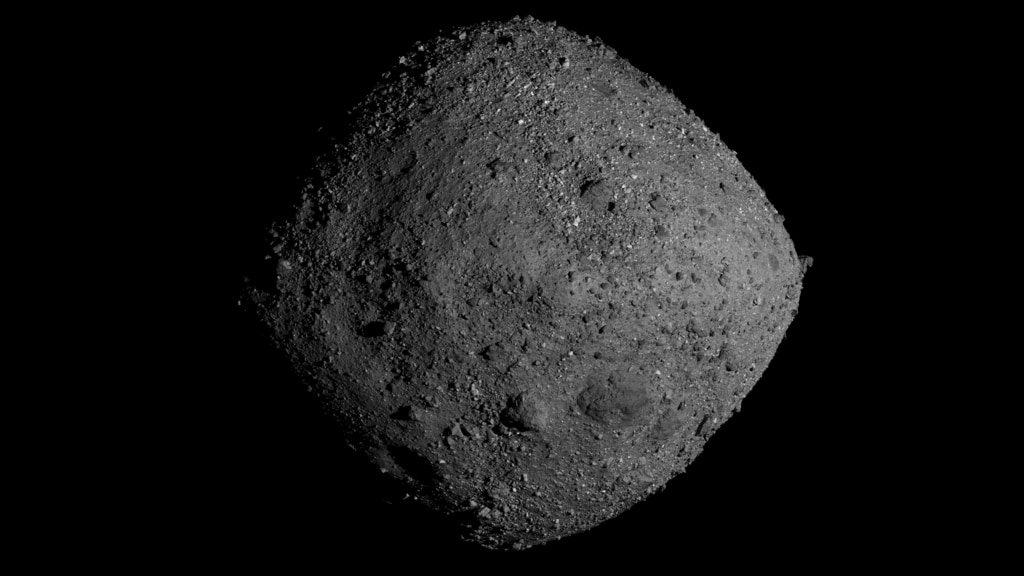
Bennu, a c-type asteroid. (Image Credit: NASA).
Asteroids may also undergo partial disruption, with smaller collisions chipping off fragments while leaving the parent body mostly intact. The Vesta family is believed to be such a case, with the parent body preserving its differentiated structure. Then there are rubble pile asteroids such as Itokawa, that appear to be loosely held together aggregates of debris from collisions, re-formed under the influence of gravity.
There are a number of asteroid families known. The S-type Vesta Family has been linked to achondrite meteorites on Earth. The Flora Family occupying the inner belt is a source of near-Earth asteroids. The Eos Family in the outer belt is believed to be formed from the breakup of a C-type parent. The Hygiea Family is also C-type, made up of fragments of the fourth largest asteroid. The Koronis Family is made up of S-type members that have a uniform composition, indicating a shattered parent.
Solar heating slowly pushes asteroids to new orbits, mixing families, or pushing them into resonant orbital alignments with Jupiter, which can tighten or loosen their groupings. This is known as the Yarkovsky effect. The resonances with Jupiter can be seen in gaps where the gravitational influence of the gas giant cleared out asteroids or flung them into family-like clusters. Some asteroids could also melt, forming distinct layers before their material was spread about. Vesta appears to be such a case.
This is why studying asteroids reveals so much about the past and the early history of the Solar System. These were fragments of shattered worlds that were brimming with the potential of life. Investigations of Bennu indicate the presence of surface water, maybe from a long-lost ocean world that once orbited a young Sun. Some asteroids started as planetesimals and were shaped by where they were formed and where they endured. Each asteroid belongs to a family, and tells a story of collisions, gravity and radiation. The violent events that cause new families to form and old ones to drift apart can take place over billions of years, and this violent history still continues to play out today.