Most life on Earth today use DNA molecules for storing genetic information, and proteins for catalysing the reactions necessary for life, such as copying the DNA and assembling other proteins. However, this results in a chicken and egg problem, where either does not work without the other. Proteins are needed to replicate DNA, but without DNA, there is no blueprint available to assemble proteins. This is a circular dependency with no route to start from scratch. This is why scientists believe that early life did not rely on DNA, but instead on RNA that can store genetic information, and fold up to act as enzymes.
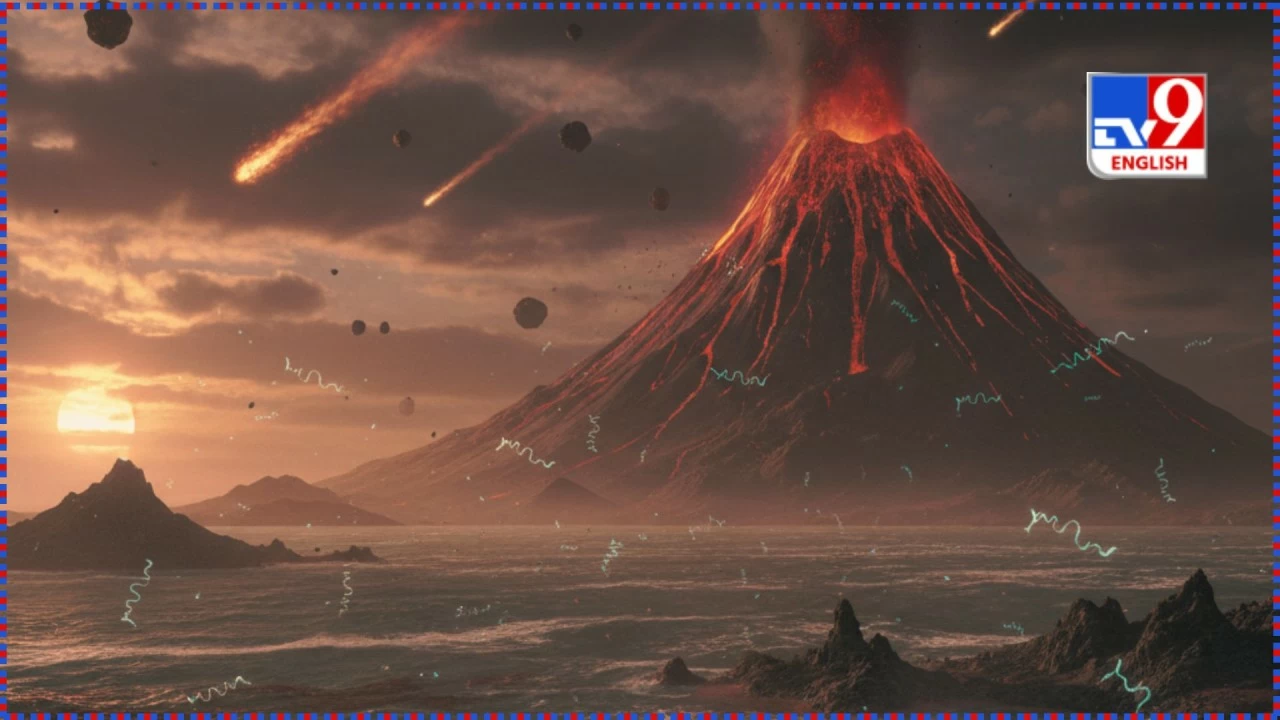
The RNA World Hypothesis suggests that life on a primordial Earth about four billion years ago relied on RNA as the primary molecule for both storing genetic information and speeding up biochemical reactions. This also makes sense because RNA is easier to assemble from basic chemicals than DNA or proteins, and it could have kick-started life that then began to advance in complexity. RNA can fold into shapes that act as enzymes, and these are known as ribosomes. Some ribosomes can even copy strands of other RNA.
RNA continues to play an important role in life
In modern cells, RNA continues to play a role. Ribosomes help assemble proteins, and viruses use RNA to store genetic information. The RNA world hypothesis is an elegant solution to the chicken-and-egg-problem with DNA, about whether genes or enzymes emerged first. RNA has formed from simple molecules such as sugars and bases in lab environments, and the most ancient fossils also support the RNA world hypothesis. Most recently, research from the asteroid Bennu indicates that all the raw material for formation of RNA was available on the ancient rock, which is possibly a fragment of a watery world battered to bits in the chaotic infancy of the solar system.
In 2024, researchers from the Salk Institute evolved an RNA ribosome that copies RNA strands accurately enough for traits to pass on over generations, demonstrating the initiation of evolution in an RNA system, boosting the case for RNA self-replication. In 2025, a team of researchers from University College London showed amino acids can link to RNA naturally, creating short protein-like chains, explaining how RNA could have started directing the assembly of proteins, providing a bridge to the DNA world. Recently, scientists from Tohoku University in Japan mixed RNA with borates and basalt, mimicking hot underground water on ancient Earth, and found RNA forming with the borates stabilising the reactions. All of these studies support the RNA World Hypothesis.