Sign In
By signing in or creating an account, you agree with Associated Broadcasting Company's Terms & Conditions and Privacy Policy.
By signing in or creating an account, you agree with Associated Broadcasting Company's Terms & Conditions and Privacy Policy.
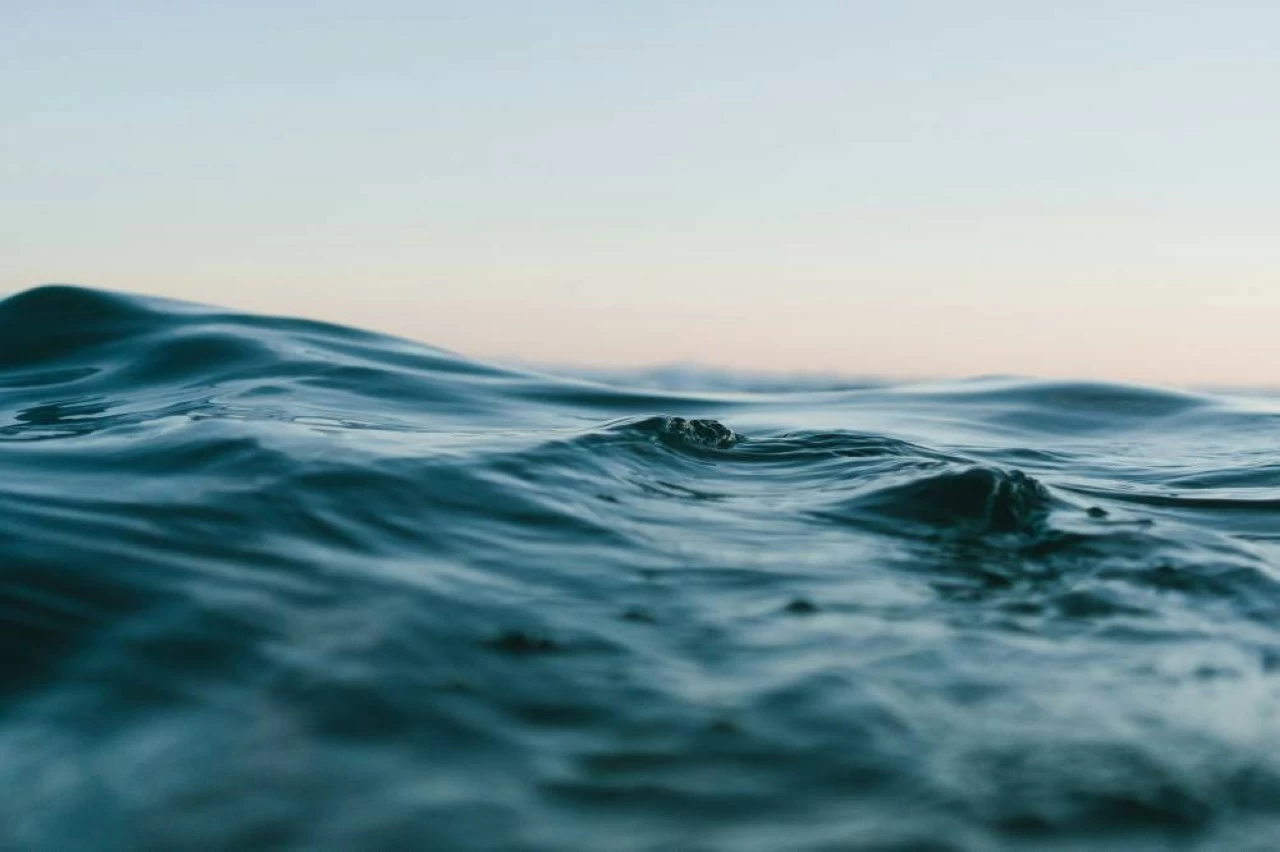


The blue colour of the oceans of the world may just be the most defining aspect of Earth, dominating the hue of the planet as seen from space. An interplay of light from the Sun, the atmosphere and water results in the mesmerizing blue appearance. Sunlight, is composed of all the colours of the visible spectrum, but peaks in intensity in the green frequencies. So, the Sun is actually green. The physical concepts necessary here to understand the colour of the oceans is reflection, absorption and scattering. The Rayleigh scattering in the atmosphere results in the blue colour of the sky, which scatters the blue and violet light, allowing the warmer colours to easily pass through.
The surface of the ocean reflects some of the light, particularly when the waters are calm, mirroring the blue colour of the sky. Water molecules are excellent at absorbing the longer wavelengths of light, which are the warm colours of red, orange and yellow. These wavelengths or colours are more readily absorbed than the shorter wavelengths such as blues and violets. The selective absorption results in blue light travelling deeper into the water, giving the ocean its characteristic colour when viewed from above. The ocean is also violet, and scatters the colour in all directions just like blues, but human eyes are more sensitive to blue light. Most of the violet light is also absorbed and scattered by the upper atmosphere, allowing blue light to dominate.
The collours of the oceans are not uniform. Near coastlines, they may appear green or brown due to phytoplankton blooms, sediments, pollution and dissolved organic matter, which all reflect or absorb light in different wavelengths. When there are minimal particles or organisms, pure, deep waters like parts of the Sargasso Sea, the ocean appears clear. In these clear waters, little light is reflected back to the surface, rendering the seas transparent. Coastal waters often contain microscopic algae containing chlorophyll for photosynthesis, which reflects green light. The nutrient-rich coastal areas support higher concentrations of phytoplanktons. Grey or murky water can result from suspended sediments such as clay or silt stirred up by waves, currents or river runoffs. Overcast skies or polluted waters can enhance the grey appearance. The regions near river mouths, or the seas after storms can have high sediment loads, resulting in a brownish appearance.
The appearance of the ocean can be altered by atmospheric conditions, such as cloud cover and pollution. Climate change is shifting the ocean colours by increasing sediment runoff or algal blooms, which are also altering entire ecosystems. Hyperspectral satellites monitoring the colours of the ocean can use the collected data as an indicator of the health of the Earth and its ecosystems, and track the impact of climate change. The colours of the waters reveal deep insights into the health of the planet.