Sign In
By signing in or creating an account, you agree with Associated Broadcasting Company's Terms & Conditions and Privacy Policy.
By signing in or creating an account, you agree with Associated Broadcasting Company's Terms & Conditions and Privacy Policy.
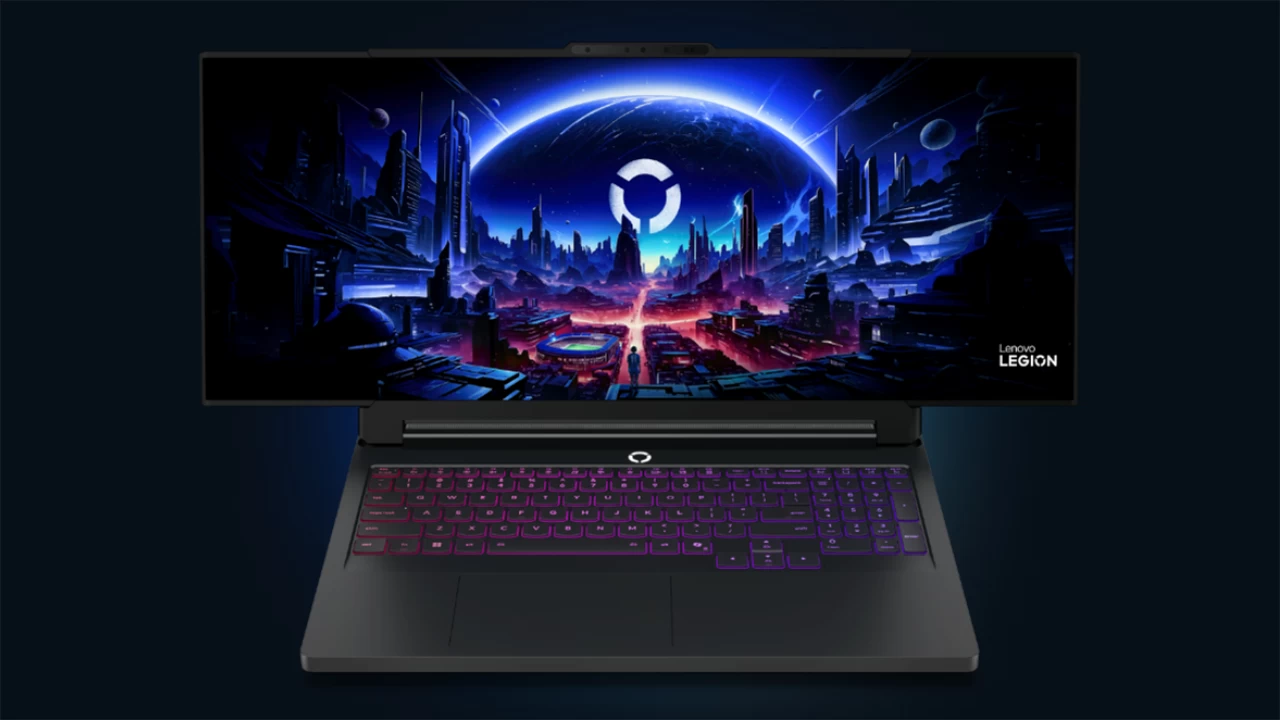


New Delhi: Lenovo presented a bold vision of the way artificial intelligence would transform personal computing at CES 2026. The company presented a wide range of future-facing proofs-of-concept, featuring new form factors, smarter interactions, and more extensive AI integration by device.
Lenovo concepts aim at productivity and smooth experiences to take care of users with rollable laptops, AI-powered screens, smart glasses and self-charging accessories. All create the image of an AI-powered ecosystem that is meant to accommodate people who work, create and live in an interconnected world.
The most impressive release made by Lenovo is the ThinkPad Rollable XD Concept. It has a fold-out, globally facing screen, which swells up and down to be either a small laptop with a 13.3-inch screen or a large workspace of almost 16 inches. This enables users to have more than 50 per cent more screen space without having a bigger unit.
The device is designed based on the tradition of experimental PCs by Lenovo, but it enables people to work in multiple directions, collaborate, and adapt flexibly to various workflows. It is simple to change the modes or start applications with touch gestures that are swipe-based and voice-controlled features. The rolling display mechanism is exhibited by a transparent Corning Gorilla Glass Victus 2 cover that is also durable.
Live translation, voice assistance, and multi-modal interaction are the new uses of AI. Lenovo makes the concept more than a laptop, dubbing it as a hybrid work, retail signage, and one-to-many communication platform.
Project Kubit, the Lenovo Personal AI Hub Concept, is created to be a personal edge cloud computer. It serves AI-enabled apps on PCs, smartphones, wearables, and smart home items to an ecosystem of products and services of a user.
At the hub, there are two ThinkStation Traveller PGX mini AI workstations running on the NVIDIA GB10 Grace Blackwell Superchip. Its touch and voice technology locally process personal data to provide advanced analytics and a high-performance AI experience, and it gets smarter as the user interacts with the device in their day-to-day activities.
Lenovo has launched its AI Glasses Concept, which is a hands-free device that is lightweight and can be utilised to remain connected. The glasses are only 45 grams and have voice and touch controls, hands-free calls, music playback and even teleprompters in case you need to make a presentation.
The glasses are powered by Lenovo Qira, and they utilise AI in contact with smartphones or PCs. They allow real-time translation, image recognition and summaries of notifications with the use of the Catch Me Up feature. Lenovo boasts of up to eight hours of productivity and entertainment by the device.
The Lenovo Smart Sense Display Concept transforms a 27-inch ultra-high-definition screen into a smart multi-gadget centre. It is able to connect wirelessly to several devices concurrently, enabling content to be cast easily and people to work together on multiple screens.
Another concept that was presented by Lenovo was an AI-powered personalised display concept. It is multi-user friendly, and it adjusts to brightness, colour temp, and display option depending on user profile, time of day, and place. It is able to scan the posture and fatigue in the eyes with the intention of enhancing comfort and general well-being.
The Lenovo Adaptable Keyboard Concept was one of the accessories that could be configured to have greater flexibility. It has variable force on keystroke and optical actuation, enabling the user to alternate between gaming speed and work precision.
Another new product announced by Lenovo was a self-charging kit concept which includes an indoor light-powered keyboard and mouse. Solar-powered mice operate at a minimum of 50 lux, which means that there is no need for charging cables or batteries and contributes to the stronger sustainability of the workspace.