Sign In
By signing in or creating an account, you agree with Associated Broadcasting Company's Terms & Conditions and Privacy Policy.
By signing in or creating an account, you agree with Associated Broadcasting Company's Terms & Conditions and Privacy Policy.
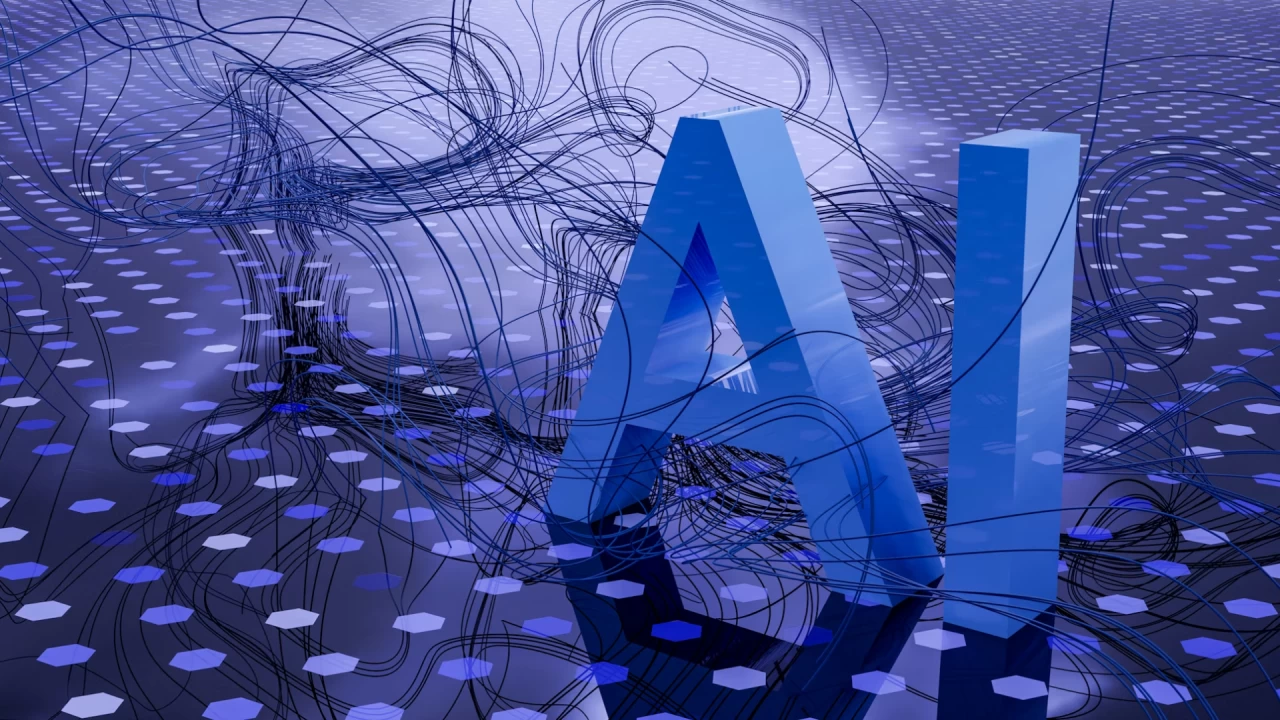

New Delhi: As 2026 begins, artificial intelligence is no longer a future concept. It has already transformed workplaces, work processes and job descriptions in any industry. According to a new Microsoft study, the effect might be more profound and quicker than a number of people anticipate, as dozens of careers will experience the core of their tasks being progressively managed by AI systems.
Although the majority of individuals equate AI to automation and productivity, the study poses an even more acute question: to what extent does the work done in modern times already lend itself to better, faster, or cheaper execution by the machine? According to actual workplace statistics, Microsoft results have shown that most of the occupations are passing into a period of rapid change as opposed to slow evolution.
To be able to get out of speculation, Microsoft has analysed more than 200,000 actual employee-to-employee interactions with its AI assistant, Copilot. These involved writing emails, summarising meetings, creating reports, data analysis, code repair, and strategy writing. These were aimed at knowing where AI is helping people and where it could possibly take over big sections of labour.
As a result of this analysis, Microsoft developed an AI applicability score to estimate the ease with which AI is capable of executing the main functions of a job. The outcome was a list of 40 jobs in which AI already demonstrates significant potential to cope with the key duties.
The jobs that were most ranked were those that were predominantly knowledge-based jobs that are dependent on language, data processing, and pattern recognition. These are writers, editors, translators, interpreters, historians, political scientists, news analysts, market research analysts, PR professionals and data scientists.
Roles that were customer-facing and involved a lot of communication were also on the list. Telemarketers, ticket agents, telephone operators and customer service representatives were identified because a number of their duties were repetitive. Even web developers, mathematicians, and code professionals were not left behind, since AI tools nowadays can create, debug, and optimise code with growing accuracy.
Microsoft did not say that it was going to lose these jobs in a single day. Rather, the work is indicating a massive change in the way of doing work. The tasks that are routine and predictable will probably be performed by AI, whereas human beings are able to be more creative, judge, use emotional intelligence, and make strategic decisions.
Simply put, AI does not take away individuals. It is replacing parts of jobs. The actual danger is in positions that do not evolve as their main duties are computed.
This is an alarm raised by industry leaders. Some have warned of the mass layoff of workers, with AI pioneer Geoffrey Hinton and Microsoft CEO Satya Nadella both stating that AI will displace many jobs soon. The point is obvious: it can be even more harmful to oppose AI than to learn to cooperate with it.
In the coming year 2026, the question that employees will answer is not whether their job is included in the list as AI becomes a coworker. Whether their competencies are keeping up with rapid change to remain relevant in an AI-driven work environment is the question.