Sign In
By signing in or creating an account, you agree with Associated Broadcasting Company's Terms & Conditions and Privacy Policy.
By signing in or creating an account, you agree with Associated Broadcasting Company's Terms & Conditions and Privacy Policy.


New Delhi: Bangladesh is gripped by another episode of chaos and anarchy. Since the removal of former Prime Minister Sheikh Hasina and her party Awami League from power in last year's July revolution, violent protests have been an usual friend of the country.
Sharif Osman Hadi was a key figure after last year's anti-government protests. A spokesperson for the Inquilab Mancha platform and a candidate in the upcoming general elections, Hadi was a darling of the common people in Bangladesh. But then tragedy struck on December 12, when he was shot in the head while launching his election campaign in Dhaka. Hadi was taken to Singapore for treatment, and he succumbed to the injury on Thursday, triggering another volatile phase in Bangladesh, before the country's first general election since Hasina's ouster, which was supposed to be held in February.
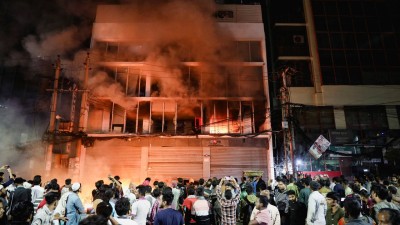
In recent times, protesters in Bangladesh have resorted to vandalising public and private properties to express their anger, and this time, there has been no exception. As Hadi's death brought angry mobs onto the streets, hundreds of protesters stormed the offices of English newspaper The Daily Star and Bengali daily Prothom Alo, setting them on fire. The former said in a statement, "It is one of the darkest days for independent journalism in Bangladesh." Other prominent buildings, including the home of the country's first president, Sheikh Mujibur Rahman, and Hasina's father, were also vandalised and torched.
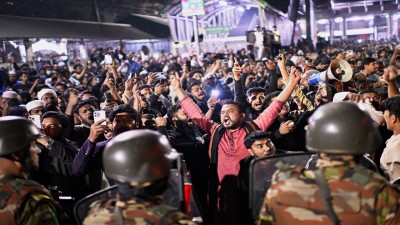
Violence broke out outside the Indian Assistant High Commission, reportedly leaving at least four people injured. The incident took place when a group of protesters reportedly clashing with security personnel near the mission’s premises. In Bangladesh, the recent protests have seen a surge in anti-India sentiments.
The mob set the office of Chorki, a Bangladeshi subscription-based over-the-top media service, on fire and vandalised the 'Chhayanot' cultural educational institution, beloved by the late musician Sanjida Khatun. All that are left behind are broken harmoniums, tablas, and banjos scattered around. Important documents, furniture, and valuable items collected and other musical instruments of the institution are also burnt to ashes.
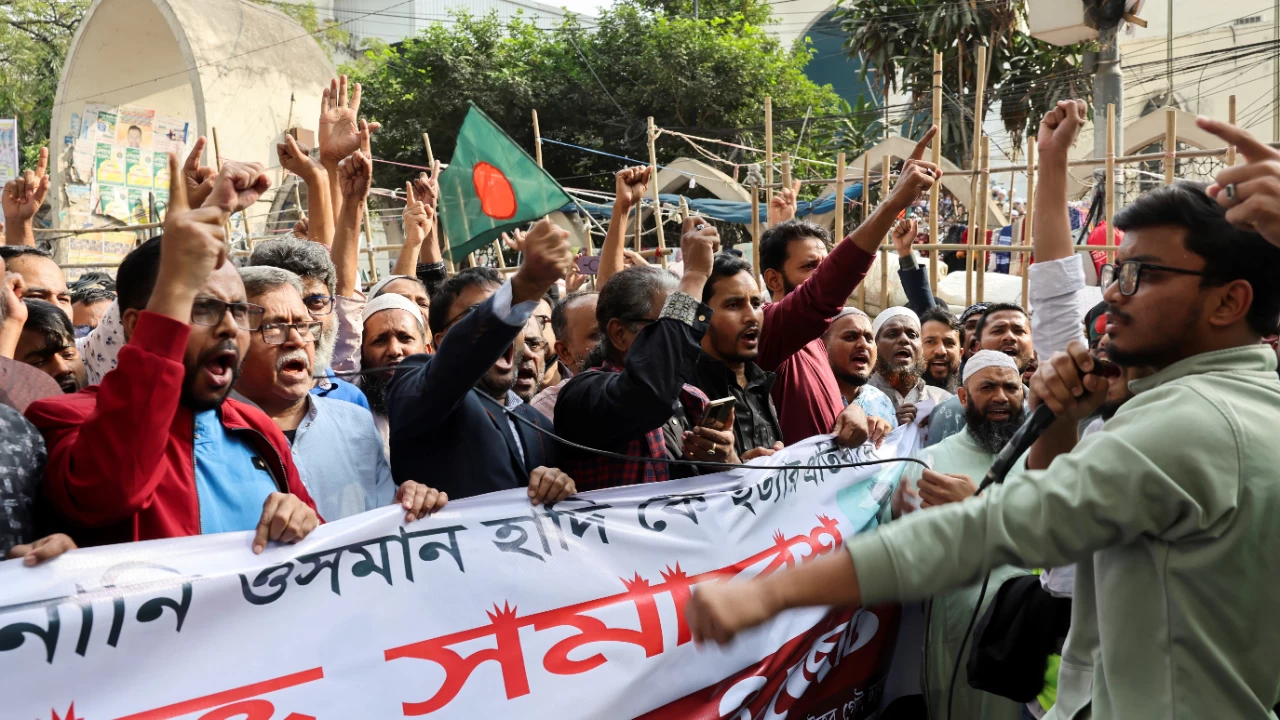
Bangladesh witnessed calm on Friday morning, but still, protesters carried national flags and placards, continuing demonstrating at Shahbagh in central Dhaka, chanting slogans, demanding justice. The National Citizen Party, that the students who played a key role in dethroning Hasina formed has warned of possible violence today. Around 1,500 people gathered at Dhaka's national mosque after Friday prayers for a rally called by Khelafat Majlis, an Islamist political party. The gathering was peaceful, but that may just be the calm before the storm.
Bangladesh's Interim Government's Chief Adviser Muhammad Yunus' key aide and Press Advisor Shafiqul Alam said, "To all my friends, I am deeply sorry that I failed you." However, it remains to be seen how the government quells this latest spate of violence that threatens to throw Bangladesh into a vortex of chaos.