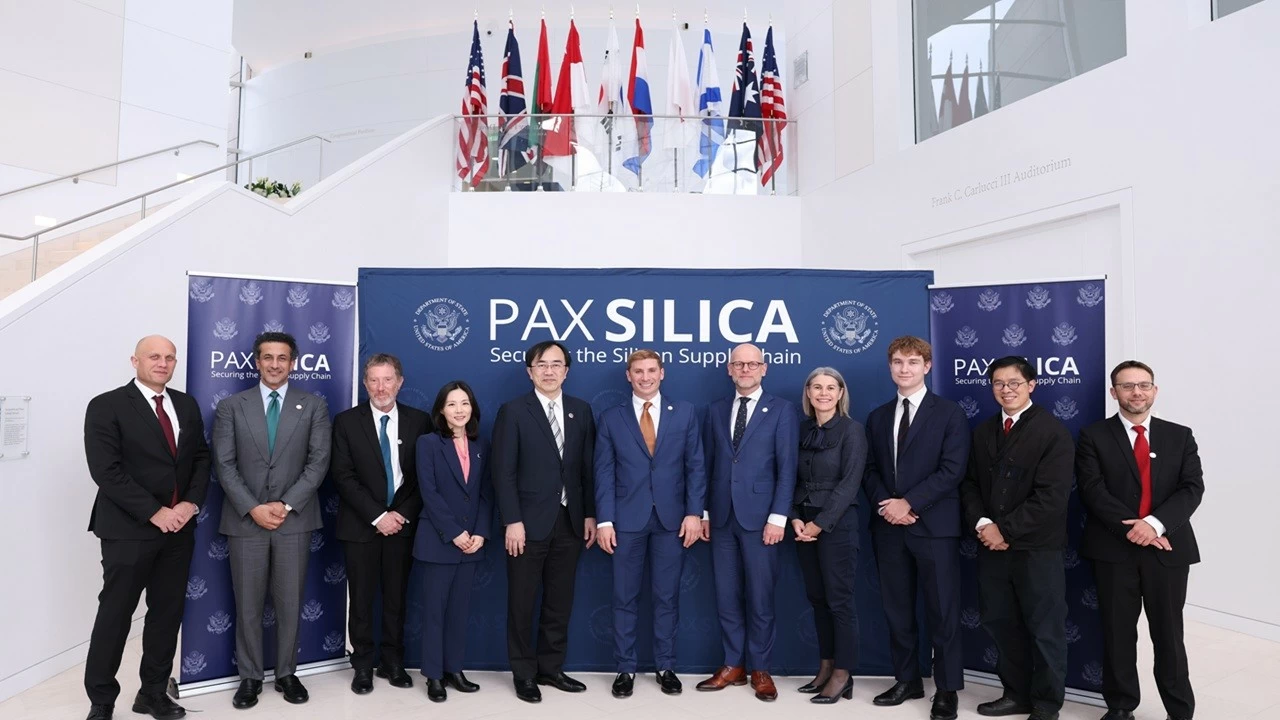
New Delhi: The United States has unveiled a new technology-focused coalition called Pax Silica, signalling a push to reorganise global supply chains around critical sectors such as semiconductors and
artificial intelligence (AI). It understandably takes its name after ‘silica’, the base material for silicon chips, the pivotal building blocks of modern computing technologies.
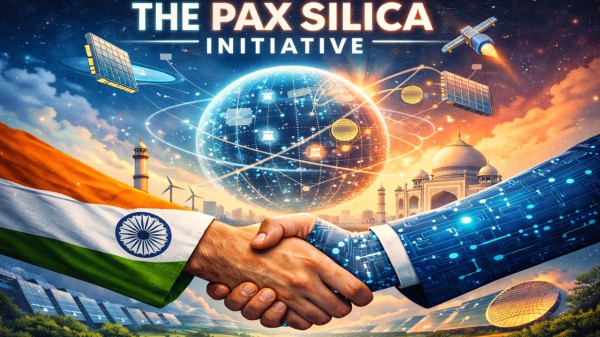
While India was formerly not a part of the grouping, it might soon be joining in. US ambassador Sergio Gor, who is currently on a visit to India, announced on Monday that India will be invited to join Pax Silica.
What is Pax Silica?
While most previous international alliances have been around military or political aims, Pax Silica is unlike any such older institution. It is being touted as a collaborative framework of capabilities to build a dependable, innovation-driven value chain that covers the full spectrum of technology essentials. These may include critical minerals, energy inputs, chip manufacturing, advanced fabrication, AI infrastructure and the logistics that sustain them.
In this sense, it is a timely initiative with the global race for AI being fought out at an extreme pace currently. Pax Silica began with countries that already play a central role in the global tech ecosystem, that is Japan, South Korea, Singapore, the Netherlands, the United Kingdom, Israel and Australia. Its footprint has since expanded, with Qatar and the United Arab Emirates joining in January. The partnerships show the willingness of the US to add non-traditional alliances to build solidly for future technological advancements.
What India’s inclusion means
Pax Silica is aimed at reducing vulnerabilities arising from concentrated supply chains and ensuring that key technologies are not disrupted by geopolitical tensions. The US touts it as an attempt to build an ecosystem where member countries can collaborate, innovate and maintain stable access to high-end technology resources.
India joining the alliance would be pivotal for it at a time when evolving global competition over control of next-generation technologies is staunch. As AI, advanced computing and semiconductor capacity become central to economic and strategic power, Pax Silica represents an attempt to shape the race in the field. India’s probable inclusion would mean it would not be left out of the emerging trends in the technology’s future.
It is also important to note that India joining this non-China bloc would give it an edge over its neigbhour when it comes to acquisition of rare-earth metals and AI technological advancements. This is pivotal for India at a time when global technology supply chains are being redrawn due to currently ongoing geopolitical upheavals.
India’s participation in Pax Silica would significantly advance its ambitions in semiconductor self-reliance by ensuring predictable access to rare earth minerals. It would also help the country in AI hardware, defence technologies, and high-value manufacturing. A secure rare-earth mineral supply would strengthen initiatives like Make in India as well. Apart from direct acquisition of the minerals, the step would also help India integrate with technologically advanced partners in the emerging fields of AI.