Sign In
By signing in or creating an account, you agree with Associated Broadcasting Company's Terms & Conditions and Privacy Policy.
By signing in or creating an account, you agree with Associated Broadcasting Company's Terms & Conditions and Privacy Policy.
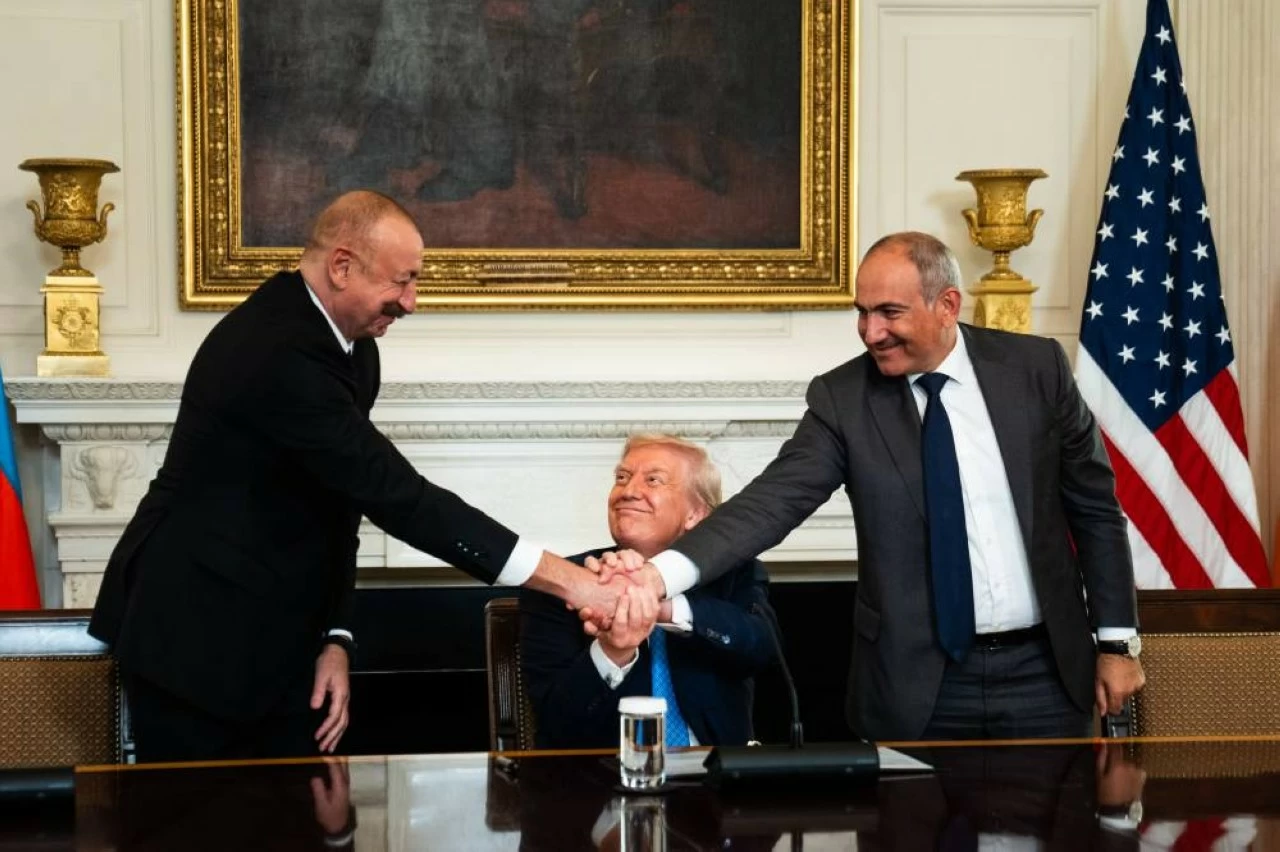


New Delhi: In a historic moment, leaders of Armenia and Azerbaijan signed a peace agreement at the White House on Friday. The newly signed US-backed deal brings an end to a long-standing conflict between the two countries.
Under the stipulations of the new deal, a new trade route is expected to open, as will the reopening of key transportation routes. The deal being brokered by the US is significant, in a region where influence of Russia has nearly been all-pervasive, the move by the US is an example of its ascending influence after Russia’s recent loss of privilege.
The deal includes an agreement that will create a major transit corridor linking Azerbaijan to its exclave of Nakhchivan, the US will own development rights to this corridor. In an attention grabbing move, it was announced that the corridor will be named the Trump Route for International Peace and Prosperity. Donald Trump said that naming the route after him was “a great honour for me”, but “I didn’t ask for this”. It was later reported that it was Armenia who suggested the name.
The conflict between Azerbaijan and Armenia is decades old and centres on the fight for control of the Karabakh region, also as Nagorno-Karabakh. The area was largely populated by Armenians during the Soviet era but is located within Azerbaijan. Various violent escalations for control of the region have ensued over time and while many efforts to bring about peace had been attempted by various international parties, peace was till now wanting.
Apart from bringing an end to the conflict and announcement of a new US-build corridor, it is expected that other deals between the two countries and the US would also be expected to come in, these would include possible partnerships in economy, energy and technology.
The leader of both the countries acknowledged that the much wanted truce was brought about by Trump and the US. “We are laying a foundation to write a better story than the one we had in the past,” Pashinyan said, calling the agreement a “significant milestone”. “President Trump in six months did a miracle,” Aliyev said. Trump remarked on how long the conflict had gone on between the two countries, adding, “Thirty-five years they fought, and now they’re friends and they’re going to be friends a long time.”
The newly announced route that is part of the peace agreement will connect Azerbaijan and its autonomous Nakhchivan exclave, which are separated by a 32 kilometre patch of Armenian territory. For Azerbaijan, a major producer of oil and gas, the route also provides a more direct link to Turkey and further towards Europe. Trump also voiced his wish to someday visit the route, saying, “We’re going to have to get over there.”
The agreement was welcomed by UK’s foreign secretary, David Lammy, who congratulated Armenia and Azerbaijan “on the bold steps taken in Washington”. The presidents of the European Commission and the European Council, Ursula von der Leyen and António Costa, also praised the deal wishing for a swift “full-fledged normalisation” between the two countries.
While the news of the peace between the two countries has been welcomed by most, Iran and Russia look to be the two nations feeling discontent from it. Iran’s foreign ministry for example reacted by issuing a warning against foreign involvement in the conflict. While welcoming the conflict’s end, Iran has long opposed the creation of the transit corridor that now forms an important part of the deal. The deal between the two former Soviet republics is also not exactly conducive to Russia’s regional influence in the region. A major power player in the region, for such an important deal to go under without its intrusion would not likely go well with a country which already is engaged in a major conflict in the region.