Sign In
By signing in or creating an account, you agree with Associated Broadcasting Company's Terms & Conditions and Privacy Policy.
By signing in or creating an account, you agree with Associated Broadcasting Company's Terms & Conditions and Privacy Policy.
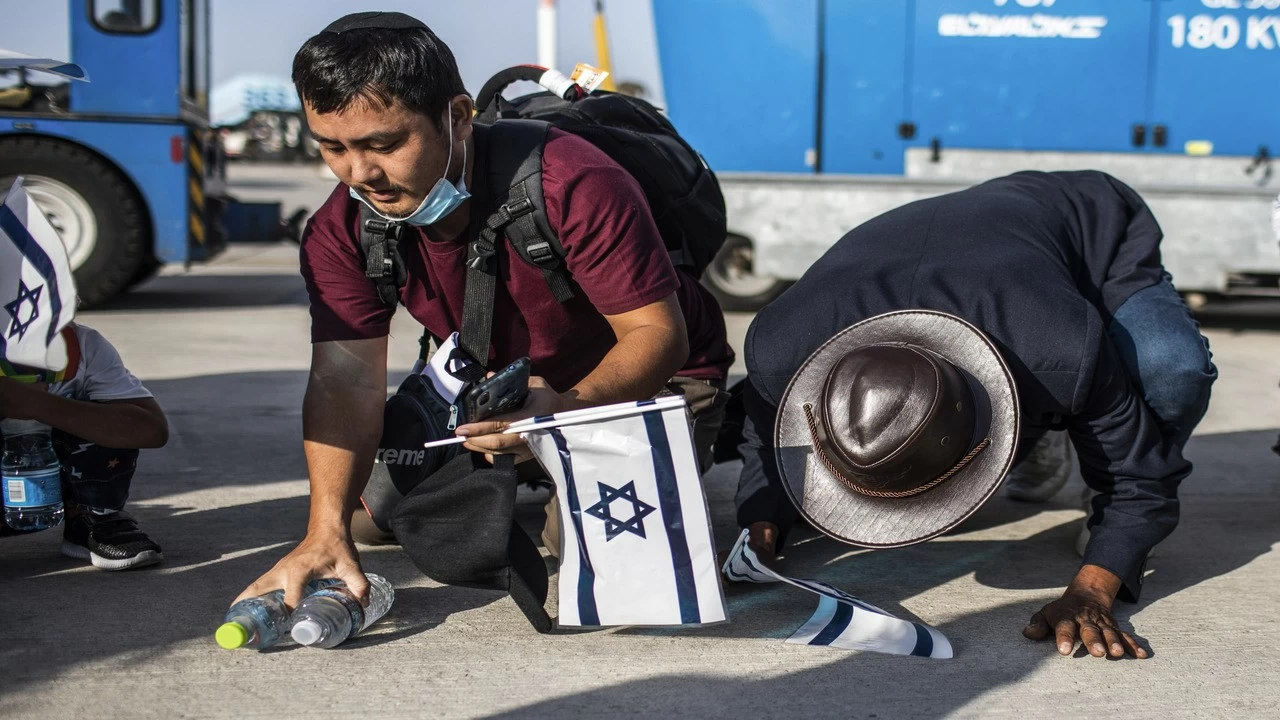


New Delhi: The Israeli government on Sunday approved a plan to bring the majority of the Bnei Menashe community members that still reside in India to Israel over the next five years. The proposal was submitted by Israel's Prime Minister Benjamin Netanyahu and Aliyah and Integration Minister Ofir Sofer.
It will now enable approximately 5,800 members of the northeastern Indian community to immigrate to Israel by 2030. Out of this, about 1,200 community members are expected to arrive by the end of 2026. Currently an estimated 5,000 Bnei Menashe are already living in Israel.
The Bnei Menashe immigrants coming into Israel from India will reportedly be undergoing Orthodox conversion through the Chief Rabbinate and will mainly settle in Nof HaGalil and other northern Israeli communities. This move is also seen as part of the Israeli attempt to strengthen the Galilee region following the war.
The Bnei Menashe, who trace their ancestry to one of the Ten Lost Tribes of Israel, live primarily in the Indian states of Mizoram and Manipur among the Kuki-Chin and Mizo tribal populations. Their migration to Israel is not new, as in the past two decades, around 4,000 community members have already made the journey.
"This is an important and Zionist decision that will also bring strength to the North and the Galilee," Israel's Prime Minister Benjamin said in a statement. "Today we are making an important and valuable decision that will enable the aliyah of members of the Bnei Menashe community over the next five years,” Ofir Sofer, Minister of Aliyah and Integration further added. The country’s Finance Minister Bezalel Smotrich called it "a renewed connection of brothers who have carried the yearning for Zion in their hearts for generations."
As part of the move, an Israeli delegation is expected to travel to India soon to begin processing applications in coordination with the Chief Rabbinate, the Conversion Authority, the Population and Immigration Authority, the Foreign Ministry, and the Jewish Agency.
The Bnei Menashe also known as ‘Children of Menasseh’ or the Shinlung in India, is a community of Indian Jews from various Tibeto-Burmese ethnic groups. They usually live around the borders of India and Burma and claim descent from one of the Lost Tribes of Israel.
The Ten Lost Tribes, part of the Twelve Tribes of Israel, were those Jewish tribes which were exiled from the Kingdom of Israel after it was conquered by the Neo-Assyrian Empire around 720 BCE.
According to the Bnei Menashe’s own tradition, the “return” to Jewish identity began in 1951 when a tribal religious leader had a vision where he saw that the homeland of his people was Israel. It was after this that the community started to look at Israel as their homeland, and slowly many people from the community started to follow Judaism.
From the late 20th century, a conscious movement emerged from within the community to revive Jewish practices like learning Hebrew, Jewish rituals, building synagogues and celebrating Jewish festivals. In the late 20th century, Israeli rabbi Eliyahu Avichail, of the group Amishav, named these people the "Bnei Menashe" based on their account of descent from Manasseh.
It was then in 2005 that the then-Sephardi Chief Rabbi of Israel, Shlomo Amar, formally recognised the Bnei Menashe as descendants of Israel. This important move finally made them eligible, often but not always after conversion, to immigrate under the “right of return.” Thus, many Bnei Menashe began migrating to Israel.