Sign In
By signing in or creating an account, you agree with Associated Broadcasting Company's Terms & Conditions and Privacy Policy.
By signing in or creating an account, you agree with Associated Broadcasting Company's Terms & Conditions and Privacy Policy.
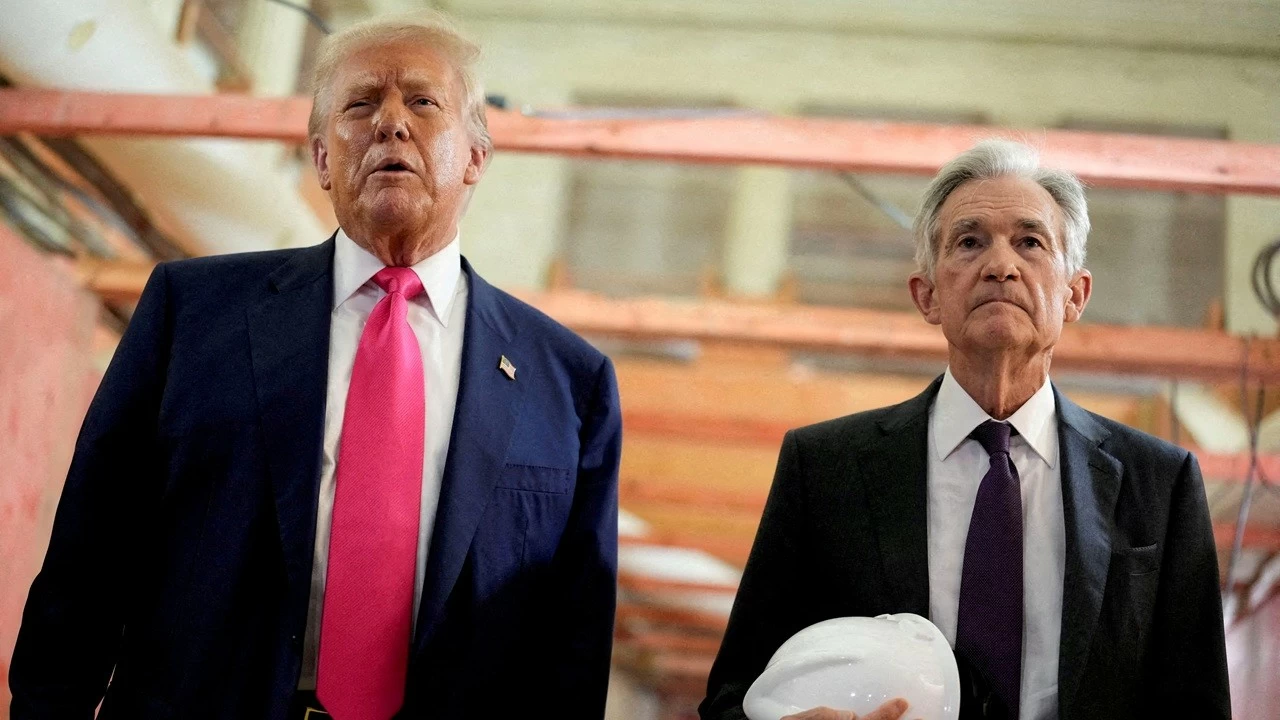


New Delhi: In the latest move that has reverberated across financial markets around the world, central banks from around the world have publicly come out in support of US Federal Reserve Chair Jerome Powell, insisting on “full solidarity” with his leadership.
Governors from major institutions that among others include the European Central Bank, Bank of England and the Bank of Canada have issued a joint statement backing Powell as he remains in a stiff confrontation with the administration of US President Donald Trump.
Principally the standoff between the Federal Reserve and Trump’s administration is the President's near constant criticism of Powell for maintaining higher interest rates and resisting political pressure to lower them to boost short-term growth.
This tension escalated sharply when the US Department of Justice reportedly launched a criminal probe into Powell, related to testimony about expensive Federal Reserve headquarters renovations. This was described as politically motivated by Powell himself.
Trump’s criticism is rooted in conventional presidential frustration with the Fed’s cautious approach, with the President now taking his objections public and voicing them aggressively. Trump argues that lower rates could support housing markets and reduce government borrowing costs. On the other hand, Powell has maintained the Fed’s mandate of price stability and full employment, independent of political winds. This has not gone down with the Trump administration.

Another major point of contention between the two parties is the independence of the Federal Reserve, that is their institutional independence to set monetary policy without direct political interference. This is regarded as pivotal for the Fed to make judiciable decisions regarding an array of things, be it maintaining price stability or safeguarding financial systems.
It is in this context that the joint statement by global central bankers is important, which underscores this point. It reiterates the Fed’s claim that the independence of a central bank is the cornerstone of economic stability for citizens. Most of the signatories have also described Powell as a leader of “integrity” and “unwavering commitment” to his public mandate.
The global support is significant as the consequences of the standoff between the Fed and Trump are far-reaching and global. The Federal Reserve influences global interest rates, and any perceived weakening of the Fed’s independence can affect currency markets, investment flows, and international monetary policy. The show of international solidarity thus sends a powerful message, reaffirming that central bankers view monetary autonomy as principal and this also reflects the interconnected nature of global finance.