Sign In
By signing in or creating an account, you agree with Associated Broadcasting Company's Terms & Conditions and Privacy Policy.
By signing in or creating an account, you agree with Associated Broadcasting Company's Terms & Conditions and Privacy Policy.
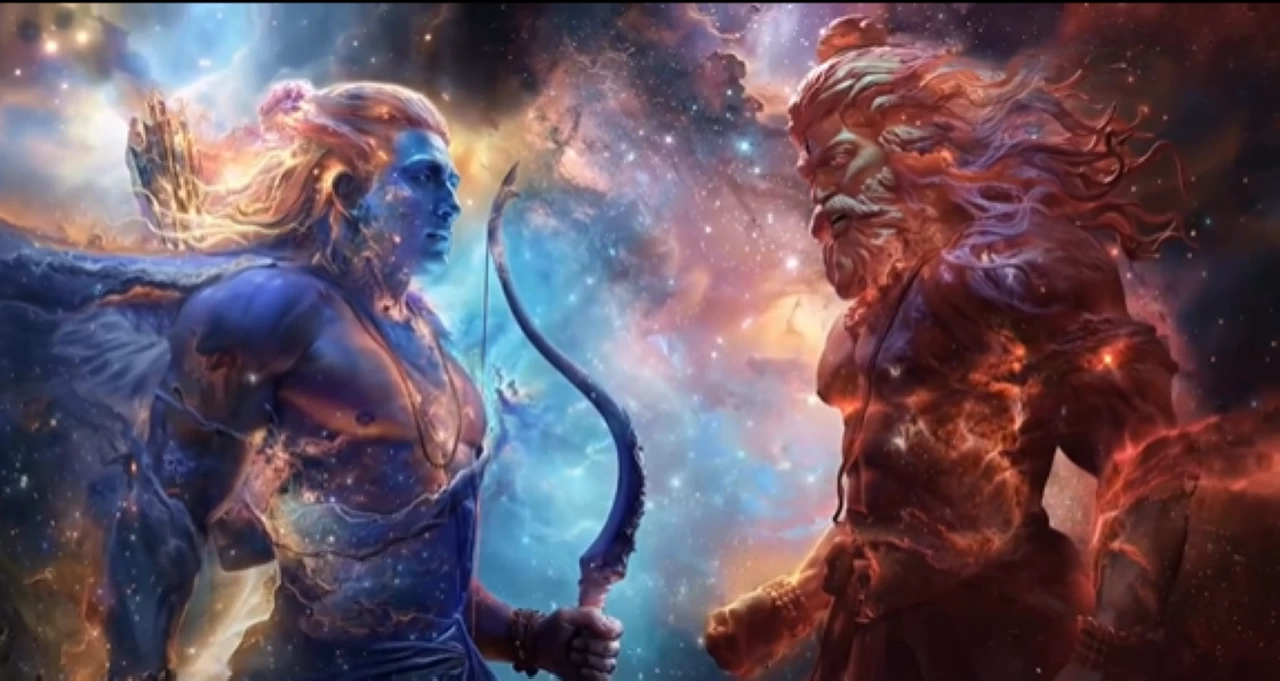


New Delhi: Two of the most awaited movies, one from Bollywood and one from Hollywood, are Ramayana and Odyssey. Two of the most revered and influential epics from the West and the East, films based on them are currently the most highly anticipated, creating the most buzz.
The phenomenon is not isolated to the excitement around just these two films, but shows a larger trend. Stories based on religious epics, historicals, and folklore are back in trend in a time where modernity is surging at breathtaking speed, but the need to relive our cultural legacies also seems to be going strong.
Mythological movies have always been popular, from ancient stories to powerful characters they have been both entertaining and inspirational. One of the most anticipated movies in India currently is the Ranbir Kapoor-Sai Pallavi starrer Ramayana which is on its way and will be released next year.
Directed by Nitesh Tiwari and written by Sridhar Raghavan, the first part of the two-part planned series is slated to release on Diwali next year. The film stars Ranbir Kapoor as Lord Ram, Yash as Ravana, Sai Pallavi as Mata Sita. The extended cast also includes Ravi Dubey, Sunny Deol, Amitabh Bachchan, Arun Govil, Lara Dutta, Kajal Aggarwal, Rakul Preet Singh, Kunal Kapoor. It is set to be one of the costliest movies ever made in India.
Globally, the other big epic which has fans in throes of excitement is Christopher Nolan’s upcoming film The Odyssey. It has been generating quite a buzz ever since it was announced, being the next venture of one of the most celebrated directors working globally today.
Recently a poster of the film was released online which had the internet up in frenzy, showing the craze and anticipation that is palpable around its release. The poster showed the film’s title in bold blue letters, placed above the image of a Greek statue’s head. Beneath the title is the statement, “Shot entirely with IMAX film cameras”, while the tagline "Defy The Gods" appears in red above the release date.
Universal Pictures had earlier announced the release date of the film on social media, saying, “The film brings Homer’s foundational saga to IMAX screens for the first time and opens in cinemas everywhere on 17 July 2026 (sic).” It stars Matt Damon as Odysseus, the king of Ithaca, and chronicles his long and perilous journey home following the Trojan War. The ensemble cast also includes Tom Holland, Anne Hathaway, Zendaya, Lupita Nyong'o, Robert Pattinson, Charlize Theron, Jon Bernthal, Benny Safdie, John Leguizamo, Elliot Page, Himesh Patel, Mia Goth, and Corey Hawkins.
The power of the medium of film is extremely influential. Acting on the subconscious, its subliminal messaging is powerful and has been used in various ways throughout its inception. The medium’s power has also been used in education and propagation of ideologies.
It is in this context, that the recent resurgence of historical epics in film is extremely important. In the case of India, propagation of the story of Ramayana, one of our most important and holy religious epics, is important. Similarly, to revisit the story of Homer’s Odyssey is important for the West.
These revisitations of the old epics are most necessary for the current generations, many of whom might be at a distance from these stories. They might have heard about them superficially but in-depth knowledge of them is often missing. It is thus the need of the hour that the current generation knows their cultural heritage and there is no better medium that can enable this than film.
The demand for such films seems to have arisen because of this only. While there are many mediums of visual entertainment today that can rival film, most of them are short-timed and fickle in content. They follow trends which shift quickly and are not instructive at large. The dissonance that occurs between the need for entertainment and education has the masses needing something that can satisfy both needs. Modern retelling of our historical epics is thus perfect for this.