Sign In
By signing in or creating an account, you agree with Associated Broadcasting Company's Terms & Conditions and Privacy Policy.
By signing in or creating an account, you agree with Associated Broadcasting Company's Terms & Conditions and Privacy Policy.
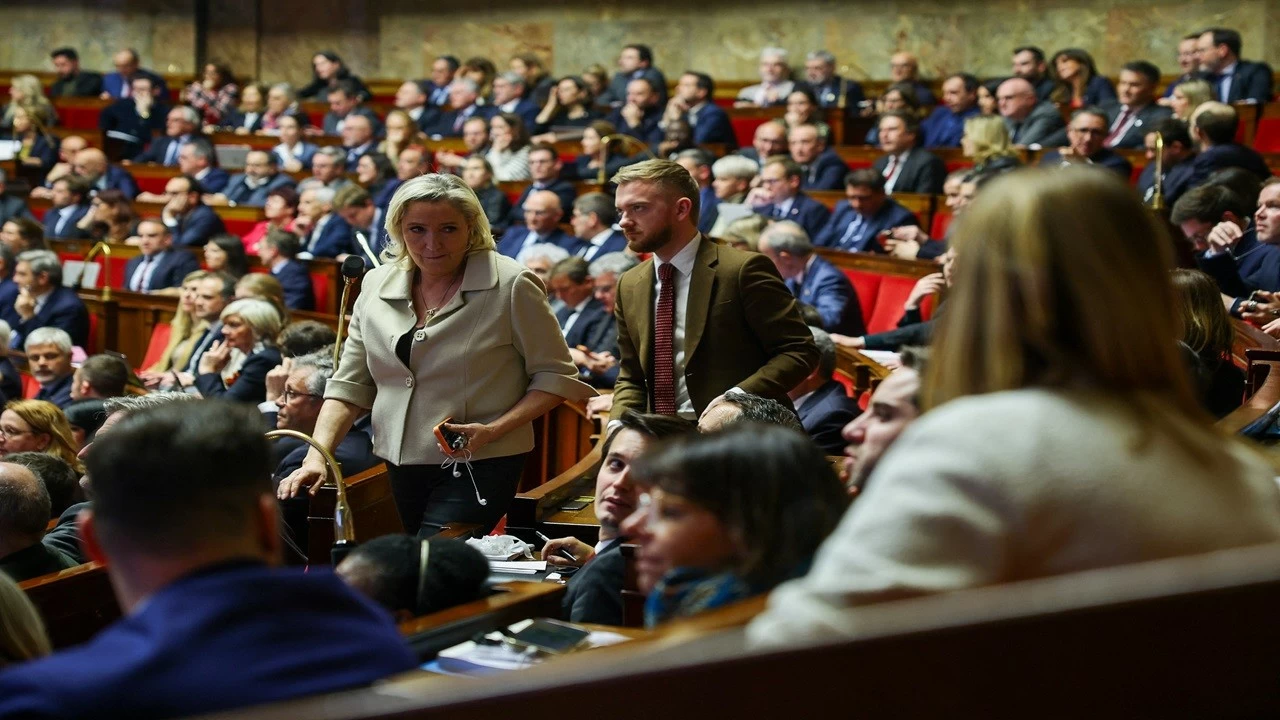


New Delhi: A row over brothels has gripped Europe. Lawmakers from Marine Le Pen’s National Rally in France are calling for the reopening of brothels, pointing out that the party will soon roll out a bill allowing sex workers to operate them.
In other EU countries, similar debates are taking place. In Italy, members of Giorgia Meloni’s coalition are backing to reopen brothels and regulating prostitution.
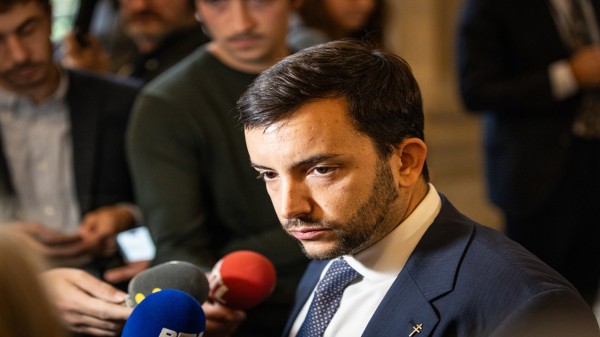
In France, Jean-Philippe Tanguy, a member of Le Pen’s National Rally, has chalked out a draft of the bill.
Tanguy, an RN MP in France’s Assemblée Nationale, who claims he has Le Pen’s backing, has reportedly said that the bill would let sex workers run their own cooperatives — doing away with pimps and putting full control in the hands of the workers. He was quoted as saying that “Prostitutes would be empresses in their kingdom.”
Advocators contend that the aim behind the move is to create a legal, regulated framework for sex work instead of letting the exploitation to continue. They argue reopening the brothels could curb illegal trafficking, boost safety and hygiene, safeguard workers’ rights, and bring the industry out of the shadows.
Earlier, brothels were known as “maisons closes” (locked houses). In France, they were banned in 1946 under the Marthe Richard law. Richard was a sex worker, pilot, spy, and politician. He had called for such a law during her tenure as a councillor in Paris’s 4th arrondissement.
The 1946 law saw closure of around 1,400 brothels which had operated under state supervision since the 19th century, including 195 in Paris. French law does not prohibit sex workers from offering their services. However, it imposes a €1,500 fine on clients. In 2016, the law was promoted by the Socialist Party and came into effect under François Hollande’s government.
Tanguy was quoted as saying by French media that when he was young, he was involved in the work of the Bus des Femmes (a sex worker aid association) in the Bois de Boulogne (Paris).
“I saw the precariousness, the suffering, the daily horror that these women experienced.” He has said the 2016 law goes a long way in subjecting workers to more suffering. “They get beaten up, sometimes have their throats slit, and no one talks about it...the height of bourgeois hypocrisy,” he pointed out.
Another National Rally MP Sébastien Chenu said “ensuring the safety of prostitutes has been Marine’s position for a very long time”. He added that many sex workers want regulation of the practice.
Previously, Le Pen had dubbed the 2016 law as “a stupid idea” that would put sex workers in “additional danger”. She said France should “send these young women back to their countries of origin” and to “wage a fight to the death against foreign mafia networks” that traffic women and operate illegal brothels.
However, there are some who criticise the bill.
Delphine Jarraud, who works at sex worker help association Amicale du Nid, was quoted as saying by Le Monde: “Recreating places where human beings are locked up, just to satisfy the sexual needs of men that are considered irrepressible, no, that’s unimaginable.”
Mylène Juste, a sex worker in Paris for over 20 years, said: “There is no question of finding ourselves allied with the RN and those who want to drive out foreigners.”
The debate in France isn't isolated. In Italy, politicians from Meloni’s governing coalition, especially from the Lega and Forza Italia, have voiced their support for regulating the industry.

Under the 1958 Merlin Law, prostitution is currently prohibited. Matteo Salvini, who leads the Lega party, said the country should “end hypocrisy” and “consider regulated prostitution”.
Some Forza Italia politicians have asked the government to reopen state-regulated brothels, implement health and safety checks for workers, and legalise the industry for taxation — like Germany's model.
In 2022, Belgium entirely decriminalised sex work for prostitutes and clients. It is now providing labour shield to sex workers, including social insurance, paid sick leave, maternity leave, unemployment benefits and a pension.