Sign In
By signing in or creating an account, you agree with Associated Broadcasting Company's Terms & Conditions and Privacy Policy.
By signing in or creating an account, you agree with Associated Broadcasting Company's Terms & Conditions and Privacy Policy.
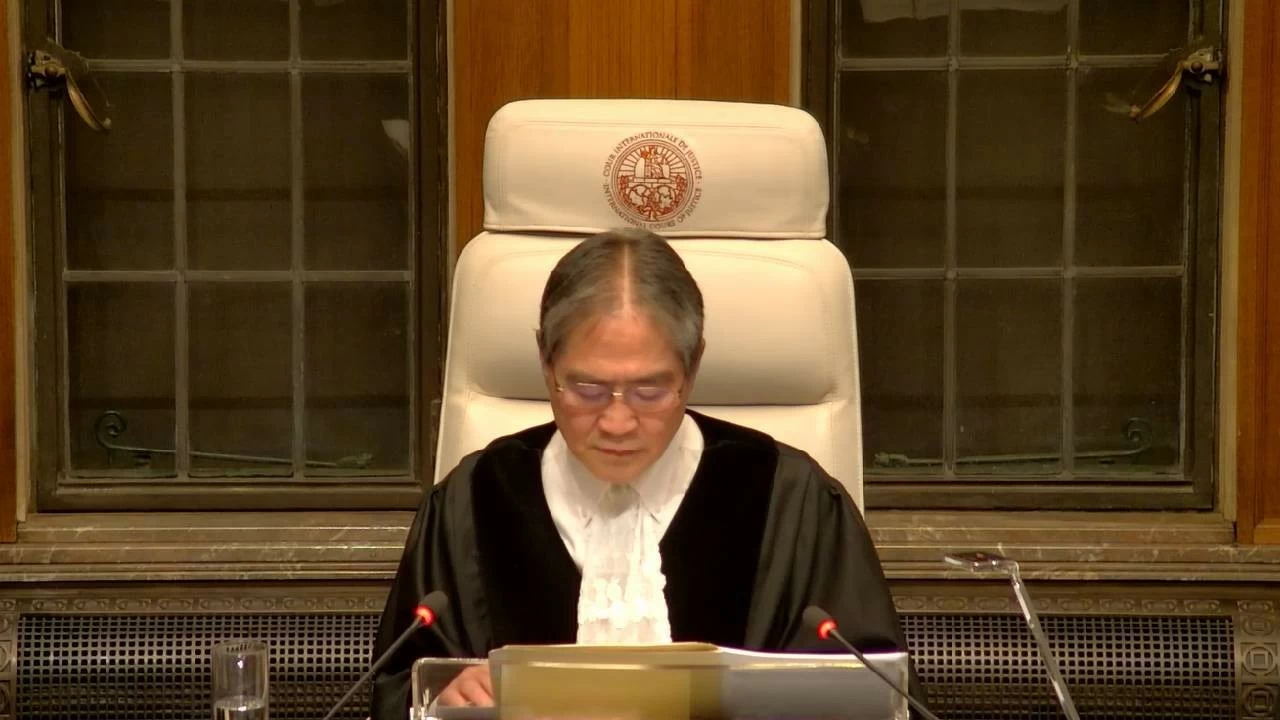

The International Court of Justice (ICJ), the top UN court, has said in its advisory opinion on Israel’s legal obligations to make sure humanitarian aid including food, medicine reaches Palestinians in Gaza and the Occupied West Bank, that Israel must not use starvation as a method of warfare. The court said in its ruling that Israel failed to prove its claims that many UNRWA staff are Hamas.
In December 2024, the UN General Assembly asked the ICJ to give its advisory opinion after Israel, the occupying power, banned UN Relief and Works Agency (UNRWA) for Palestinian Refugees in the Near East, from operating in Gaza.
‘Israel has obligations to provide humanitarian provisions’:
The ICJ finds that Israel as an occupying power and based on 4th Geneva Convention and customary convention has obligation to protect the civilian population, even under conditions of active fighting.
The court finds that the local population has been inadequately supplied and that Israel has obligation to provide humanitarian provisions. The court notes that there is no evidence that UNRWA has breached the principle of impartiality.
"Israel is obligated to allow relief efforts by third parties including impartial international organizations, which includes UNRWA," ICJ President Yuji Iwasawa said.
“As an occupying power, Israel is obliged to ensure the basic needs of the local population, including the supplies essential for their survival,” the court said. It also ruled that Israel is violating international law by banning UNRWA and blockading humanitarian aid.
Fragile ceasefire:
The advisory opinion comes in the background of a fragile ceasefire that went into effect on October 10, after Israeli bombs killed over 70,000 Palestinians in Gaza and the besieged enclave was in ruins. In August, famine was officially declared in Gaza.
Since the latest ceasefire, just 986 trucks have entered Gaza, significantly less than the 6,600 trucks intended to have entered by Monday, Gaza media office said.