Sign In
By signing in or creating an account, you agree with Associated Broadcasting Company's Terms & Conditions and Privacy Policy.
By signing in or creating an account, you agree with Associated Broadcasting Company's Terms & Conditions and Privacy Policy.
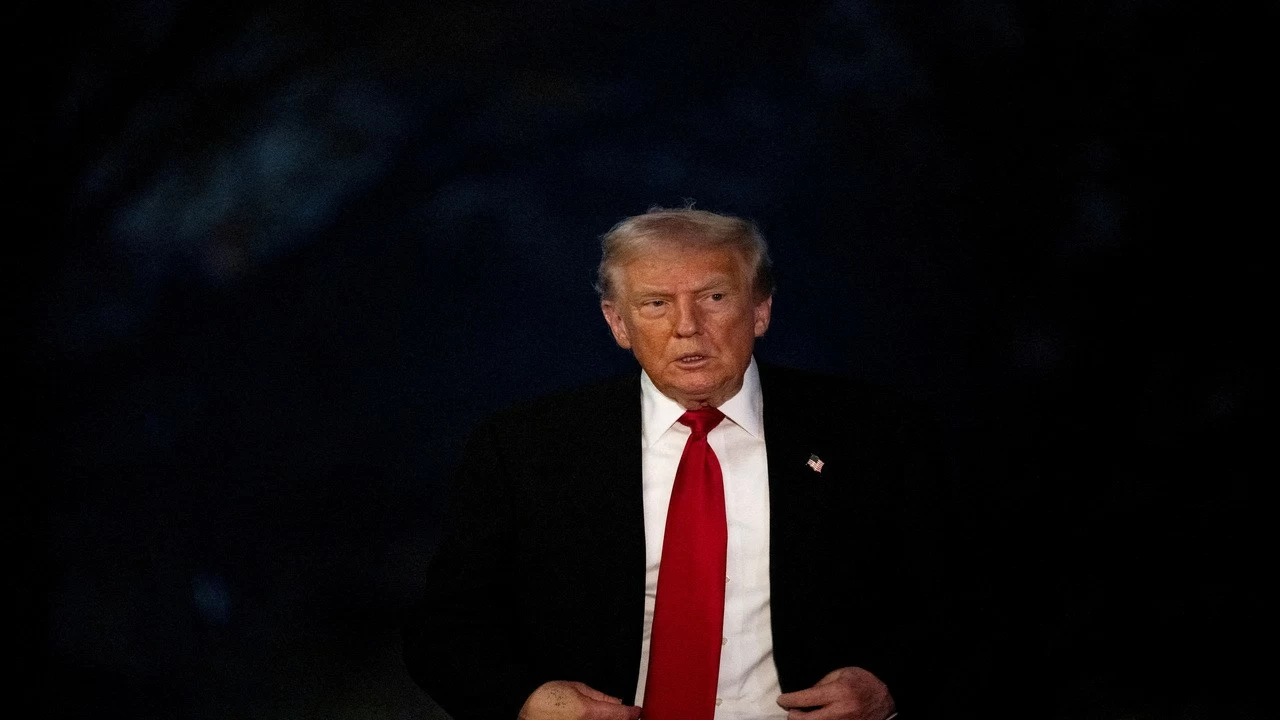


New Delhi: US President Donald Trump’s positions on events, both domestic and international, are known to be fickle. Recently the brunt of his unpredictability is being faced by Europe. This comes at a time when the US President has hinted that he could walk away from supporting Ukraine and compounded this claim with describing the whole of Europe as “weak” and “decaying”, claiming it was “destroying itself” through immigration.
In a recent interview to Politico, US President Donald Trump made some startling remarks on the ongoing Russia-Ukraine war that have become a major cause of concern across Europe. Trump called for Ukraine’s president, Volodymyr Zelenskyy, to accept his proposal to cede territory to Russia, arguing that Moscow retained the “upper hand” and that Zelenskyy’s government must “play ball”.
“I don’t want to rule in or out. I don’t talk about it,” Trump said in reference to his peace deal not having been agreed on till now, adding he did not want to talk about military strategy. Trump was further reportedly seen describing some unnamed European leaders as “real stupid”. “If it keeps going the way it’s going, Europe will not be … in my opinion … many of those countries will not be viable countries any longer. Their immigration policy is a disaster. What they’re doing with immigration is a disaster. We had a disaster coming, but I was able to stop it.”
While the intensity of these explicit comments from Trump against Europe and its leaders is new, the sentiments behind them are not. Trump’s recent sharp comments follow the release last week of a new US national security strategy that claimed Europe faced “civilisational erasure” because of mass migration.
These moves follow a recent trend of the Trump administration’s interventions against Europe. Many of the US administration’s moves have not been well received by the European leaders. In response to such US comments, the German chancellor Friedrich Merz rejected the notion that European democracy needed saving. Merz said on Tuesday that the new US policy document underscored the need for a European security policy more independent of Washington. “Some of it is unacceptable for us from the European point of view,” he commented. “That the Americans want to save democracy in Europe now, I don’t see any need for that … If it needed to be saved, we would manage that alone,” he further added.
Such comments from Donald Trump do not heed well for the long-standing strategic partnership between the US and Europe, seen by most as a monolith termed the ‘West’. Ties based on historical legacy and successes in global military efforts and trade, it has been Trump’s unpredictable and non-traditional policy measures that have caused this recent rupture in this old partnership. The rupture though is not incidental, be it the Ukraine-Russia war or trade deals, Trump has been insistent on implementing a fair deal from all quarters, be it old partners or new foes.
It is in this context that Trump’s recent comments should be seen. While they might not cause a sudden cessation in the good relations between the US and Europe, which in itself is not a monolith when it comes to relations with Trump, the larger repercussions may take time to materialise.
On the other side, Trump’s unpredictable nature may see him move towards Europe with a more amiable stride again. The historicity of the ties in this regard will also be of big help. The Ukraine-Russia war is currently a big impediment in the relations between EU and the US under Trump, but larger civilizational and trade ties may eventually save the relations from today’s sharp commentary.