
Sign In
By signing in or creating an account, you agree with Associated Broadcasting Company's Terms & Conditions and Privacy Policy.
By signing in or creating an account, you agree with Associated Broadcasting Company's Terms & Conditions and Privacy Policy.
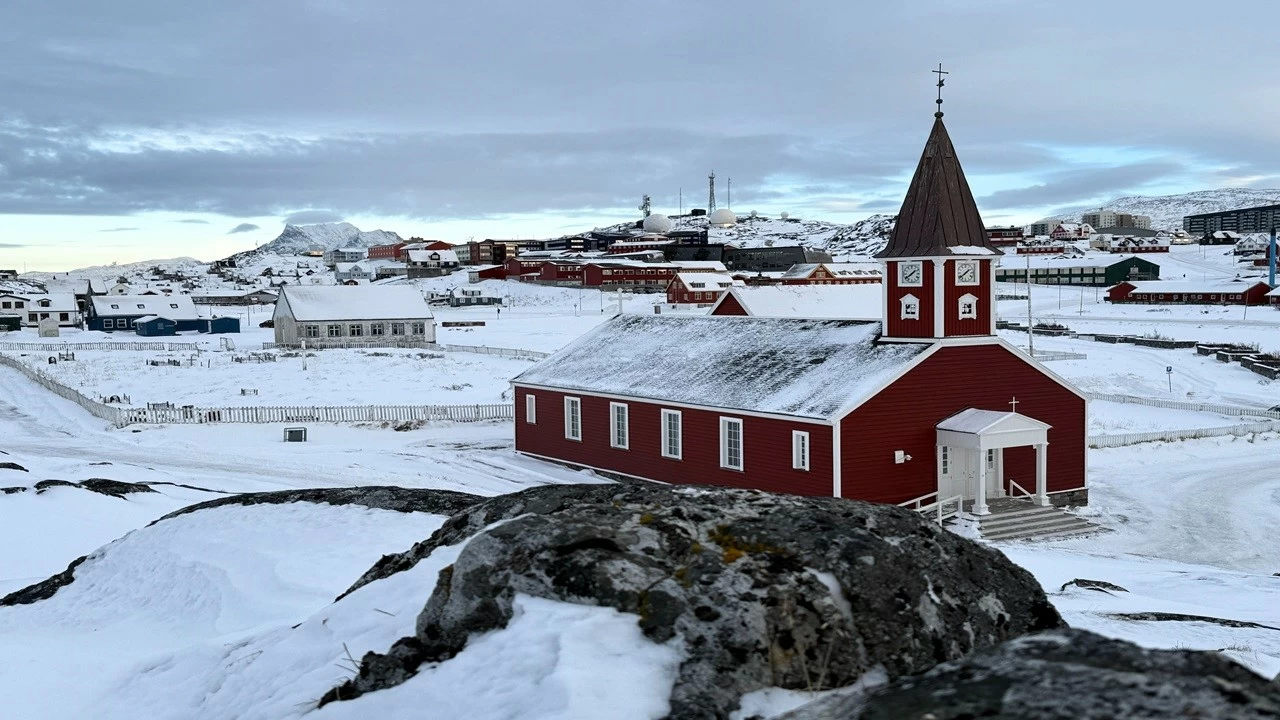


New Delhi: US President Donald Trump on Wednesday raised his rhetoric over Greenland. He reiterated: "“We need Greenland for national security."
The US, Danish and Greenlandic officials held high-level talks over Greenland in the White House. Following the meeting, Denmark's foreign minister said there is a "fundamental disagreement" with the US over Greenland. Lars Lokke Rasmussen said Trump was insisting on "conquering" Greenland which was "totally unacceptable". "We made it very, very clear that this is not in the interest of [Denmark]," he added.
Later, Trump voiced interest in acquiring the resource-rich island, a stand that unsettled allies across Europe and intensified tensions with NATO.
On Wednesday, the White House posted a controversial graphic, which showed Greenland has two options: US or Russian-Chinese influence. Shared on X, the controversial post was captioned, "Which way, Greenland man?"
Can US take over the island nation? Are Trump's concern about Greenland's security justified? How might global geopolitics around Greenland evolve in the years ahead?
Greenland is an autonomous region within the Kingdom of Denmark. It is neither an independent country nor a Danish colony. Greenland has its own internal governance, with an elected parliament (Inatsisartut) and a government (Naalakkersuisut).
Greenland's government has control over its natural resources (including mining and hydrocarbons), social welfare, healthcare, education, healthcare, policing and justice, environment, fisheries, local taxation, and local economic policy.
On the other hand, Denmark controls defence and security, foreign policy and diplomacy, monetary policy and currency, citizenship, Supreme Court jurisdiction (in some cases). Denmark also provides a block grant of about €500 million every year.
Greenland is no more a member of the EU, as it left the EEC in 1985 after gaining home rule. Denmark represents Greenland on global platforms on key sovereign matters.
The US has a military presence (Thule/Pituffik Space Base) under pacts with Denmark that date back to the era of World War II when Nazi Germany was on the rampage.
There's the 2009 Self-Government Act which gives Greenland the legal right to declare independence through a referendum.
In the Oval Office on Wednesday, Trump said: "Greenland is very important for the national security, including of Denmark. And the problem is there's not a thing that Denmark can do about it if Russia or China wants to occupy Greenland, but there's everything we can do. You found that out last week with Venezuela."
He has reiterated that the US will act “whether they like it or not" and indicated doing it the “easy way" (negotiated) or the “hard way" (implying force or stronger pressure).
Last week, reports said that Trump officials discussed offering amounts ranging from $10,000 to $100,000 to Greenlanders in a bid to pull the country away from Denmark and bring it closer to Washington. Trump knows he can't buy Greenland which has a population of nearly 57,000 and is rich in minerals, legally. Trump has also appointed a special US envoy to Greenland who is working to make Greenland part of the US.
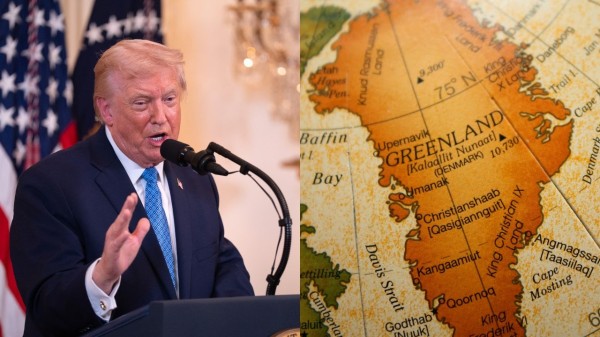
Greenland’s government and political parties have stoutly rejected any US takeover proposals. They have reiterated their commitment to remain within the Kingdom of Denmark while charting their own course in the future.
Denmark is a NATO ally. It has cautioned that any bid by the US to force Greenland away from Danish sovereignty could severely damage NATO ties. Germany, Norway, and Sweden are among key European nations that have backed Denmark.
Greenland lies on the shortest Arctic route between Russia and the US. It thus is located along possible missile flight paths. This makes Greenland an important early-warning and surveillance point for spotting intercontinental and hypersonic missiles directed towards the US. Greenland’s control determines how soon incoming attacks can be detected.
As ice continues to melt due to climate change, the Arctic is turning from a frozen shield into a key strategic highway. New shipping routes are opening between Asia, Europe, and North America. While Russia is militarising its Arctic coast and China calls itself a “near-Arctic state", the US is planning to boost its Arctic presence, enhance cooperation with allies, and protect emerging sea lanes and security interests in the region.
Greenland is also important to the US because the region has vast mineral wealth. It holds large reserves of rare earth elements, uranium, and other critical metals crucial for advanced technologies and clean or renewable energy.