Sign In
By signing in or creating an account, you agree with Associated Broadcasting Company's Terms & Conditions and Privacy Policy.
By signing in or creating an account, you agree with Associated Broadcasting Company's Terms & Conditions and Privacy Policy.
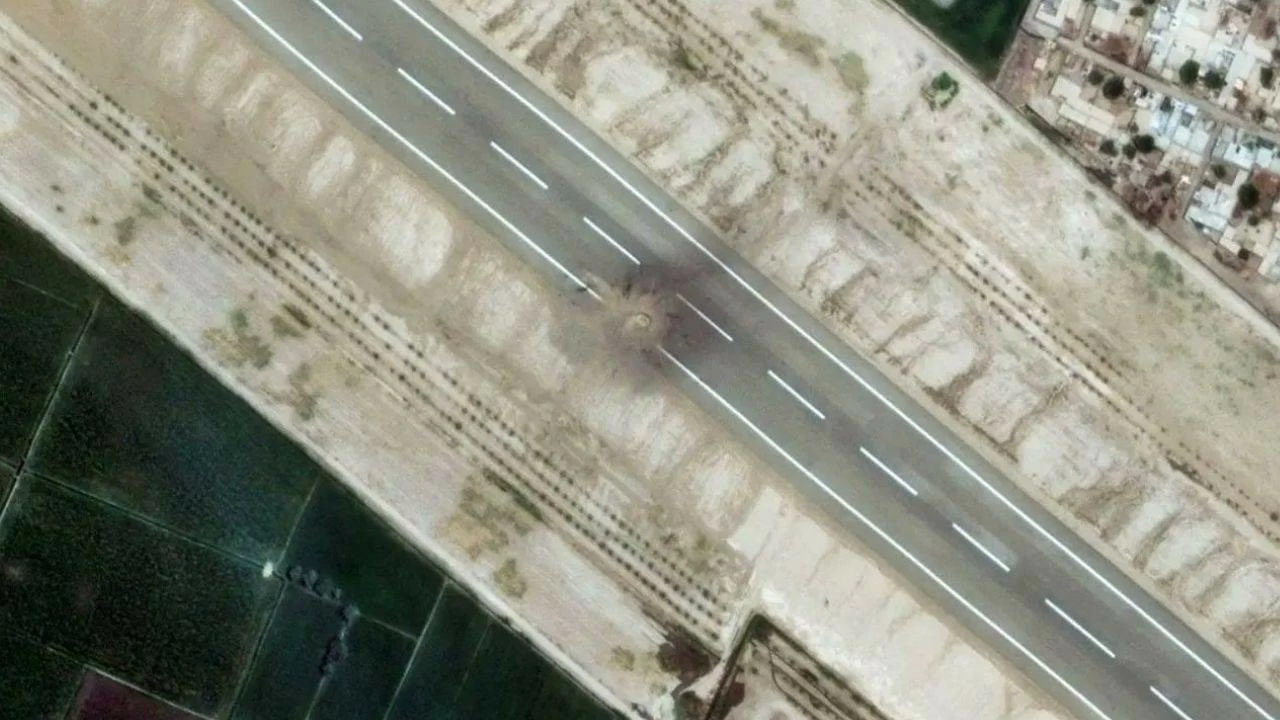


New Delhi: Pakistan has extended the closure of the damaged runway at the Rahim Yar Khan airbase until at least August 15, more than three months after it was struck by Indian Air Force (IAF) jets during Operation Sindoor on May 10.
Independent satellite imagery expert Damien Symon confirmed via social media platform X that the runway will remain offline until mid-August. The update aligns with a new NOTAM (Notice to Airmen) issued by Pakistan’s Civil Aviation Authority, extending the earlier closure which was in effect until August 5.
Initially, Islamabad had closed the runway for one week after the strike. However, the deadline has since been extended multiple times due to the scale of damage. The IAF's precision-guided munition created a massive crater nearly 19 feet deep and 43 feet wide in the middle of the runway, rendering the airbase inoperative.
Rahim Yar Khan was one of six Pakistani military sites targeted by India on May 10, in response to Pakistan's failed air intrusions and drone/missile attacks along the Line of Control and international border the night before. Other sites hit included Rafiki, Murid, Chaklala, Sukkur, and Juniya.
Satellite images released by Indian security forces after the strike showed extensive damage not only to the runway but also to a nearby building at the airbase. The affected Runway 01/19 measures 3,000 metres and has a bituminous surface, according to aviation tracking data from Flightradar24.
Strategically located in southern Punjab, Rahim Yar Khan serves as a forward operational base for the Pakistan Air Force's Central Air Command and also houses the Sheikh Zayed International Airport. Its proximity to the Rajasthan frontier makes it a critical asset in Pakistan's military infrastructure.
India launched Operation Sindoor after a deadly terror attack on April 22, in which Pakistan-based terrorists killed 26 civilians, most of them tourists. A ceasefire was eventually agreed upon on the evening of May 10, following a call from Pakistan's Director General of Military Operations (DGMO) to his Indian counterpart.