Sign In
By signing in or creating an account, you agree with Associated Broadcasting Company's Terms & Conditions and Privacy Policy.
By signing in or creating an account, you agree with Associated Broadcasting Company's Terms & Conditions and Privacy Policy.
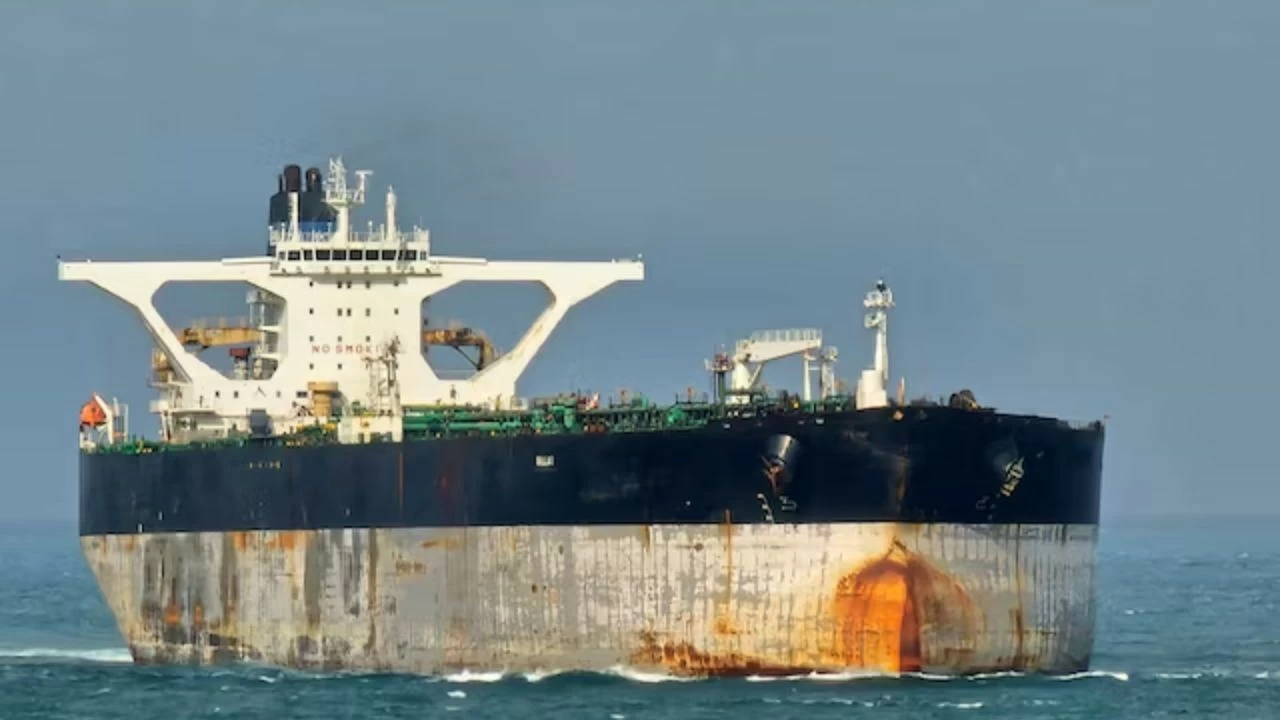


New Delhi: The US has seized a Russian-flagged oil tanker allegedly involved in transporting sanctioned Venezuelan crude, marking what officials described as a rare instance of a US military action against a Russian-registered vessel.
According to US officials, the tanker Marinera, earlier known as Bella-1, was intercepted on Wednesday in the Atlantic Ocean near Iceland after being tracked for more than two weeks. The vessel had previously evaded US maritime enforcement efforts in the Caribbean and refused to allow boarding by the US Coast Guard.
In a post on X, the US military’s European Command said the Trump administration had seized the ship for violating US sanctions. US Defense Secretary Pete Hegseth reinforced the message, saying, "The blockade of sanctioned and illicit Venezuelan oil remains in FULL EFFECT — anywhere in the world."
Two US officials told Reuters that the operation was carried out jointly by the Coast Guard and the US military. Russian military assets, including a submarine, were reported to be in the broader area during the seizure. However, officials said there were no signs of direct confrontation between US and Russian forces.
Russia strongly criticised the US, accusing it of breaching international law and violating the principle of freedom of navigation. In an official statement, the Russian transport ministry said that the 1982 United Nations Convention on the Law of the Sea protects vessels on the high seas from the use of force by other countries.
“No state has the right to use force against vessels duly registered under the jurisdiction of other states," the ministry said.
The tanker, which previously operated under the name Bella-1 and was later renamed Marinera, had been granted temporary authorisation to sail under the Russian flag on December 24, the ministry noted. It added that communication with the vessel was lost after US naval forces boarded it “in the open sea, beyond the territorial waters of any state"
US sources said it was not yet clear where the seized vessel would be taken, though it is expected to enter British territorial waters. The UK Ministry of Defence declined to comment on the development.
The tanker had changed its name and re-registered under a Russian flag after the US Coast Guard first attempted to intercept it last month. Officials say it is part of a broader effort by Washington to disrupt Venezuela’s oil exports through enforcement actions at sea.
Separately, the US Coast Guard intercepted another tanker with links to Venezuelan oil shipments in Latin American waters. The Panama-flagged supertanker M Sophia, described by US Southern Command as a “stateless, sanctioned dark fleet motor tanker,” was escorted toward the United States for final disposition.
Authorities said the vessel had departed Venezuelan waters earlier this month as part of a group of tankers transporting crude to China with tracking systems turned off.
The seizures come as Washington intensifies pressure on Caracas following a dramatic US operation that led to the capture of President Nicolas Maduro. Venezuelan officials have condemned the move, accusing the US of attempting to seize control of the country’s oil wealth.
Since energy sanctions were imposed in 2019, Venezuela has relied heavily on a so-called shadow fleet to move crude abroad, a practice analysts say leaves vessels increasingly vulnerable to US enforcement actions.