Sign In
By signing in or creating an account, you agree with Associated Broadcasting Company's Terms & Conditions and Privacy Policy.
By signing in or creating an account, you agree with Associated Broadcasting Company's Terms & Conditions and Privacy Policy.


New Delhi: At least 16 people died after a mass shooting at Sydney’s Bondi Beach on Sunday. The attack has brought Australia’s gun laws — which is believed to be among the toughest across the globe — into focus. It has raised pertinent a question: Are the firearm laws inadequate in their current form? Do they need to be changed?
Australia’s reputation as one of the safest countries in the world has remain undisputed over the last three decades. The country was mostly spared the kind of large-scale gun violence seen elsewhere. The Bondi Beach attack brought to mind the Port Arthur massacre in Tasmania in April 1996 after which the current gun control framework took shape.

On April 28, 1996, a lone gunman Martin Bryant, armed with semi-automatic weapons, gunned down 35 people and critically injured 23 others at a historic tourist site in Port Arthur in Tasmania. The massacre sent shock waves across the world. At the time, Australia was grappling with repeated mass shootings. Between the late 1970s and the mid-1990s, Australia witnessed 13 mass shooting incidents in just 18 years.
Within two weeks of the shooting in Port Arthur, the then prime minister John Howard made gun laws stricter. He launched a gun buyback scheme and rolled out a licensing system to keep firearms out of the hands of those deemed unfit to own them.
The federal government and all state and territory governments agreed on a unified approach to regulating firearms. As a result, the National Firearms Agreement (NFA) came into effect. It set minimum standards for gun ownership across Australia. Under the agreement, semi-automatic rifles and shotguns were banned, a nationwide licensing system was introduced, and all firearms were required to be registered.
Under the gun buyback programme, as many as 650,000 firearms were surrendered and removed from circulation, while more than one million guns were destroyed in all. According to estimates, this accounted for around one-third of Australia’s privately owned firearms at the time.
The reforms had a desired impact, with a 2018 research carried out by the University of Sydney and Macquarie University revealing that Australia did not see a single mass shooting for 22 years after the NFA was implemented. Following the 1996 reforms, Australia’s gun ownership system went on to record one of the lowest per-capita gun homicide rates in the world.
However, over the years, the number of legally owned firearms has steadily increased and now exceeds pre-crackdown (1996) levels, as per a Reuters report which cites the Australia Institute think tank.
The spike in gun ownership has taken place within a framework of strict regulation. Under Australian law, individuals must procure a licence, provide a valid reason for owning a firearm, and register every weapon. Licences are usually granted for purposes such as farming, pest control, work-related use, or participation in organised shooting sports.
Sajid Akram, the 50-year-old shooter, owned six licensed firearms and was a member of a gun club. He landed in Australia in 1998 on a student visa. In 2001, Akram got a visa for partners of Australian citizens or permanent residents. Akram's gun licence permitted an adult with a “genuine reason” to own up to six rifles or shotguns. Accepted reasons include target shooting, recreational hunting, and vermin control. Akram was accompanied by his son Naveed, 24, during the shooting. Police has not provided detailed information about the firearms used, but footage from the scene apparently show a bolt-action rifle and a shotgun.
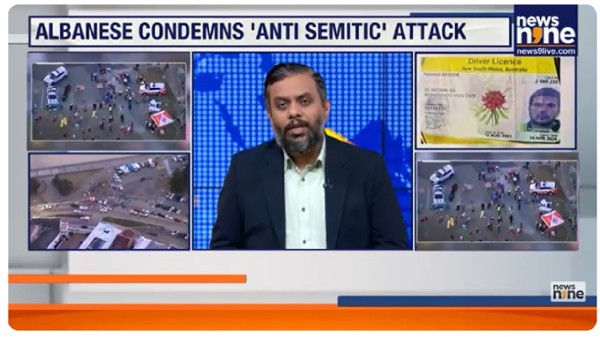
Amid the public anger and grief over the Sunday attack, Australian Prime Minister Anthony Albanese said that gun licences cannot be in perpetuity, as people can be radicalised over time. Albanese underlined that he would propose new caps, including a limit on the number of guns a licensed owner can obtain. The PM said he would raise the issue with cabinet.

"The government is prepared to take whatever action is necessary. Included in that is the need for tougher gun laws," said Albanese. He added: "People's circumstances can change. People can be radicalised over a period of time. Licences should not be in perpetuity."
The PM pointed out that some gun control laws are commonwealth and some are implemented by the states. "What we want to do is to make sure that we're all completely on the same page."
In the wake of the Sydney attack, federal and state leaders have indicated that changes to firearms legislation were being actively considered.
New South Wales Premier Chris Minns said Parliament could be recalled to expedite legislative changes. “We want to make sure that prospective reform and change in New South Wales has a lasting impact,” he said.
“If you’re not a farmer, if you’re not involved in agriculture, why do you need these massive weapons that put the public in danger and make life dangerous and difficult for New South Wales police?”
“It’s time we have a change to the law in relation to the firearms legislation … but I am not ready to announce it today. You can expect action soon,” he said. The PM also said: “If we need to toughen these (laws) up, if there’s anything we can do, I’m certainly up for it.”
The response to the attack indicates that Australian leaders are considering changes to the current gun laws, and the country may soon see stricter regulations introduced.