Sign In
By signing in or creating an account, you agree with Associated Broadcasting Company's Terms & Conditions and Privacy Policy.
By signing in or creating an account, you agree with Associated Broadcasting Company's Terms & Conditions and Privacy Policy.
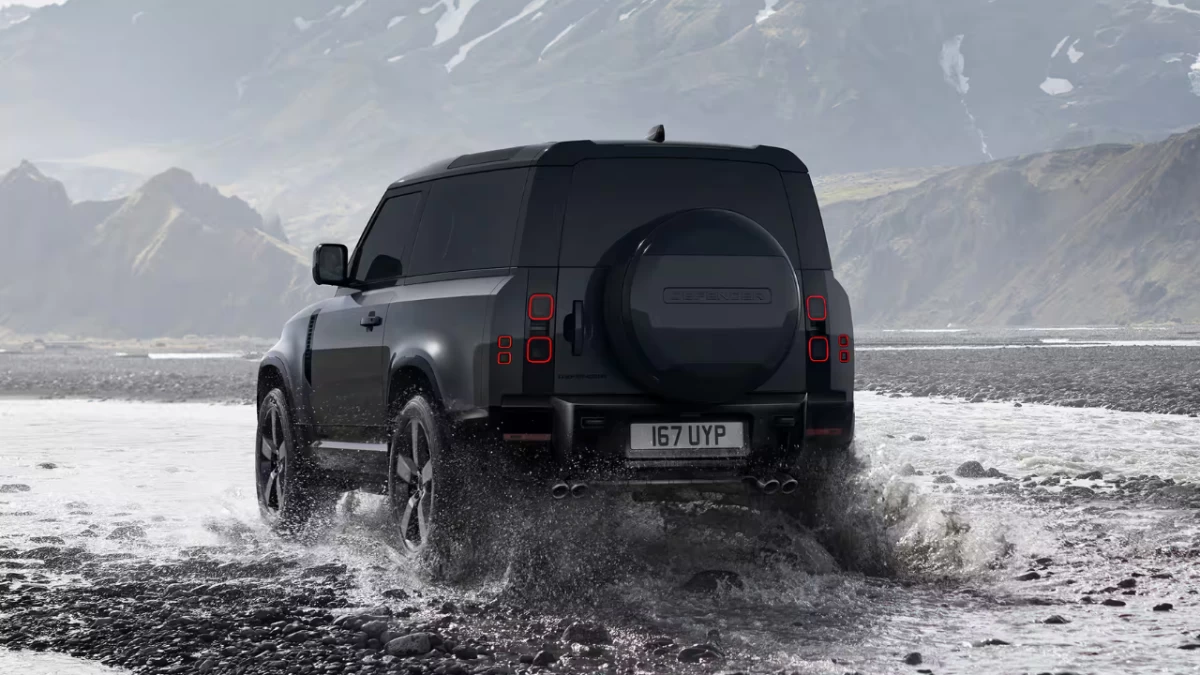

If you like adventure and venturing out to new places, you probably require a vehicle with 4x4 but there are a lot of technical details to look out for when you are considering a 4x4 vehicle. There are multiple terms and things that might get a little confusing for people.
There are a lot of things to keep in mind and choose a vehicle with the right set of features. 4x4 vehicles have also gotten quite advanced which make things even more complicated but in reality they ease your time on the trail and when the going gets tough. Here are all the 4x4 terms explained:
4x4 or 4wd equipped vehicles can send power to all four wheels of the vehicle. This is helpful in low-grip situations like off-roading or driving on the snow. Most vehicles which are equipped with 4x4 systems are large SUVs but there are a few exceptions as well.
Now there are a couple of types of 4x4 systems available as well. When talking about a 4x4 system here we are not referring to AWD (all-wheel-drive) vehicles which manipulate traction across the wheels using sensors. A 4x4 system will lock in place and can be engaged by the driver to get maximum grip from the get go.
Four wheel drive high or 4-High means that the higher range of gears are selected and the vehicle has been locked into 4x4. This is the same gearing as to what you are using in 2-wheel-drive mode. 4-High is beneficial when you need the grip and also want to carry speed. Older 4x4 vehicles have a lever to shift between 4-High and 4-Low but in newer cars, it is electronically switchable.
When you put the car in 4-Low, the vehicle selects a lower gear ratio. This is ideal when you need very precise control and need the vehicle to slowly go over obstacles. This also allows for greater control and would cause less stress on the driveline components. One should not drive on pavement with 4-Low engaged and it is purely for off-road use.
A transfer case is essentially a transmission which has the lower set of gears and it is the component which allows you to shift from 4-High to 4-Low. It is found in most true 4x4 vehicles and can be activated by either a manual lever or an electronic switch.
A differential is what transfers power between the wheels. All the vehicles will have a differential as it is an essential part to give the wheels power and also help with turning the vehicle. There are a few types of differentials which can be present in a car.
Open Differential: The most basic type of differential is the open differential which is found in most road cars. The open differential automatically transfers power to the wheel with the least amount of grip. This is quite helpful when taking turns as the outside wheels lose traction which the differential helps with.
Limited Slip Differential: While an open differential will transfer almost all the power to the wheel with the least amount of grip, it is not always ideal. A limited slip differential only allows a fraction of the power to go to the wheel with the least amount of grip. Some 4x4 vehicle do come equipped with limited-slip differentials.
Locking Differentials: Locking differentials lock both the wheels in place and they rotate at the same speed. This allows for maximum grip and the least amount of slippage. Locking differentials can be activated by the driver of the vehicle when they need it which makes it quite versatile. Many hardcore off-roaders may have up to 3 locking differentials but most regular 4x4 vehicles come equipped with a rear locking differential.
One would have heard these terms when talking about off-roading. These are quite essential and one can compare the capability of a 4x4 vehicle by these angles. This is where it all gets pretty technical and nerdy.
Approach Angle: An approach angle is the angle formed between the front wheels and the bumper of the vehicle. This allows us to judge as to what angle of a steep incline or obstacle the vehicle will be able to clear.
Departure Angle: Similarly, the departure angle is the angle formed between the rear wheels and the rear bumper and denotes the angle at which the vehicle can descend or take an obstacle without scraping the back of the vehicle.
Break-Over Angle: Break Over Angle refers to the angle between the front wheels, the midpoint of the vehicle and the rear wheels. It determines at what angle your vehicle can clear the obstacle without scraping its underbelly.
Wheel articulation refers to the amount of lateral movement of the wheel. When off-roading, more articulation is advantageous as it allows your wheels to be on the ground and offer grip. In solid-axle vehicles, both the wheels articulate in conjunction to one another but in independent vehicles, they move independently to one another.
Many modern cars are equipped with a hill descent control system. This allows the driver to go downhill without worrying about the brakes or the accelerator and just focus on the steering wheel. Many cars have a set speed which they descend at but many manufacturers also allow you to set the speed accordingly.
There are a lot more terms which are associated with 4x4 vehicles. There are also different types of 4x4 systems available and many modern cars come with highly advanced systems which alter the traction control and also help in manoeuvring around an off-road trail. We will take up all these topics in a different article.