Sign In
By signing in or creating an account, you agree with Associated Broadcasting Company's Terms & Conditions and Privacy Policy.
By signing in or creating an account, you agree with Associated Broadcasting Company's Terms & Conditions and Privacy Policy.
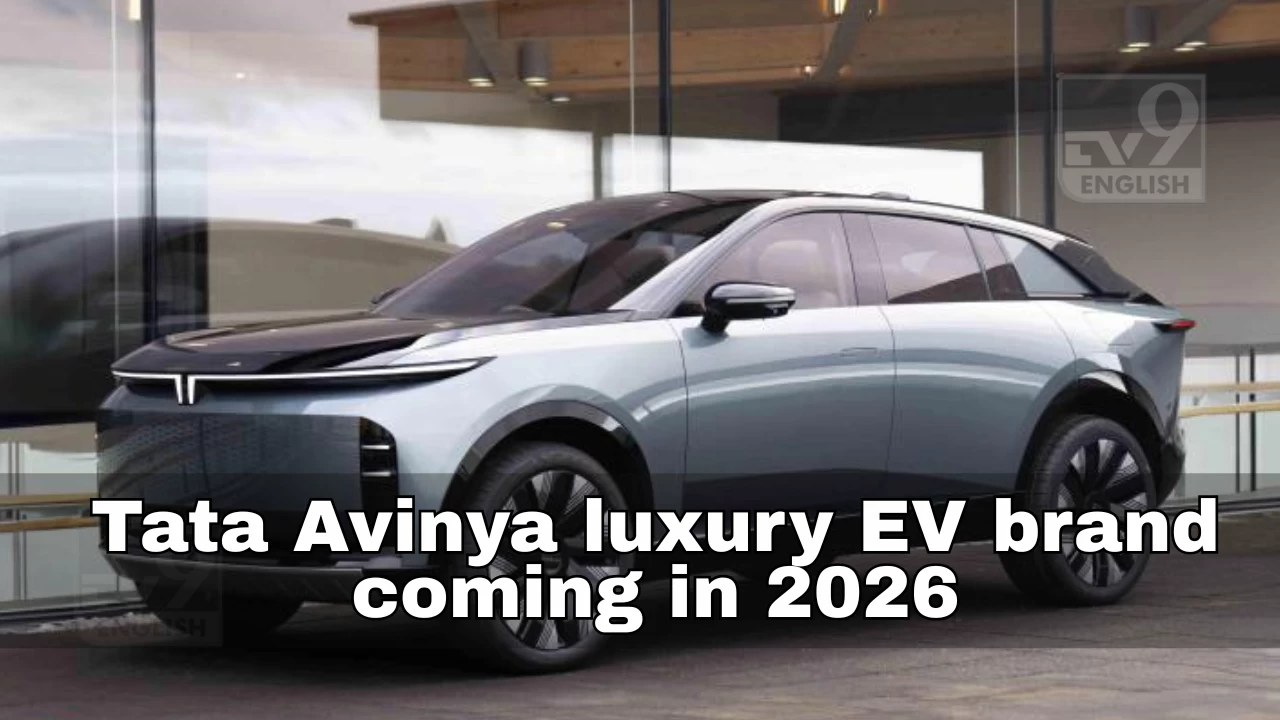

New Delhi: Tata Motors is getting ready to push itself into a space many Indian carmakers still treat carefully. The company is preparing to launch Avinya, a separate luxury electric brand, starting in 2026.
There is serious talk, clear model planning, production estimates, and big money involved. Reports from AutoCar India suggest this new brand may be supported by investments of over USD 1 billion (₹9,000 crore). The bigger target over the decade sits at around USD 2 billion (₹18,000 crore) for the wider EV program. That number alone tells you Tata wants Avinya to be meaningful, not just fancy PR talk.
The first Avinya model, known internally as P1, is planned as a Sportback. It is based on the Avinya concept shown earlier and is positioned as something stylish, low slung and very dynamic to look at. Tata expects around 24,000 units a year from this car, which is honestly quite confident for a premium EV from an Indian brand. Pricing may cross ₹35 lakh, placing it firmly in a luxury zone many Indian buyers are now willing to explore.
Following that, things get more interesting. The Avinya SUV, linked to the Avinya X concept, will come next. Enthusiasts will probably like this one more, as SUVs still dominate hearts and sales. Above this, Tata is planning a 3 row luxury SUV, again under the Avinya umbrella. These vehicles will be built on JLR’s EMA architecture, which already hints that Tata wants international standards baked into these products, not just premium badges.
Tata is currently discussing five Avinya models, codenamed P1 to P5.Here is what enthusiasts need to know:
The first model will roll out from the Sanand plant in Gujarat. Later, production may expand to Tamil Nadu, depending on final strategies. Expected combined sales across all Avinya models could touch around 1 lakh units annually by the end of the decade, which is quite bold.
Tata already leads India’s EV space, but market share has started to face pressure as Mahindra, Hyundai, Kia, Maruti Suzuki and even JSW MG gear up. EV penetration may reach 20 percent by the end of the decade. Tata wants its own number to hit over 30 percent of its total sales by 2030–31.